
How to build a running habit that sticks
Updated · 6 min read
In short: Habits come from repetition more than willpower. Start so small it is hard to say no, such as 15 minutes of walk-run. Tie the run to something you already do every day, lay out your kit the night before, and set a goal with a date. In a well-known study from University College London, new daily habits took 66 days on average to feel automatic, with a wide range, and a single missed day made little difference.
Why repetition beats willpower
Willpower is what you use when a run is a decision. A habit is what you have when the run no longer needs deciding. You get from one to the other by doing the same thing, in the same situation, again and again, until the situation starts the behavior for you.
The study most people quote on this comes from Phillippa Lally and her team at University College London. They asked 96 volunteers to pick a new health behavior, tie it to a daily cue, and repeat it for 84 days while rating how automatic it felt. On average it took 66 days to reach the plateau, but the range ran from 18 days to a predicted 254. People who picked an exercise habit took about one and a half times as long as people who picked a new eating or drinking habit.
Two findings matter for runners. A single missed day had little effect on progress. But many missed days, even spread out, lowered how automatic the habit became in the end. So expect two to three months before running feels like part of your week, shrug off one bad day, and do not let misses pile up.
Seven ways to make it stick
- Start small. Fifteen minutes of walk-run is plenty in week one. A session you can finish on your worst day beats an ambitious one you skip.
- Tie it to a cue you already have. Straight after morning coffee, or the moment you get home from work. The cue does the remembering for you.
- Lay out shoes, clothes and phone the night before. Every small barrier you remove is one less excuse at 6 a.m.
- Put fixed times in your calendar like appointments. Tuesday, Thursday and Saturday at the same hour is easier to keep than three runs “sometime this week.”
- Set a goal with a date and something to show for it at the end. A finish line gives today a reason.
- Log every session, even the short ones. A growing list of done days is its own motivation.
- Miss a day? Do the next one. Do not double up to make up for it. That is how a missed day turns into a sore week.
Choose your cue
Psychologists call a plan in the form “when this happens, I will do that” an implementation intention, or simply an if-then plan. It works because it moves the decision from the moment, when you are tired, to the night before, when you are not. Pick one cue that happens every day at a time you can actually run.
| When this happens | I will | Why it works |
|---|---|---|
| I finish my morning coffee | Put on my shoes and walk out the door | Same time and place every day |
| I get home from work, before I sit down | Change and run for 20 minutes | The couch is where evening runs disappear |
| I drop the kids at school | Walk-run a loop of about 2 miles | You are already out and dressed |
| My Tuesday and Thursday lunch break starts | Take a brisk 15-minute walk | Fits office days with no gear |
| It is Saturday, 8 a.m. | Meet a friend for a longer run | Someone is waiting for you |
Your first four weeks
The aim of the first month is showing up, not getting fast. Here is one gentle way to build, using walk-run intervals. Repeat any week that feels hard. There is no prize for moving on early.
| Week | Sessions | Each session | What counts as success |
|---|---|---|---|
| 1 | 3 | 15 minutes: jog 1, walk 2, repeated | Three sessions done |
| 2 | 3 | 20 minutes: jog 2, walk 2, repeated | Same days, same times |
| 3 | 3 or 4 | 20 to 25 minutes: jog 3, walk 2 | Every session logged |
| 4 | 3 or 4 | 25 minutes: jog 5, walk 2 | Your first dated goal finished |
If you want a full plan to your first 5K, see the virtual 5K for beginners. If you have a health condition, are pregnant, or have not exercised in a long time, check with a doctor before you start.
Why a dated goal helps
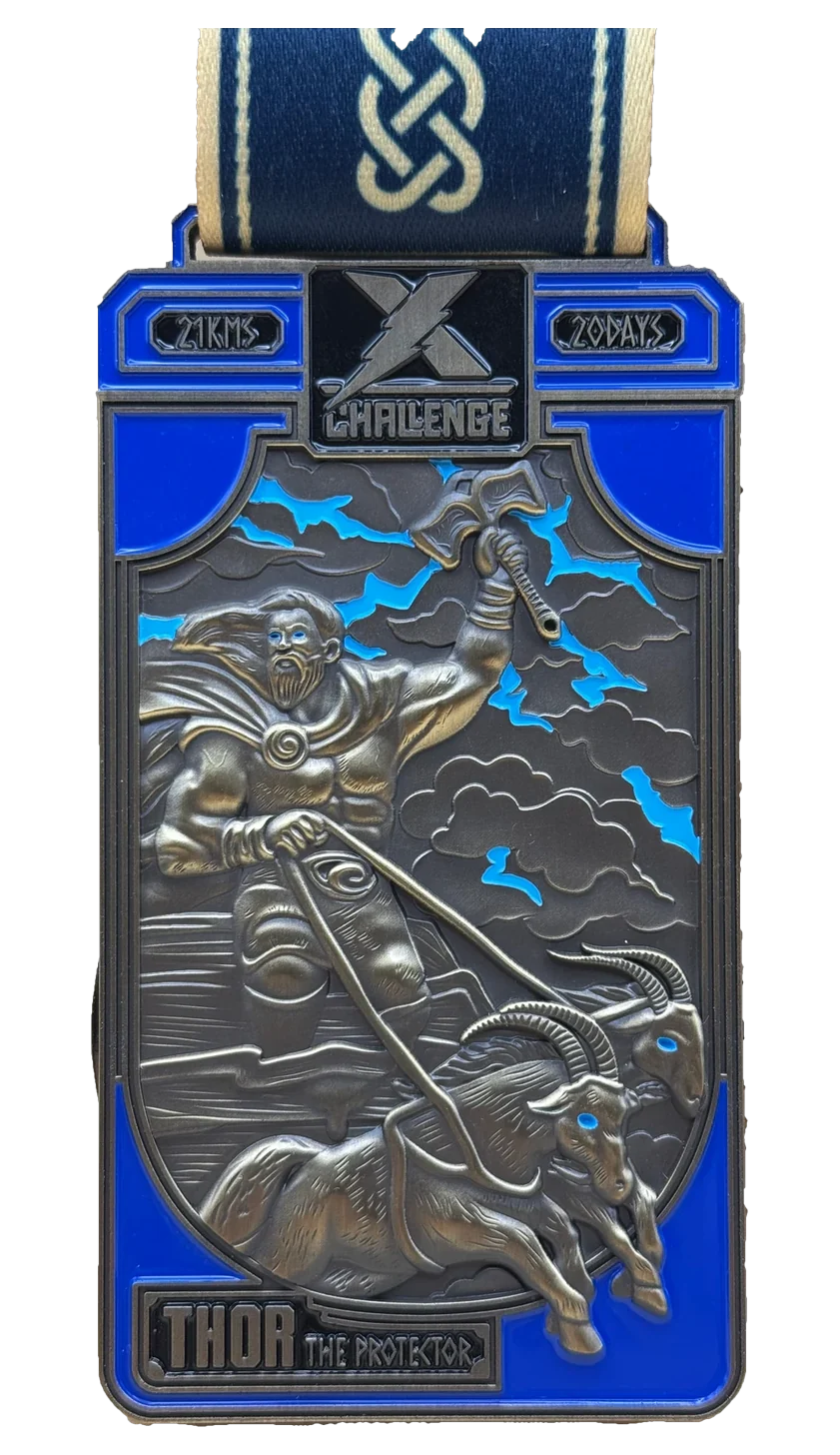
Without a finish line, tomorrow always looks like a better day to start. A challenge with a window gives today a reason. LOKI is 5 km (3.1 miles) in 7 days, about 0.7 km a day, which fits neatly inside week three or four of the plan above. Then move up to ODIN at 10 km in 10 days and THOR at 21 km in 20 days.
Each window starts when you tap Start, so you can line it up with a calm week instead of the week you move house. Every session adds to the total, so three short runs count the same as one long one.
Pick the reward before you start and make it visible. A medal on a hook by the front door, a note on the fridge with the finish date, or a shared chat where you post each run. The goal works best when you see it on the days you would rather stay in.
Make the first five minutes easy
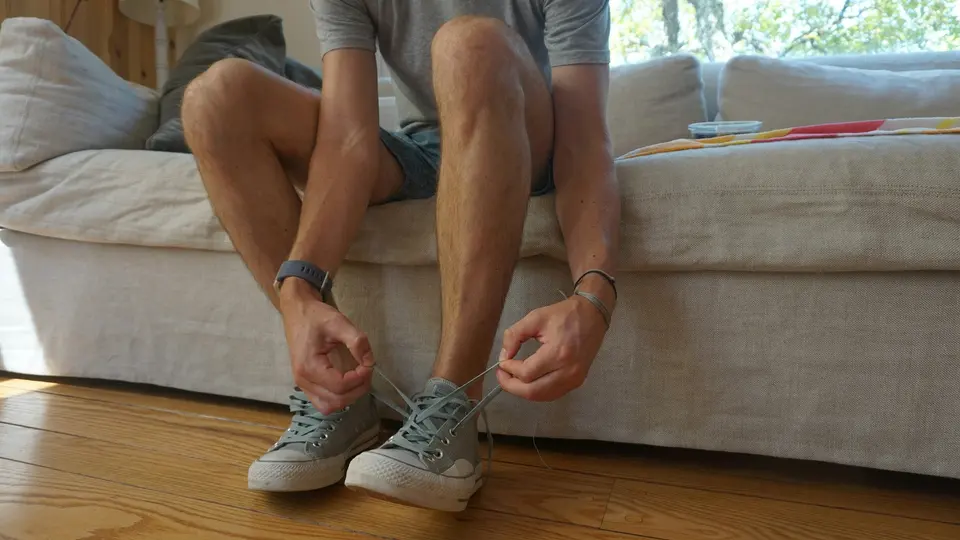
The hardest part of any run is getting out of the door. Once you are moving, most of the resistance goes. So design for the first five minutes, not the whole run. Sleep in your running clothes if it helps. Keep shoes by the door with the laces loose. Have a default route you do not have to think about. Promise yourself only the first five minutes, then decide. On most days you will keep going, and on the days you do not, you have still kept the habit alive.
Mistakes that break a new habit
- Starting with hard runs every day. Sore legs on day four are the most common reason week two never happens.
- Waiting to feel motivated. Motivation usually shows up ten minutes into the run, not before it.
- Treating one missed run as failure. The research says one miss barely matters. Quitting over it does.
- Changing the time every week. A habit needs a stable cue. Moving the run around makes it a decision again.
- Judging every run by pace. Early on, the only number that matters is how many times you went.
Everyone has flat weeks, usually around weeks three to six when the novelty wears off and the habit is not automatic yet. That is normal. See getting past a running slump, try running with friends, or read running when you are busy if time is the problem.
Common questions
- How many days a week should I run to build a habit? Three is a good start. Same days each week helps more than extra days.
- Does walking count? Yes. Brisk walking is moderate activity, and the CDC counts it toward the 150 minutes a week it suggests for adults.
- What if I miss a whole week? Go back to the previous week’s sessions and build again from there. One week off costs very little.
- Is morning or evening better? Whichever you can repeat. If mornings suit you, see running before work.
Sources
Challenges from this guide


Or take the whole set

More: all guides · how it works · every challenge