
The Four Holy Beasts: dragon, kylin, turtle and phoenix
Updated · 6 min read
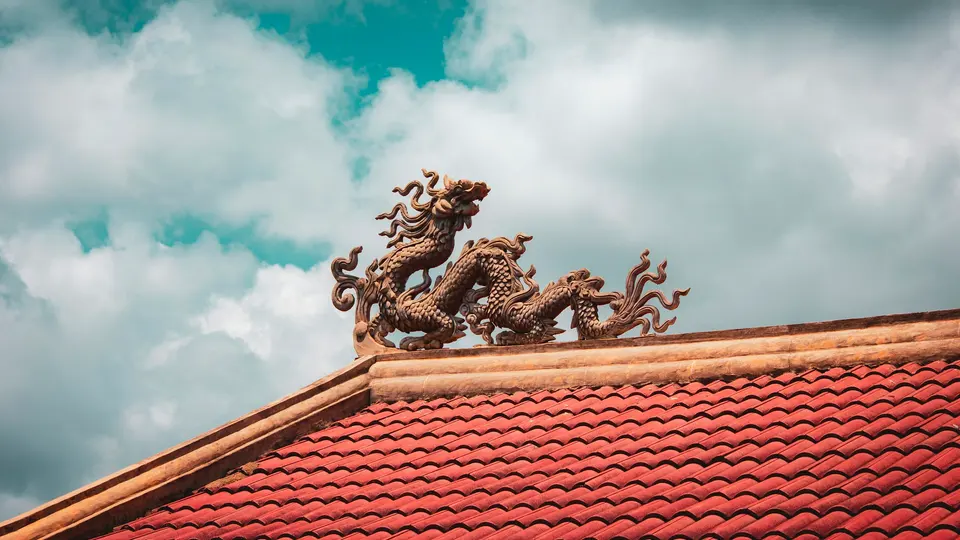
In short: The Four Holy Beasts are the dragon, the kylin (qilin), the turtle and the phoenix. The Chinese classic the Book of Rites lists them as the four intelligent creatures, and they are honored across China, Vietnam, Korea and Japan. The dragon stands for power and rain, the kylin for virtue, the turtle for long life and the phoenix for peace. They are a different set from the Four Symbols of the compass, where a white tiger takes the kylin’s place.
The four at a glance
| Beast | Also called | Stands for | Medal |
|---|---|---|---|
| Dragon | Long (Chinese and Vietnamese) | Authority, rain, rivers | DRAGON: 179 km in 88 days |
| Kylin | Qilin, kirin (Japanese), kỳ lân or ly (Vietnamese) | Virtue, good rulers, the birth of sages | KYLIN: 88 km in 68 days |
| Turtle | Tortoise, quy (Vietnamese) | Long life, steadiness, things that last | TURTLE: 68 km in 39 days |
| Phoenix | Fenghuang, phụng (Vietnamese) | Peace, grace, good times | PHOENIX: 139 km in 79 days |
Where the list comes from
The grouping goes back to the Book of Rites, one of the Confucian classics. In James Legge’s 19th-century translation, it asks what the four intelligent creatures were and answers: the kylin, the phoenix, the tortoise and the dragon. The text explains each one by what its presence means. When the dragon is tame, the fish do not hide. When the phoenix is, the birds do not scatter. When the kylin is, the beasts do not run. When the tortoise is, people’s feelings do not go astray.
The idea is harmony. Each creature leads its own kind, and when it settles among people, the world is in order. In Vietnam the four are known together as tứ linh, and you see them on temple roofs, in communal houses and in embroidery.
The dragon
The East Asian dragon is a power to respect, far from the treasure-hoarding monster of European stories. It brings rain, rules the waters and rises through the clouds. Emperors took it as their emblem, and it heads the four.
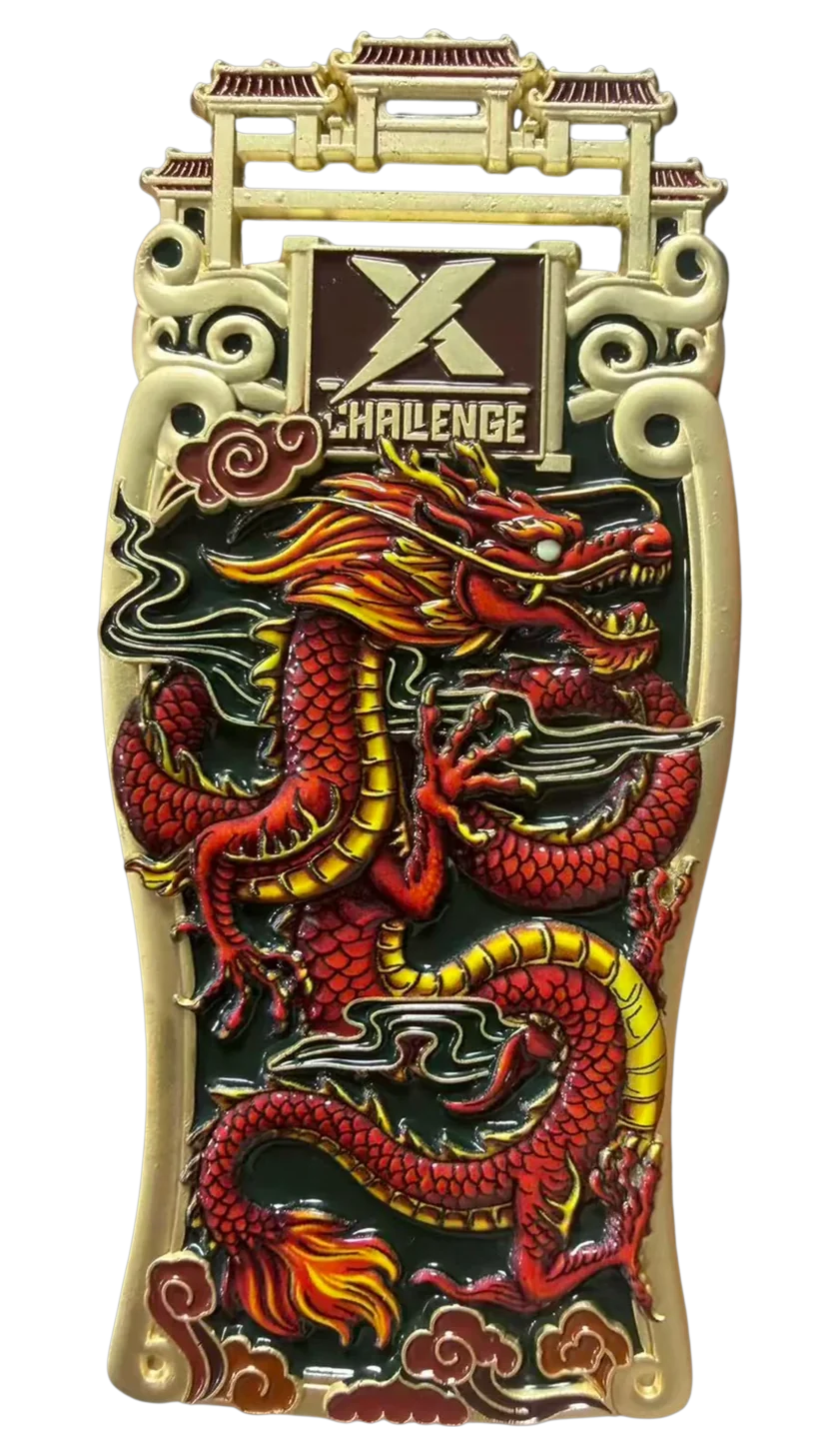
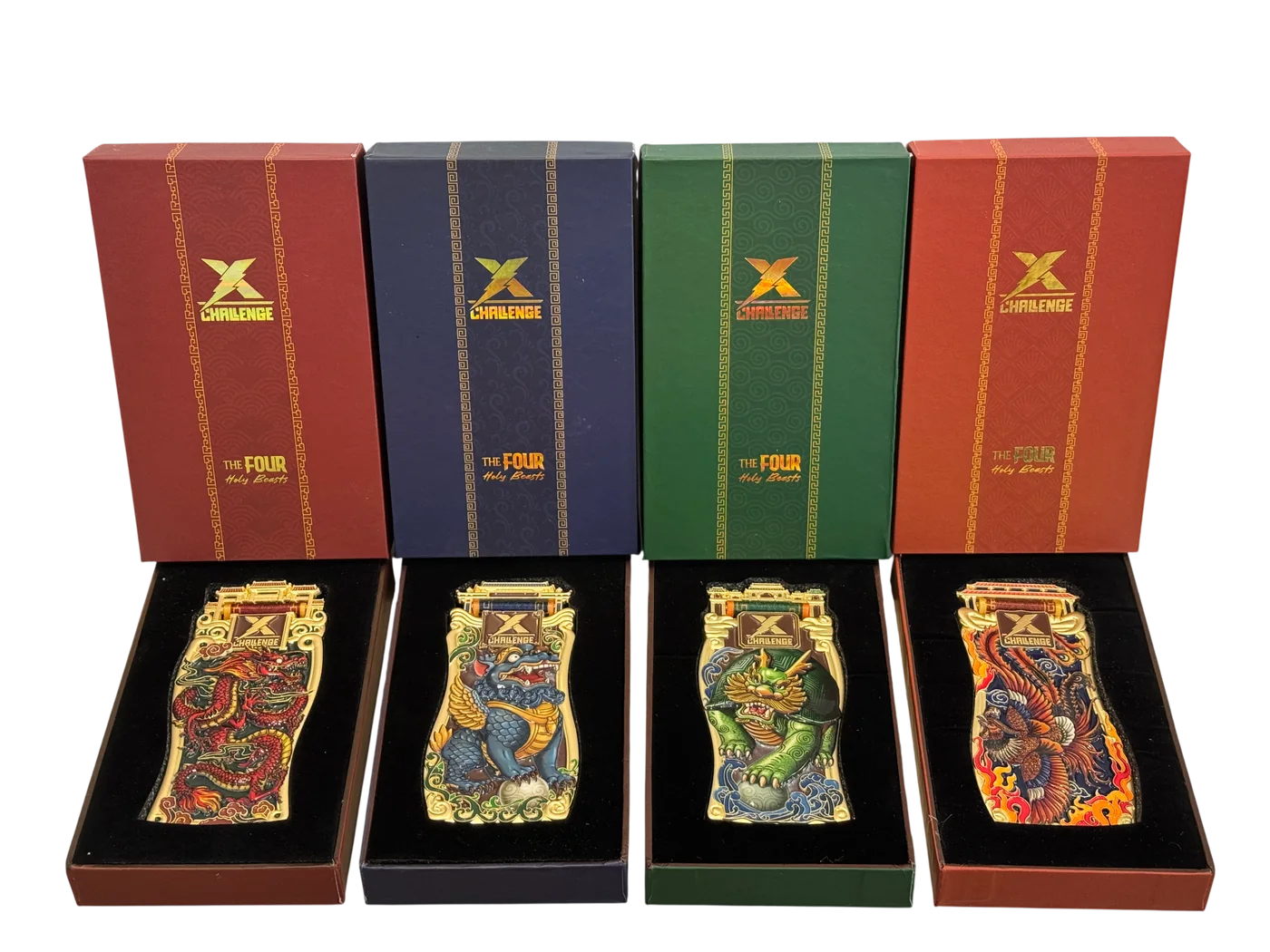
On the DRAGON medal it coils up through cloud in red and gold enamel on the front and appears again as carved jade on the reverse. It is the longest road in the set, 179 km (111 miles) in 88 days, about 2 km a day.
The kylin
The kylin is often drawn with a dragon’s head, a deer’s body, scales and hooves. For all that, it is the gentlest of the four. Old poems say its feet harm no living thing, not even the grass. It appears for a sage or a just ruler, and legend says one appeared to Confucius’ mother before he was born. When a giraffe reached the Chinese court during the voyages of Zheng He in the 15th century, many people took it for a kylin.
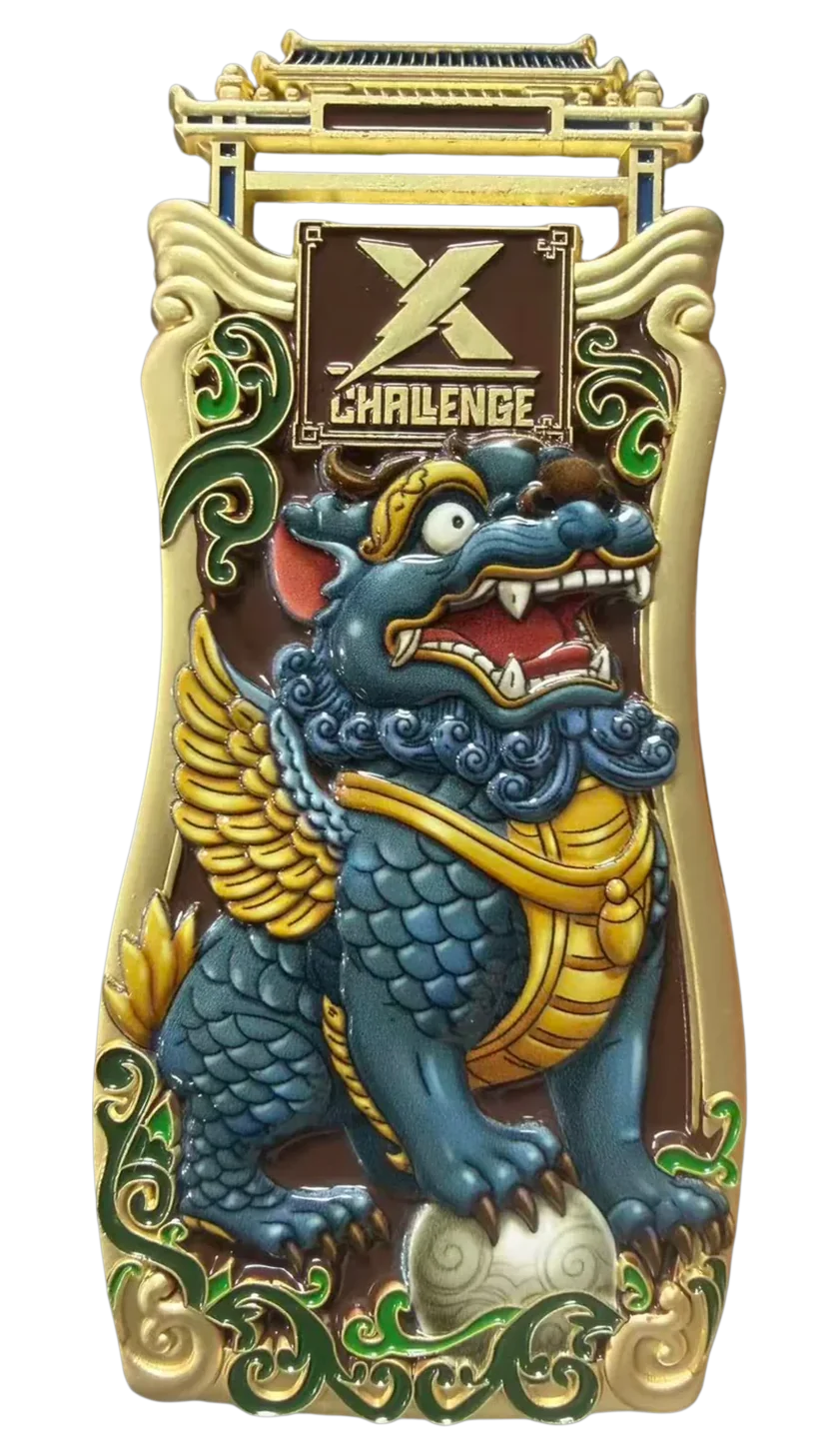
The KYLIN medal shows it in blue and gold, with a gourd and a blossom coin on the reverse. At 88 km in 68 days it is the gentlest pace in the set, a little over 1.3 km a day.
The turtle
The turtle is the only one of the four you could meet in real life. It stands for long life and for carrying something steadily over time. In ancient China its shell was used for divination: the Book of Rites mentions the ancient kings consulting “the stalks and the tortoise-shell”. Stone turtles still carry tablets on their backs at temples across the region, including the stelae of the Temple of Literature in Hanoi.
The TURTLE medal shows a dragon-turtle in jade green with gilt horns, and a gold ingot riding the waves on the back. 68 km in 39 days is about 1.7 km a day.
The phoenix
The East Asian phoenix, the fenghuang, is a bird of peace and grace that appears when times are good. In the Book of Rites its presence means the birds do not fly in terror. In art it is often paired with the dragon, especially in wedding decoration.
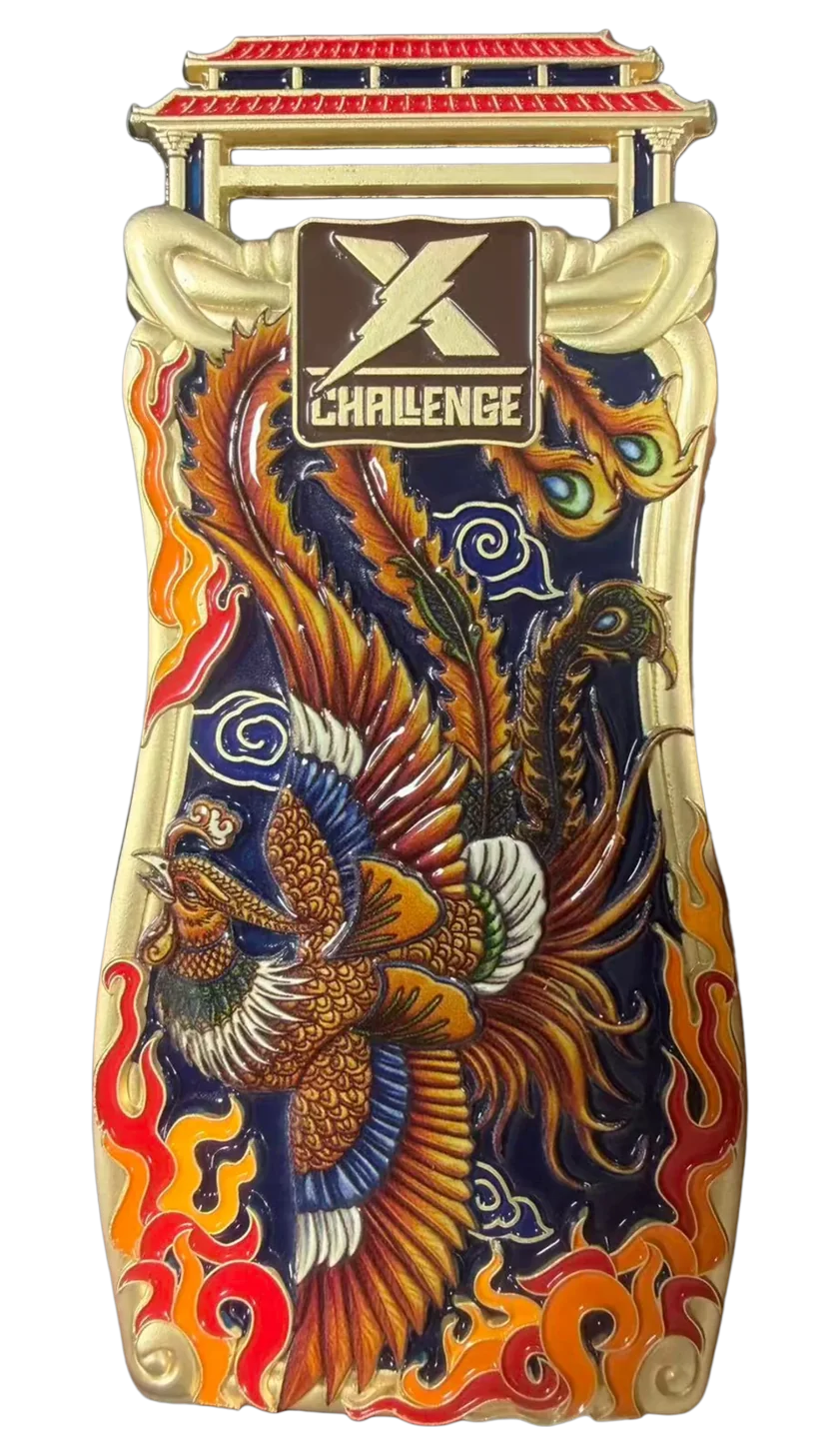
The PHOENIX medal opens its wings in flame-orange enamel, and the reverse keeps a single plume and the egg of the next bird. 139 km in 79 days closes the set, about 1.8 km a day.
Four Holy Beasts or Four Symbols?
People often mix up two different sets of four. The Four Symbols are the guardians of the compass: the Azure Dragon of the east, the White Tiger of the west, the Vermilion Bird of the south and the Black Tortoise (or Dark Warrior, a tortoise wound with a snake) of the north. They were central to Han dynasty cosmology, and you find them on tomb tiles and bronze mirrors.
| Four Holy Beasts | Four Symbols | |
|---|---|---|
| What they are | Creatures of good omen | Guardians of the four directions |
| Members | Dragon, kylin, turtle, phoenix | Azure Dragon, White Tiger, Vermilion Bird, Black Tortoise |
| The odd one out | The kylin | The White Tiger |
| Where you see them | Temples, embroidery, festivals | Tomb walls, mirrors, star maps |
Three creatures overlap, more or less. The kylin and the tiger are the difference. The X Challenge set is the Four Holy Beasts.
Where you see the four today
Look up at an old temple or communal house in Vietnam or southern China and you will often find them on the roof ridge: a pair of dragons facing a pearl, with phoenix, kylin and turtle motifs in the carving and ceramic work below. They appear in embroidery, on lacquer boxes, on wedding decorations and on New Year prints. At Mid-Autumn and Lunar New Year, kylin and lion dances move through the streets to bring luck to homes and shops.
The four rarely appear as equals. The dragon tends to take the center, the phoenix sits beside it, and the kylin and turtle fill out the picture. That order, dragon first and phoenix last, is the one the medal set follows.
The four as medals
The Four Holy Beasts is 474 km in all, at $129 for the set. Each medal is die-cast as a temple stele under a tiled roof, with the guardian in cloisonné enamel on the front and its blessing on the back. The time windows are lucky numbers, explained in what 88, 68, 39 and 79 mean. Every activity the app records counts, so most people walk part of the way.
Common questions
- What are the Four Holy Beasts? The dragon, kylin, turtle and phoenix, the four intelligent creatures of the Book of Rites.
- Is the White Tiger one of them? No. The White Tiger belongs to the Four Symbols, the guardians of the directions.
- What is a kylin? A gentle creature of good omen, often drawn with a dragon’s head and a deer’s body. It is also called qilin or kirin.
- Which is the luckiest? The dragon heads the four, and its medal carries the luckiest window, 88 days.
Sources
- The Lî Kî, Book VII (Li Yun), translated by James Legge, Sacred Books of the East vol. 27, Wikisource: the four intelligent creatures and what each one’s presence means, and the stalks and the tortoise-shell.
- Qilin (Chinese Unicorn), World History Encyclopedia: the kylin’s appearance, its link to sages and just rulers, Confucius, the giraffe of Zheng He’s voyages, and its names in Japan, Korea and Vietnam.
- Directional tomb tile with Green Dragon of the East, Providing for the Afterlife exhibition, asianart.com: the four directional animals and their place in Han dynasty cosmology.
Challenges from this guide
Or take the whole set
More: all guides · how it works · every challenge