
Who are Odin, Thor and Loki in Norse mythology?
Updated · 6 min read
In short: In Norse mythology Odin is the chief of the gods, Thor is his son, the thunder god and protector of Asgard, and Loki is a trickster, the son of a giant, who mixed his blood with Odin’s. Loki is not Thor’s brother in the myths, as he is in the Marvel films. Their story ends at Ragnarök, the last battle of the gods. Most of what is known about them comes from the two Eddas, written down in Iceland in the 13th century.
The three gods at a glance
| God | Role | Known for | At Ragnarök |
|---|---|---|---|
| Odin | Chief of the gods, god of wisdom, war and the dead | One eye, the spear Gungnir, the eight-legged horse Sleipnir, the ravens Huginn and Muninn | Swallowed by the wolf Fenrir |
| Thor | Thunder god, protector of Asgard and of people | The hammer Mjölnir, a belt of strength, a chariot drawn by two goats | Kills the serpent Jörmungandr, walks nine paces and falls to its venom |
| Loki | Trickster who both helps and harms the gods | Shape-shifting, and his children Fenrir, Jörmungandr and Hel | Fights against the gods, and he and Heimdall kill each other |
Odin: wisdom bought at a price
Odin is called the Allfather, and every story about him is about paying for knowledge. In the poem Völuspá, a seeress tells him she knows where his eye is hidden: in the well of Mímir, given as a pledge for a drink of wisdom. In Hávamál, Odin himself says he hung on “the windy tree” for nine nights, wounded by his own spear, to win the runes. The tree is Yggdrasil, the world tree.
Two ravens sit on his shoulders. Their names, Huginn and Muninn, mean Thought and Memory, and the Prose Edda says he sends them out at dawn to fly over the world and bring back news. He rides Sleipnir, the best of horses, which has eight legs, and carries the spear Gungnir. Wednesday is named after him, through his Old English name, Woden.
Thor: the one who shows up
Thor is Odin’s son. Völuspá calls him “the son of Fjorgyn”, the earth. His job in the stories is plain: keep the giants out. The Prose Edda gives him three treasures. The hammer Mjölnir, which the giants knew well. A belt that doubles his strength. And iron gloves to hold the hammer.
He travels in a chariot pulled by two goats, Tanngnjóstr and Tanngrisnir. In one story he cooks them for supper and raises them again the next morning with his hammer. He is quick to anger, slow to be fooled twice, and he is the god Thursday is named after.
Loki: the crack in the pattern
Loki is the hardest of the three to pin down. The Prose Edda names his father as the giant Farbauti and his mother as Laufey. He lives among the gods, helps them out of trouble with his cunning, and gets them into most of it in the first place. In the poem Lokasenna he reminds Odin that the two of them once mixed their blood. No story of that oath survives, but the bond explains why Odin puts up with him for so long.
With the giantess Angrboda, Loki has three children: the wolf Fenrir, the serpent Jörmungandr and Hel, who rules the dead. The gods bind the wolf, throw the serpent into the sea that circles the world, and send Hel below. Loki is also the mother of Sleipnir, after he takes the form of a mare to stop a giant finishing the walls of Asgard. In the end he arranges the death of the god Baldr, and the gods bind him until the end of the world.
How the myths differ from Marvel
- Loki is not Thor’s adopted brother. In the myths he is the son of a giant, and his bond is with Odin, by blood.
- Loki is no charming antihero by the end. He brings about Baldr’s death, and at Ragnarök he steers a ship of the dead against the gods.
- Thor’s strength comes with his tools. The belt and the gloves matter as much as the hammer.
- Odin spends much of the myths wandering the worlds in disguise, asking questions and paying for the answers.
Ragnarök and the rainbow bridge
Ragnarök is the Norse end of the world. In Völuspá, Heimdall blows his horn, Yggdrasil shakes, and the fire giant Surtr comes from the south. Loki stands at the helm of a ship carrying the people of Hel. Odin goes out to fight the wolf and is killed, and his son Vidar avenges him. Thor kills the serpent, walks nine paces and dies of its venom. The Prose Edda adds that Bifröst, the rainbow bridge to Asgard, breaks when the fire giants ride over it, and that Loki and Heimdall kill each other.
Then the poem turns. The seeress sees the earth rise again from the sea, green, with waterfalls and an eagle hunting fish. A few gods survive and meet to remember what happened. The ending is a reset as much as a destruction.
Where the stories come from
Almost everything is from two Icelandic books. The Poetic Edda is a collection of anonymous poems, preserved in a manuscript called the Codex Regius, written down around 1300 and found by an Icelandic bishop in 1643. The Prose Edda is a handbook for poets by Snorri Sturluson, who died in 1241. He retold the myths in prose and quoted many of the same poems.
Both were written down centuries after the Viking Age, in Christian Iceland. They are the best record we have, but they are retellings, and they do not always agree with each other.
The three gods as medals
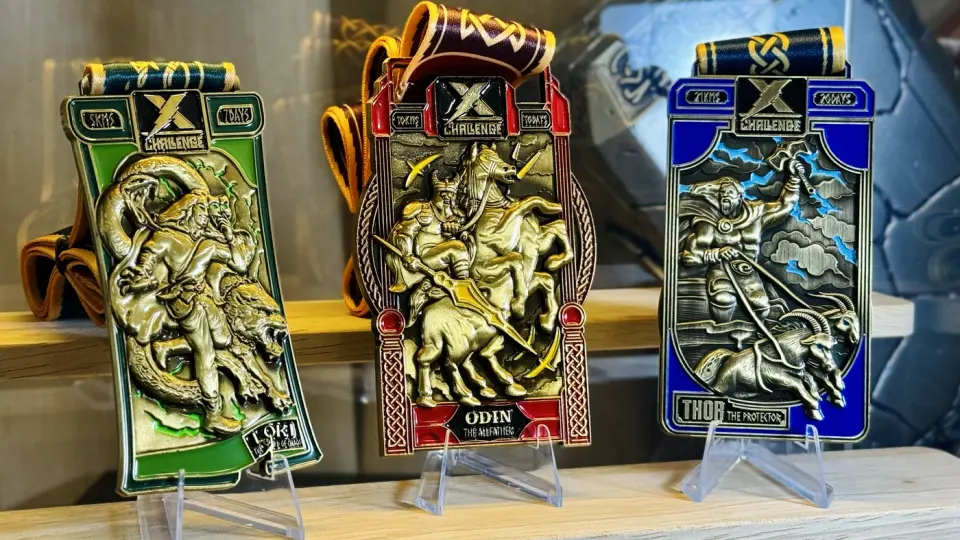
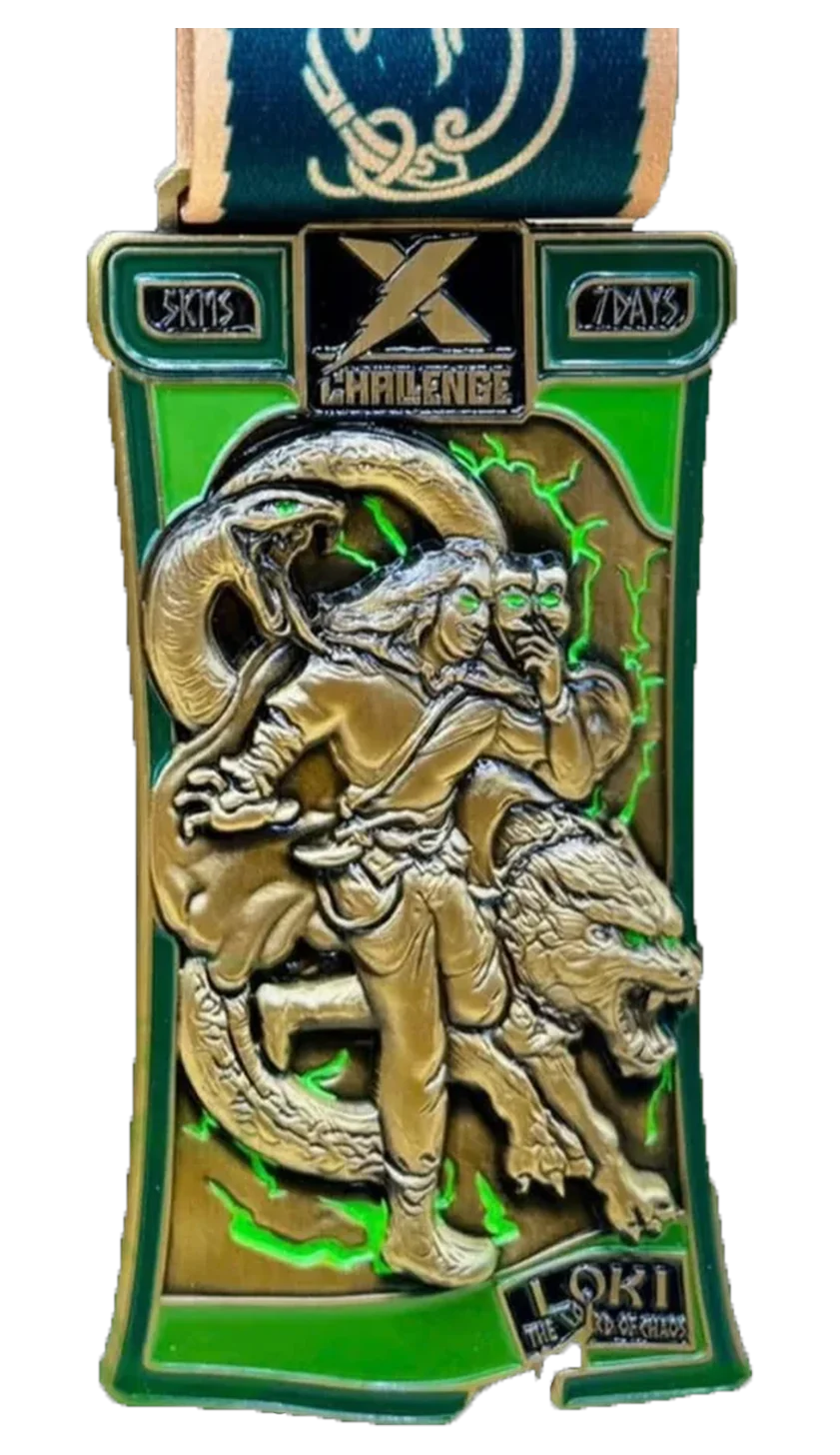
- LOKI, 5 km in 7 days: Loki between Jörmungandr and Fenrir, in glow-in-the-dark green enamel. The reverse shows Bifröst breaking, and the bottom edge is left torn.
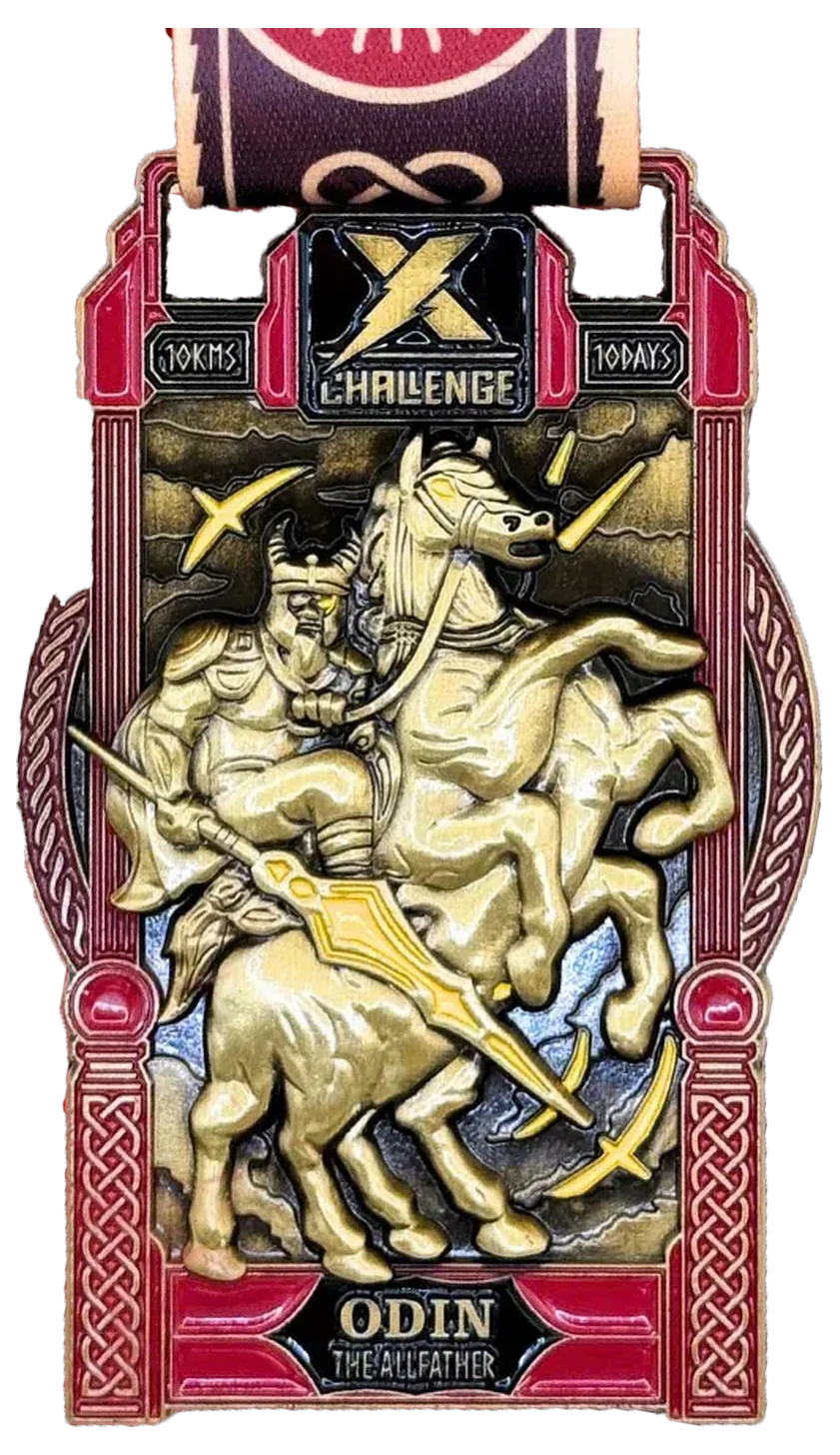
- ODIN, 10 km in 10 days: Odin on Sleipnir with Gungnir raised. The reverse shows Yggdrasil with an eye that lifts off on two magnets, and Huginn and Muninn beneath it.
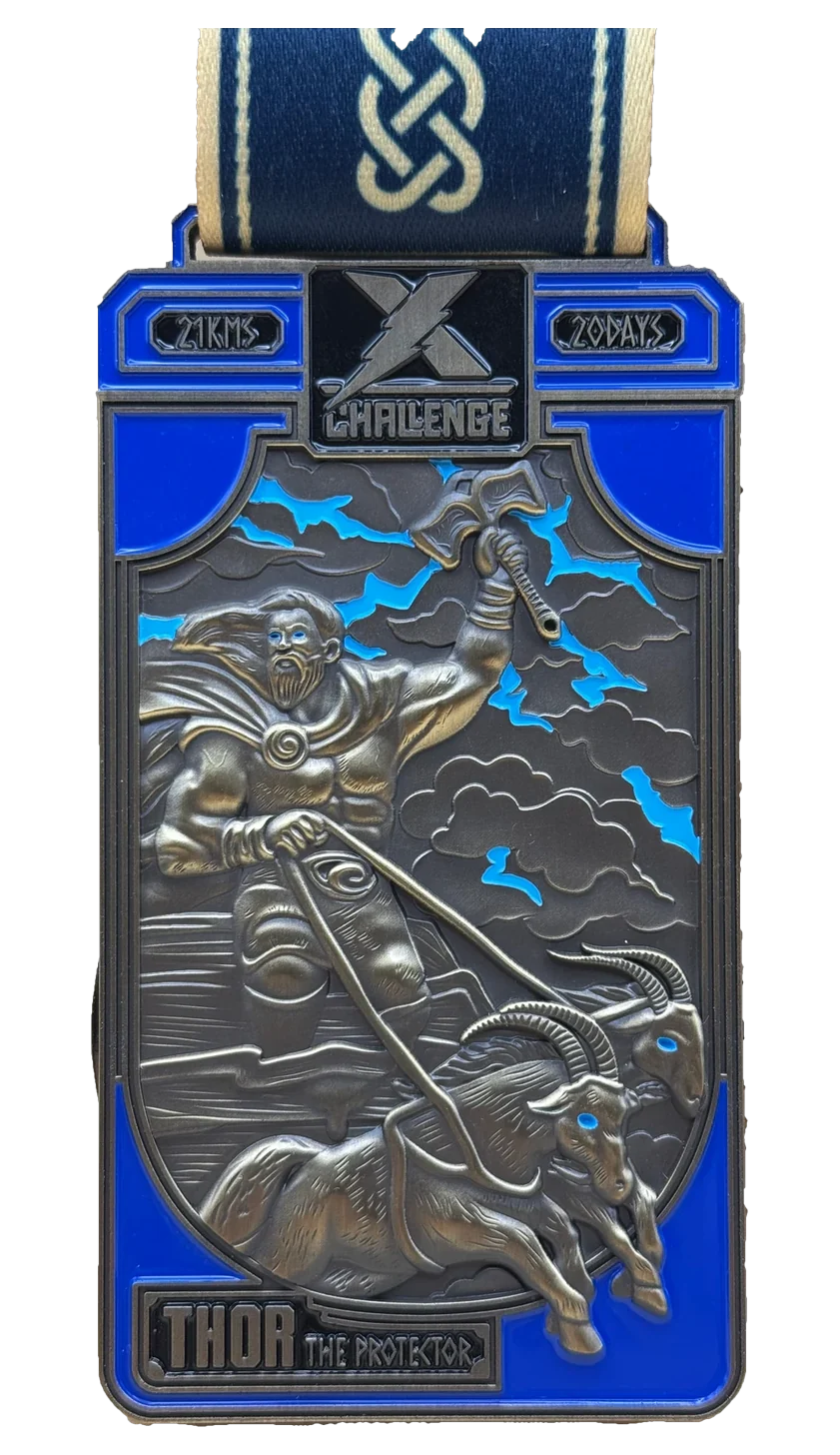
- THOR, 21 km in 20 days: Thor swinging Mjölnir from his goat-drawn chariot. On the reverse, Surtr rises above an Asgard that turns on a dial of runes.
Together they make up Legends Of Asgard, 36 km (22 miles) in all, at $99 for the set. For the world they live in, read Yggdrasil and the nine realms.
Common questions
- Is Loki Thor’s brother? Not in the myths. That comes from Marvel. In the Eddas, Loki is the son of a giant and Odin’s blood-brother.
- Who kills Odin? The wolf Fenrir, Loki’s son, at Ragnarök. Odin’s son Vidar then kills the wolf.
- Does Thor die at Ragnarök? Yes. He kills the serpent Jörmungandr, walks nine paces and falls from its venom.
- Are the Eddas religious texts? They are poems and stories written down by Christians in the 13th century, so they record the myths rather than a living religion.
Sources
- The Poetic Edda, translated by Henry Adams Bellows (1923), Project Gutenberg: Völuspá (Odin’s eye in Mímir’s well, Ragnarök, the earth rising again), Hávamál (nine nights on the tree), Grímnismál (Huginn and Muninn), Lokasenna (Loki and Odin’s mixed blood, with the translator’s note that no account of it survives).
- The Younger Edda (Prose Edda) by Snorri Sturluson, translated by Rasmus B. Anderson, Project Gutenberg: Loki’s parents and children, Sleipnir’s birth, Thor’s goats and treasures, Bifröst breaking, and the translator’s summary of Ragnarök.
Challenges from this guide
Or take the whole set

More: all guides · how it works · every challenge