
What makes a good finisher medal
Updated · 6 min read
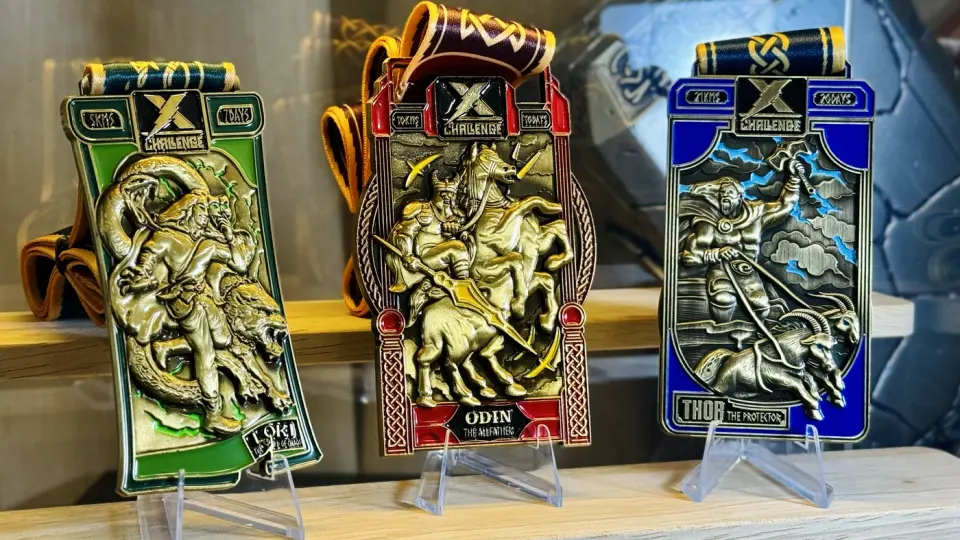
In short: A finisher medal worth keeping is usually die-cast rather than stamped flat. It has real depth in its relief, uses enamel and plating on purpose, is designed on both sides, and comes with a ribbon and box made for it. It should also carry the distance you covered. Judge it from photos taken at an angle, and ask what the back shows. Every X Challenge medal is die-cast and double-sided, with its own ribbon and gift box, and ships only after the app records your finish, from $45 for one medal.
The short checklist
You will hold this thing for years, so it is worth five minutes before you buy. These are the points that separate a medal people hang on the wall from one that ends up in a drawer.
- Casting and relief. Die-cast medals can carry real depth: layered sculpture rather than a flat, printed surface. Photos taken at an angle show it. Straight-on photos hide it.
- Plating and patina. Antique finishes darken the recesses so the relief reads from across a room. Bright plating looks best on simpler designs.
- Enamel. Coloured enamel fills chosen areas. Enamel set between raised metal lines (cloisonné-style) is the most detailed. Glow-in-the-dark enamel works when the design is built around it.
- The reverse. A blank or text-only back is common. A designed reverse doubles what you are buying.
- Your distance. A medal that carries the distance you did records your own effort.
- Ribbon and box. A ribbon designed for the medal, and a box that protects it, make it something to display.
- Weight in the hand. A cast medal feels solid. Very light medals are often stamped thin or made of acrylic.
Die-cast or stamped: why it matters
Most metal medals are made one of two ways. Die-casting injects molten alloy into a steel mould under pressure, so the metal fills every curve of a three-dimensional sculpt. Die-striking, often called stamping, presses a flat blank of metal between two dies. Stamping gives crisp, shallow detail. Casting allows deep relief, cut-outs and irregular shapes. Printed and acrylic medals skip the metal work entirely.
| Kind | How it is made | What you see | Where you meet it |
|---|---|---|---|
| Die-cast | Molten alloy forced into a steel die | Deep relief, cut-outs, odd shapes, real weight | Collectible series and themed medals |
| Die-struck (stamped) | A flat blank pressed between two dies | Crisp but shallow detail, round or simple outlines | Traditional awards and many road races |
| Printed metal | A flat disc with a printed or epoxy-domed face | Full colour, no relief | Budget events and kids’ races |
| Acrylic or wood | Cut and printed sheet | Light, flat, often colourful | Novelty and very low-cost events |
None of these is wrong for every event. A stamped medal can be beautiful, and a cast one can be dull. But if a medal is the main thing you are paying for, depth and weight are what you will notice every time you pick it up.
Enamel, plating and finish
Colour on a medal usually comes from enamel. The type changes how the surface feels and how the light catches it.
| Type | What it looks like | What to check |
|---|---|---|
| Soft enamel | Colour sits below the raised metal lines, so you can feel the ridges | Even fill, no gaps at the edges |
| Hard enamel | Colour polished flush with the metal, smooth to the touch | No pits or bubbles in the surface |
| Cloisonné | Colour set in cells between fine raised metal lines, very detailed | Clean lines between colours, no bleeding |
| Glow-in-the-dark | Enamel that charges in light and glows after dark | That the design uses it on purpose |
| Antique plating | Darkened recesses, polished high points | That the relief is deep enough to show it |
| Bright plating | Shiny gold, silver or bronze all over | Fingerprints and scratches show more |
The reverse, the distance and the details
Turn the medal over in the photos. Many race medals carry the sponsor list or the year on the back and nothing else. That is fine for a souvenir. For a medal you are buying for the design, look for a second artwork on the reverse.
Then look for your distance. A medal struck with the kilometers or miles you covered records what you did. Some designs go further with moving parts: a spinner, a hinge or a piece held on magnets. Ask whether those are part of the sculpt or glued on. Cast-in parts last longer.
Ribbon, box and how it arrives
A plain lanyard with a stock clip is a sign the budget went elsewhere. A ribbon printed for the medal, in its colours, ties the piece together and looks better on a hanger. Check how the ribbon attaches: a cast loop at the top is stronger than a thin jump ring.
Packaging matters more than it sounds. A gift box protects enamel and plating in the mail and gives you somewhere to store the medal later. Medals that arrive loose in a padded envelope often arrive scratched.
How to judge a medal from photos before you buy
- Find a photo taken at an angle. If every photo is straight-on and evenly lit, the relief may be shallow.
- Find a photo of the back. If there is none, assume it is plain.
- Look for a photo in a hand. It tells you the real size better than any number.
- Read what the seller says about the material. “Die-cast alloy” and “enamel” are specific. “Premium metal” is not.
- Check when it ships. Some virtual events ship on a fixed date, others when you finish.
Finisher medal design at shorter distances
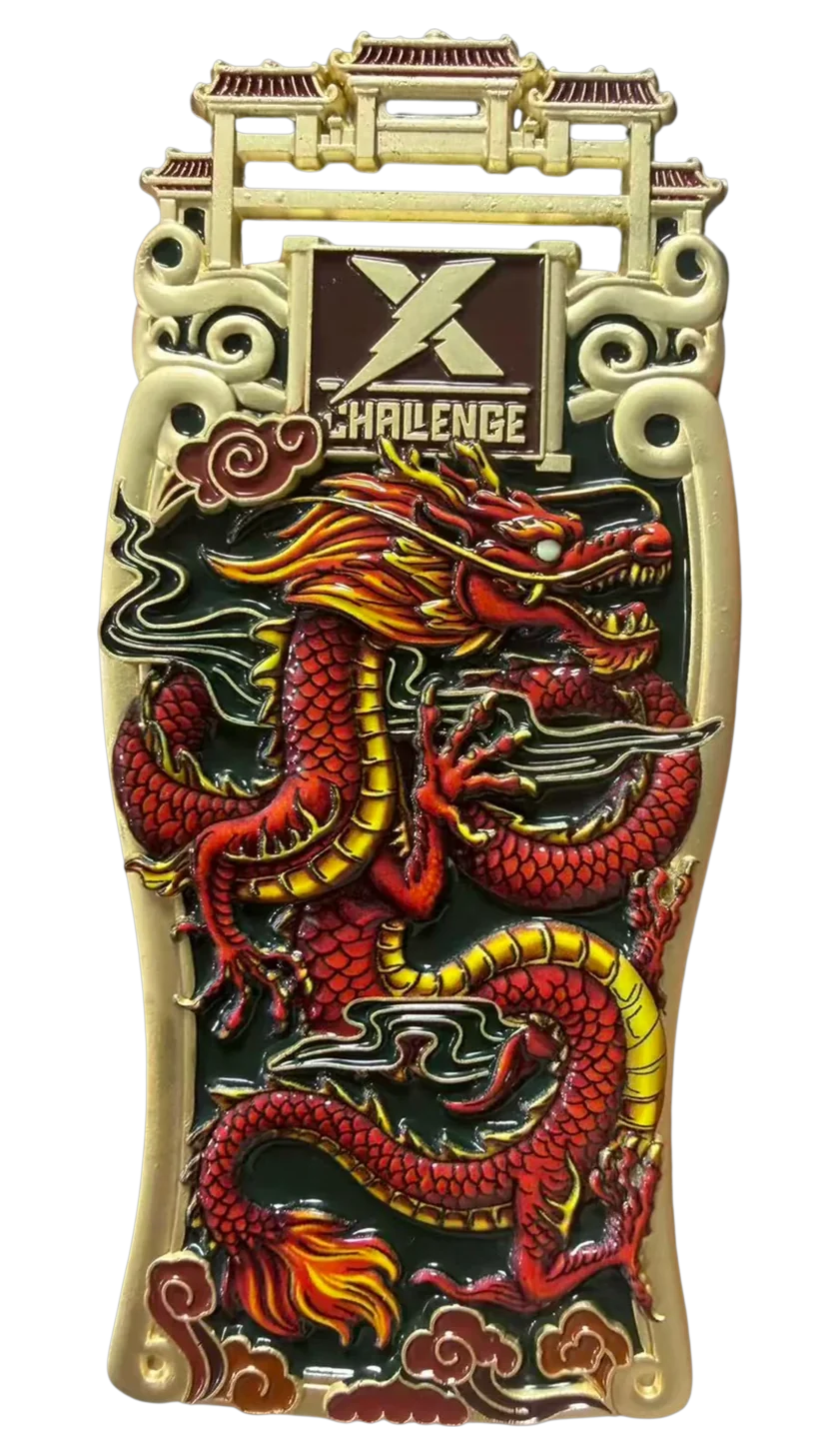
Finisher medals for a 5K are often the plainest in a race series, but the distance does not have to decide the quality. The same checks apply at any length. The LOKI medal for 5 km is die-cast and double-sided, just like the DRAGON medal for 179 km.
X Challenge medals, specifically
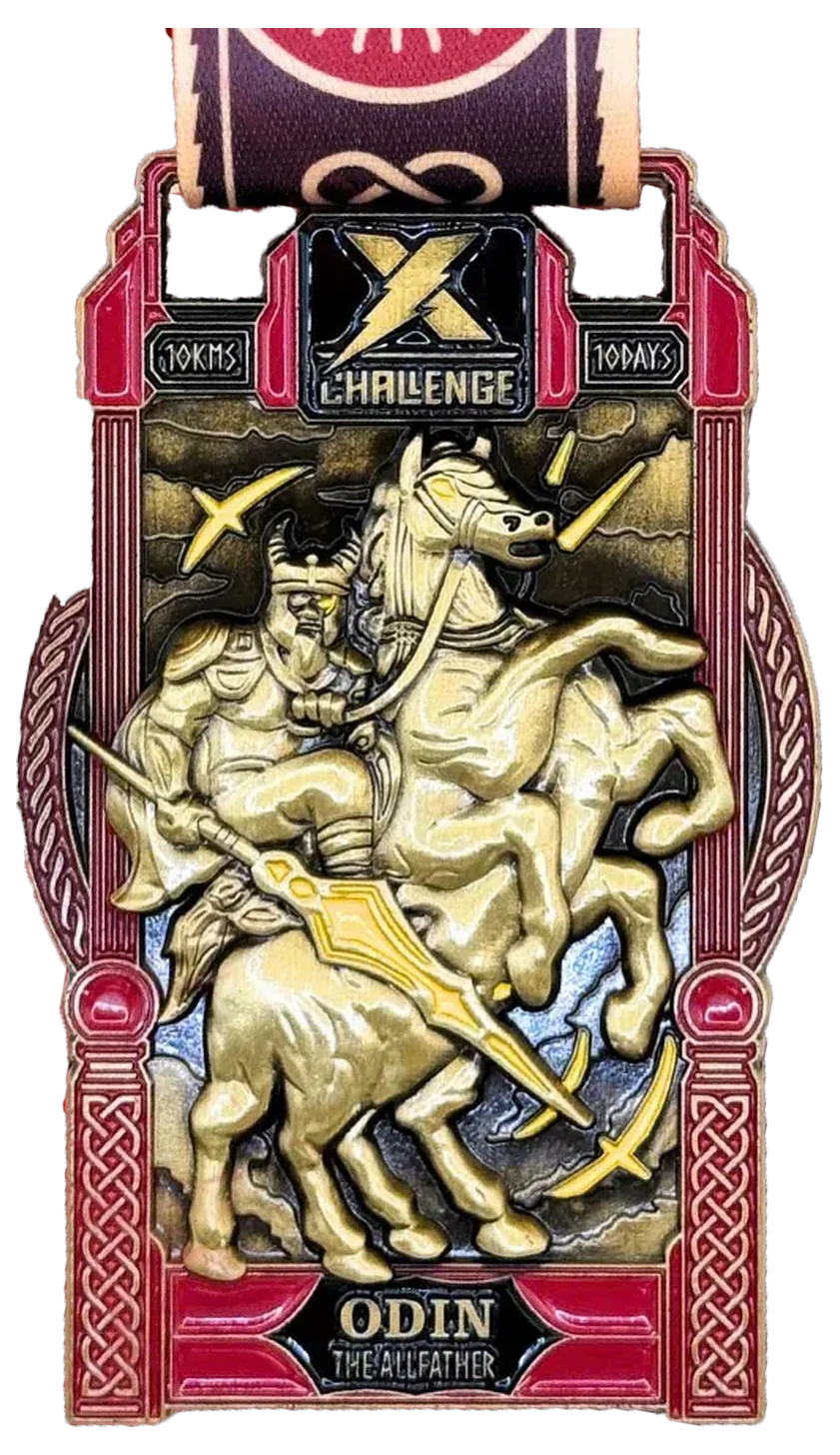
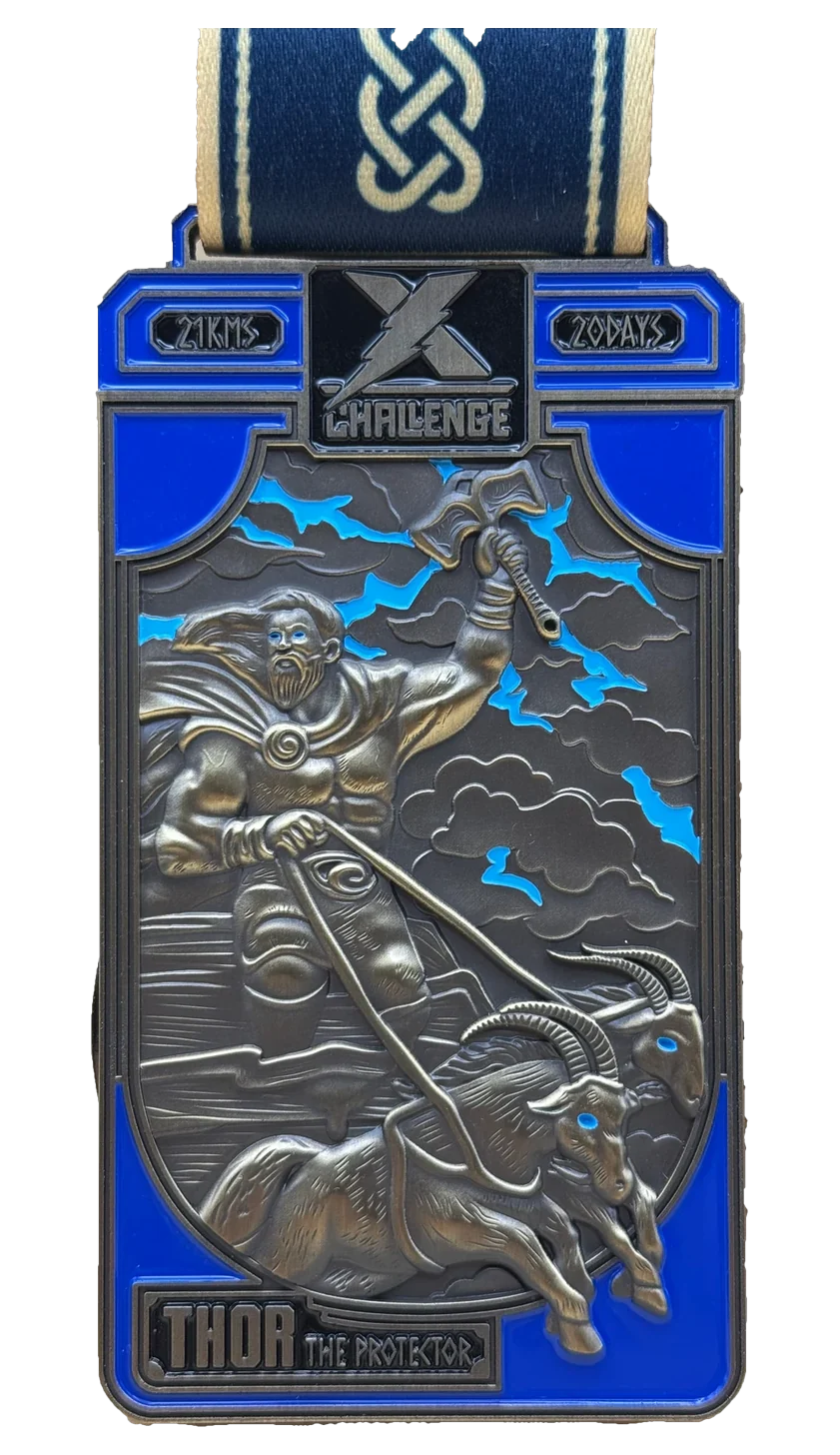
- Legends Of Asgard: die-cast alloy with a hand-finished antique bronze patina in deep relief. LOKI’s green is glow-in-the-dark enamel. ODIN’s eye lifts off on two magnets. THOR’s city turns on a dial of runes.
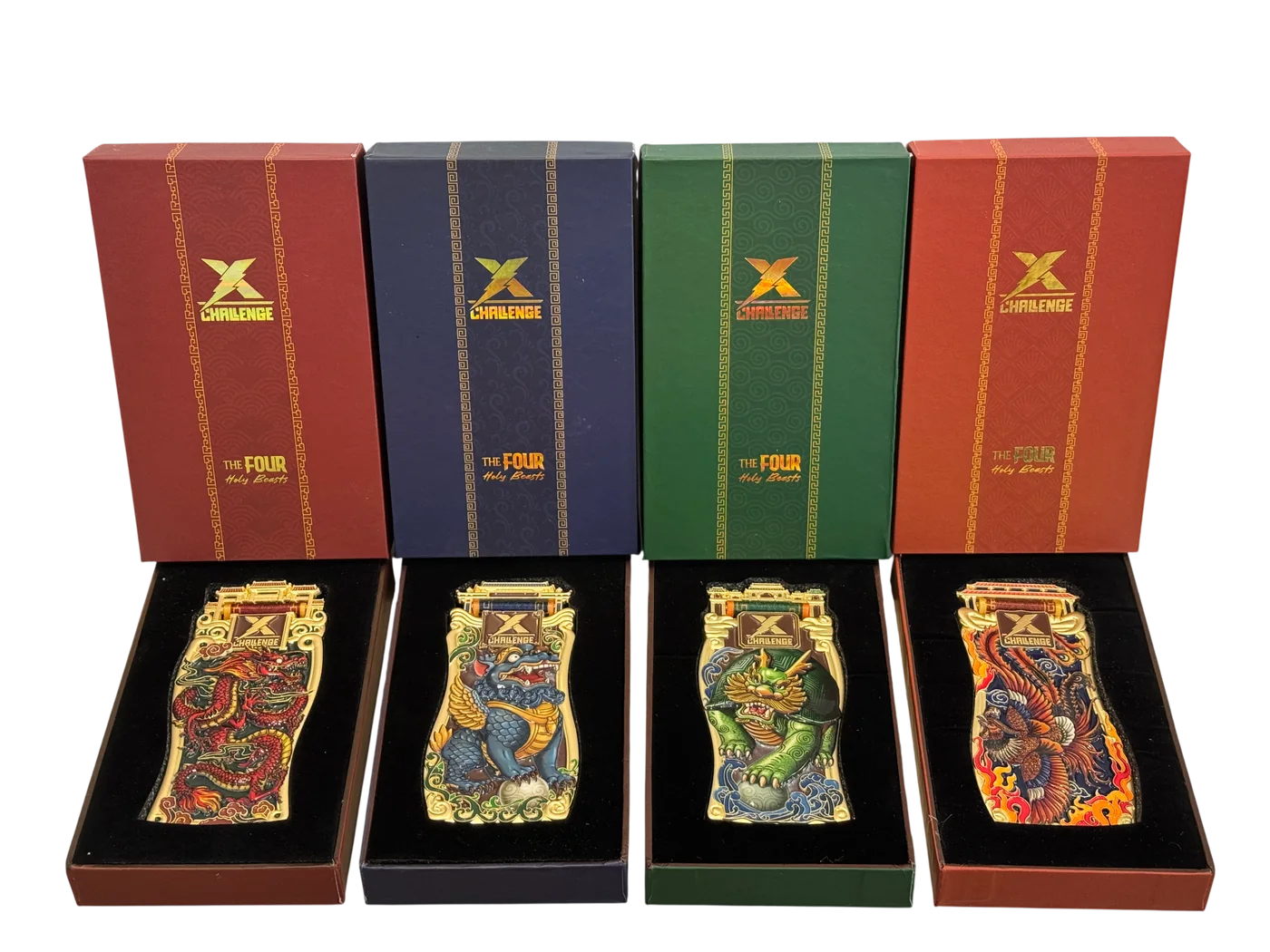
- The Four Holy Beasts: die-cast as temple steles under a tiled roof, the guardian in cloisonné enamel on the front, its blessing on the reverse with your distance struck beneath it.
- Every medal is double-sided and comes with its own ribbon, a gift box and a digital certificate in the app.
Medals ship within the 50 US states, 5–10 business days after the app records the finish, by USPS or UPS with tracking. See every medal, or read how finisher medals are made.
Common questions
- Is die-cast always better than stamped? Not always. It allows deeper relief and more complex shapes, which matters most for medals bought for their design.
- What is the difference between soft and hard enamel? Soft enamel sits below the metal lines and you can feel the ridges. Hard enamel is polished flat.
- Why does a double-sided medal matter? You get two designs, and a stand lets you show either side.
- Should a medal show my distance? If it is a record of your effort, yes. It is what makes it yours.
Sources
- Die casting, IEEE Technology Navigator: the definition of die-casting used above.
- Cloisonné workshop, The Guild of Enamellers: how bent wires form the cells that hold cloisonné enamel.
Challenges from this guide
Or take the whole set

More: all guides · how it works · every challenge