
Getting back into running after a break
Updated · 6 min read

In short: Come back at less than you left off. After a week or two off, you can usually pick up close to where you were with a few easy runs. After a month or more, start at roughly half your old weekly distance and build back over several weeks. After several months, or after injury or illness, start again with walk-run intervals. Run easy, leave a day between runs at first, and judge progress by how you feel the next day, not by your old paces.
How much fitness have you lost?
Fitness fades gradually. A week or two off costs very little, and many runners feel fresher for it. After a month, easy runs feel noticeably harder and your breathing gives you away on hills. After several months, most of the endurance you built is gone, though your know-how, your kit and often some of your strength remain.
The tricky part is that your heart and lungs come back faster than your tendons, bones and joints. You may feel ready for your old long run in week two while your shins and Achilles are still catching up. That gap is where most comeback injuries happen, so let your legs set the pace.
Where to restart
| Time off | Where to restart | Build back over |
|---|---|---|
| Up to 2 weeks | Your usual runs, a little shorter and slower for a few days | About a week |
| 2 to 6 weeks | Roughly half to two thirds of your old weekly distance, all easy | 2 to 4 weeks |
| 6 weeks to 3 months | Short easy runs with walk breaks, about a third to half your old distance | 4 to 8 weeks |
| More than 3 months | Walk-run intervals, as if starting again but moving faster through them | 6 to 10 weeks |
| After injury or illness | Pain-free walking first, then walk-run once your doctor or physical therapist agrees | As advised |
These are rough starting points, not rules. If a stage feels easy and you feel fine the next day, move on. If something aches, hold or step back.
A two-week comeback after a long break
For a break of two months or more, these two weeks get you moving again without asking too much of your legs. Every session is at conversational pace.
| Day | Week 1 | Week 2 |
|---|---|---|
| Monday | Rest | Rest |
| Tuesday | 20 min: jog 2, walk 1, repeated | 25 min: jog 4, walk 1, repeated |
| Wednesday | Brisk 20-minute walk | 10 minutes of strength work |
| Thursday | 20 min: jog 2, walk 1, repeated | 25 min: jog 4, walk 1, repeated |
| Friday | Rest | Rest |
| Saturday | 25 min: jog 3, walk 1, repeated | 30 min: jog 5, walk 1, repeated |
| Sunday | Easy walk | Easy walk or bike ride |
After two weeks, start dropping walk breaks and adding a few minutes a week. If you used to follow a beginner plan like Couch to 5K, it is fine to jump into it at a middle week rather than week one, as long as the first sessions feel easy.
Coming back after injury or illness
- Get the green light first. If a doctor or physical therapist treated the injury, ask them when and how to restart.
- Walk before you run. You should be able to walk briskly for 30 minutes without pain before you start jogging.
- Stop if pain changes how you run. A limp or a shortened stride means your body is protecting something.
- After an illness, give yourself a few easy days once symptoms are gone. See running when sick.
- For common running aches, see knee pain from running and shin splints.
The mental side
The hardest part of a comeback is often comparing yourself to your old self. Your old paces and distances will feel like a standard you are failing. Put them away for a month. Start a new log, treat your first week back as day one, and measure progress from there. Many runners find fitness comes back quicker than it took to build the first time.
Be honest about why you stopped, too. If it was injury, build more slowly. If it was boredom, change something: a new route, a running partner, a new goal. If it was time, plan shorter sessions. See running when you are busy and getting past a running slump.
Signs you are building too fast, and what helps
- An ache in the same spot that is worse the morning after a run.
- Shins, calves or the Achilles that feel tender to touch.
- Easy runs that feel harder this week than last week.
- Poor sleep, or a heavy, flat feeling that lasts all day.
- Dreading the next run when you were keen a week ago.
Any one of these is a signal to hold your current level for a week, or step back to the previous one. Two or more together, or pain that makes you limp, mean rest for a few days and see a doctor or physical therapist if it does not settle.
Your heart and lungs can work harder than your running legs are ready for. Cycling, swimming, rowing and brisk walking let you train them without extra impact. On a rest day from running, 20 to 40 minutes on a bike keeps the fitness coming back while your tendons catch up. On X Challenge, those sessions count toward the same distance total, so a comeback month with plenty of cycling still moves you toward a medal.
Comeback mistakes, rules and a first goal
- Picking up at your old weekly distance because the first run felt fine.
- Running your old routes at your old paces and feeling defeated.
- Doing a long run in week one to prove you still can.
- Skipping strength work because it is not running.
- Stopping again the first time a run goes badly. Bad runs are part of every comeback.
- Leave at least one rest day between runs for the first two weeks.
- Keep every run easy enough to talk.
- Add time before you add speed.
- Judge each run by how you feel the next morning.
- Add strength work twice a week. It helps your legs handle the return.
- Pick a small goal with a date, a few weeks out.
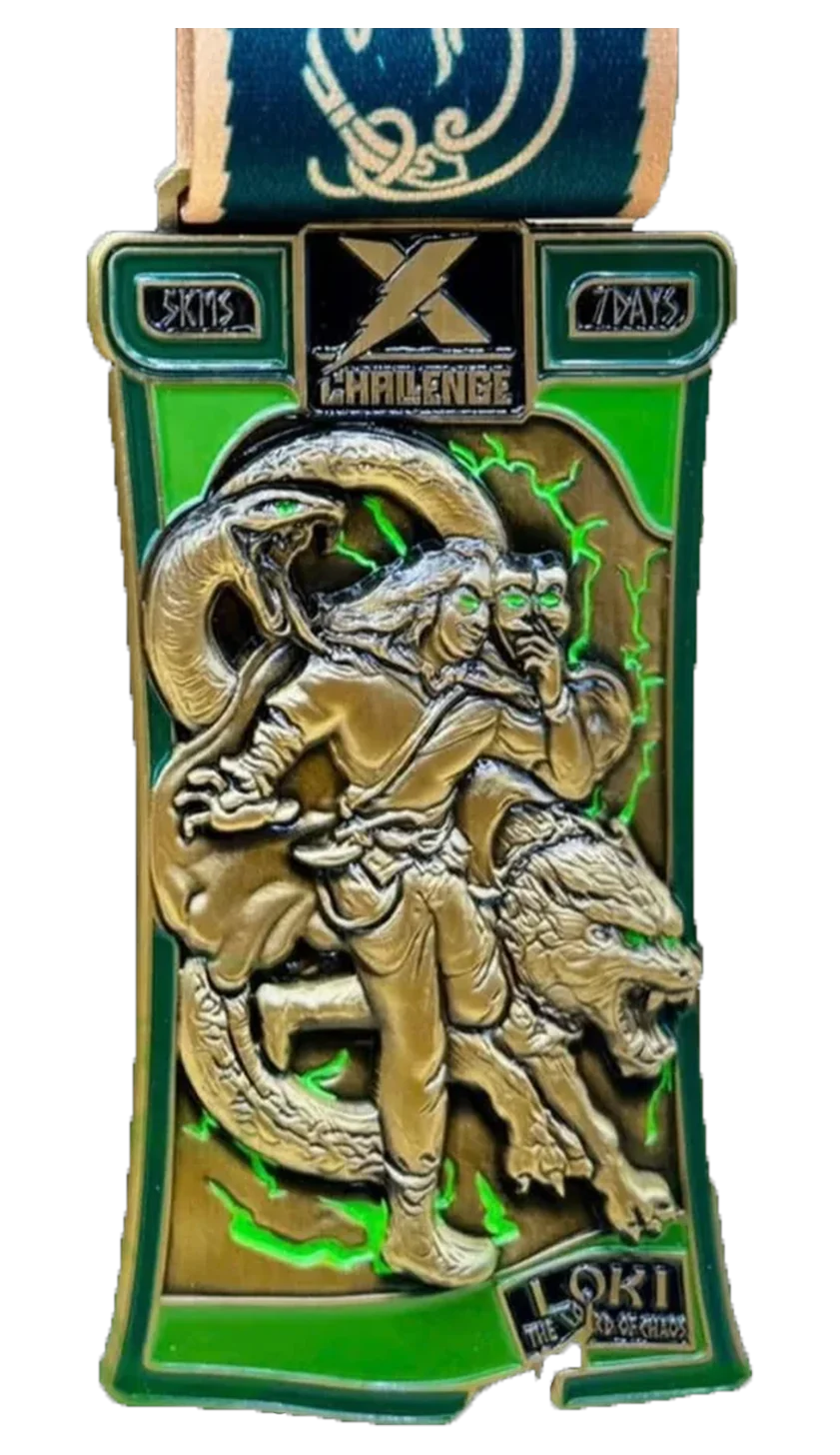
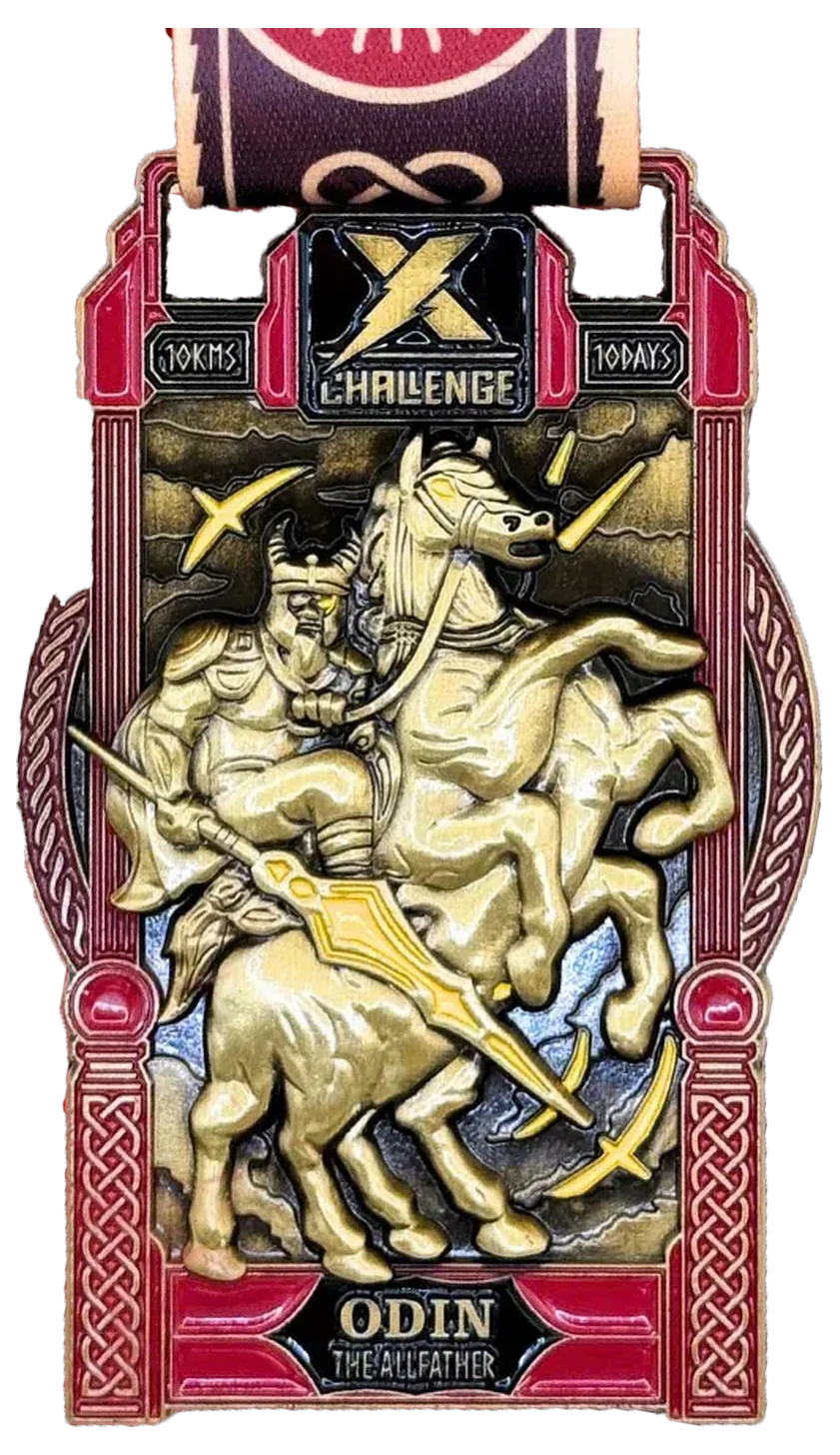
A short goal with a window gives the first weeks a shape. LOKI is 5 km in 7 days, and walking counts, so it fits the first or second week back. Then ODIN, 10 km in 10 days, once you are running most of each session. If you are coming back by walking, TURTLE gives you 39 days to cover 68 km.
Common questions
- How long until I am back to my old level? It varies a lot. Allow at least as many weeks as you took off, and do not rush the last stretch.
- Is it normal to feel slow and heavy? Yes. Easy runs feel hard for the first couple of weeks back. It passes.
- Can I cross-train while I build back? Yes. Cycling and swimming keep your fitness up with less impact.
- Should I see a doctor before restarting? If you stopped because of an injury or illness, or have a health condition, yes.
Sources
This is general information, not medical advice. See a doctor or physical therapist if pain lasts, gets worse, comes with swelling, or if you have a health condition.
Challenges from this guide

Or take the whole set


More: all guides · how it works · every challenge