
Knee pain from running: the common kinds
Updated · 6 min read
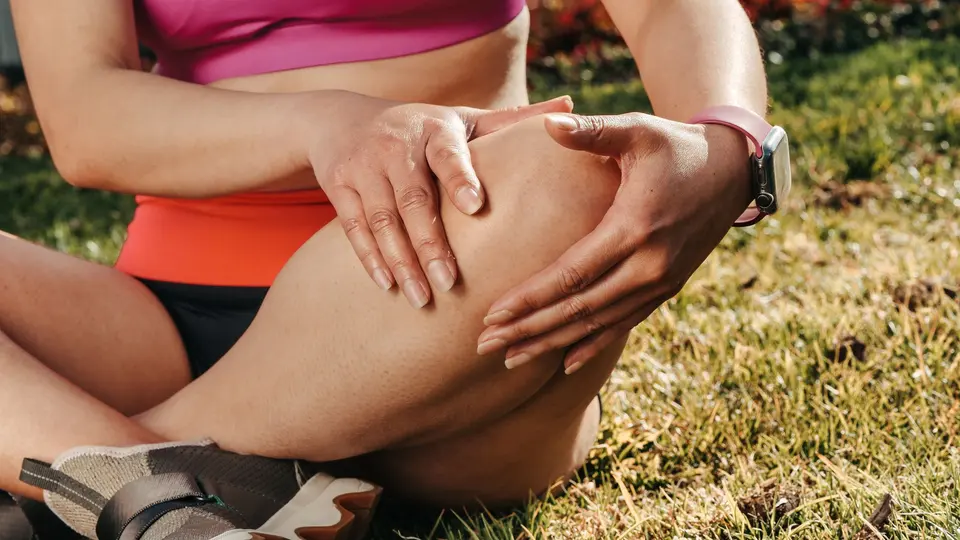
In short: Two kinds of knee pain are common in runners. One is a dull ache around or behind the kneecap, often worse on stairs and after sitting. The other is pain on the outside of the knee that starts after a set distance. Both are usually linked to adding load too fast and to hips and thighs that are not yet strong enough. Running less and strengthening the hips and thighs usually helps. Swelling, locking, giving way, or pain after a twist or fall needs a doctor.
The two common kinds
| Kind | Where | Usually worse when |
|---|---|---|
| Runner’s knee (patellofemoral pain) | Around or behind the kneecap | Going downstairs or downhill, squatting, sitting with bent knees |
| IT band syndrome | Outside of the knee, sometimes up the thigh | After a certain distance, running downhill |
Runner’s knee
AAOS uses patellofemoral pain syndrome as an umbrella term for pain at the front of the knee and around the kneecap. The main symptom is a dull, aching pain that starts gradually. It tends to get worse with stairs, running, jumping or squatting, and after long periods of sitting with your knees bent. Some people notice popping or crackling as well.
The common causes are overuse and a sudden change in how often, how long or how hard you train. A change of shoes or running surface can play a part. Weak quadriceps and hip muscles can let the kneecap track off-center in its groove.
A doctor usually diagnoses it with a physical exam and sometimes an X-ray, according to AAOS. An MRI is only likely if symptoms continue after physical therapy and home exercise. AAOS also notes that shoe inserts can help some people by improving how the foot and ankle line up.
IT band syndrome
The iliotibial band runs down the outside of the thigh to just below the knee. When it is irritated, the outside of the knee hurts, often after the same distance on each run. It is common in runners and cyclists. For the full picture, see IT band syndrome from running.
MedlinePlus notes that it is often worse running downhill and after sitting for a long time with the knee bent. Shorter runs on flat ground, ice, and strength work for the hips and core are the usual first steps, much like runner’s knee.
Other knee pain is less typical of running. Pain below the kneecap, on the tendon, can come from jumping and hill work. Pain on the inner side of the knee, or deep inside the joint after a twist, needs a professional to look at it.
Exercises that usually help
AAOS stresses strengthening and stretching the quadriceps and hip muscles, because they help keep the kneecap stable. These are simple places to start:
- Glute bridges: lie on your back, knees bent, lift and lower your hips. 3 sets of 12.
- Side-lying leg raises for the outer hip. 3 sets of 12 each side.
- Clamshells: lie on your side, knees bent, open the top knee like a book. 3 sets of 15.
- Sit-to-stands from a chair, slow and controlled, knees in line with your toes. 3 sets of 10.
- Step-ups onto a low step, keeping the knee from falling inward. 3 sets of 10 each leg.
- Quad and hip flexor stretches after each session. See six stretches after running.
Do them two or three times a week. Drop any exercise that makes the pain worse. Mild effort in the muscle is fine. Pain in the knee is not.
A three-week strength plan
| Week | Sessions | Exercises |
|---|---|---|
| 1 | 3 a week, about 15 minutes | Glute bridges, side-lying leg raises, clamshells, 2 sets each |
| 2 | 3 a week, about 20 minutes | Add sit-to-stands. Move to 3 sets of everything |
| 3 | 2 to 3 a week, about 20 minutes | Add step-ups. Try single-leg bridges if two-leg bridges are easy |
Strength builds slowly, so give it at least six weeks. Many runners keep a short version going for good, twice a week, because the pain tends to come back when they stop.
Common mistakes
- Resting completely and doing nothing else. The knee usually needs strength work, not only time off.
- Going straight back to hills and stairs. Those load the front of the knee most, so add them last.
- Running with a brace and ignoring the cause. A sleeve may feel nice, but the hips and thighs still need strengthening.
- Deep squats and lunges early on. Keep the range shallow and pain-free at first.
- Sitting for hours with bent knees. Stand up and straighten your legs every half hour.
What to change in your running
- Cut your distance or take a break from the runs that hurt. AAOS suggests switching to cycling, an elliptical or swimming until the pain settles.
- Avoid downhills and stairs for now. Flat routes and a treadmill are easier on the front of the knee.
- Shorten your stride slightly so your foot lands closer to under your body.
- Check your shoes. A recent change of shoe or a worn-out pair can be part of the story.
- Ice after activity can ease pain. NHS advice is up to 20 minutes every two to three hours, wrapped in a towel.
Keep your fitness up meanwhile. Swimming is gentle on most sore knees. Cycling with the saddle high enough that your knee is only slightly bent at the bottom of the stroke often works too. The elliptical suits some people and not others. Use the same rule for all of them: no pain during, and no extra pain the next morning.
Getting back to running
| Stage | What to do | Move on when |
|---|---|---|
| 1 | Walk and do the strength exercises | Stairs and walking are pain-free |
| 2 | Short flat runs mixed with walking, every other day | Two weeks with no pain during or after |
| 3 | Continuous easy runs, still flat | No pain the next morning |
| 4 | Add distance slowly, then gentle hills | Keep the strength work going |
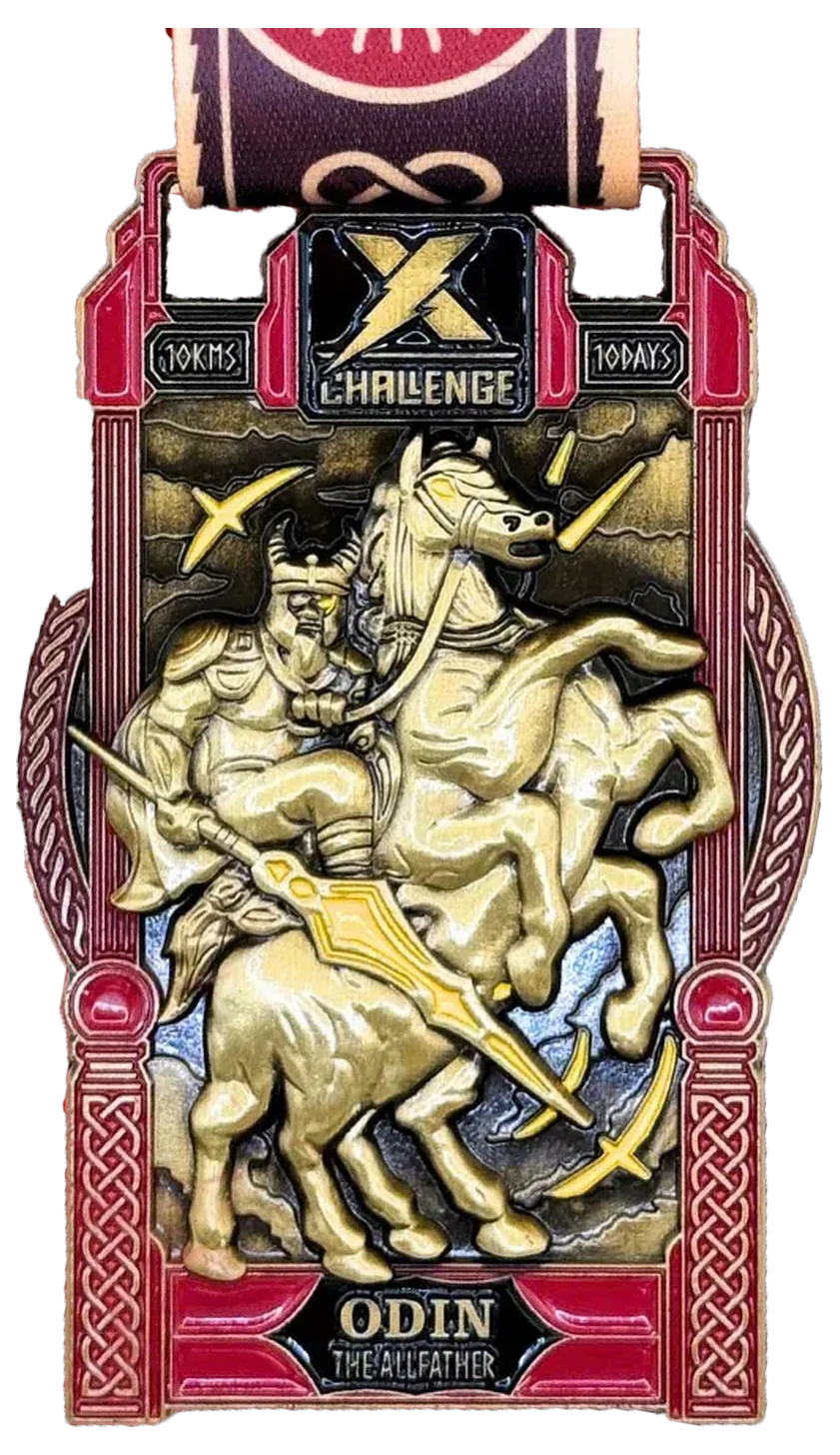
Walking counts on X Challenge while you rebuild. Kylin is 54.7 miles (88 km) over 68 days, only about 0.8 miles (1.3 km) a day, so a sore knee does not have to stop your progress.
When to see a doctor
The NHS advises seeing a doctor if knee pain does not improve within a few weeks, and getting urgent advice if:
- You cannot move the knee or put weight on it.
- The knee is badly swollen or has changed shape.
- The knee locks, gives way, or clicks painfully. Painless clicking is normal.
- You have a fever, or feel hot and shivery, with redness or heat around the knee.
- The pain is very bad, or it started with a twist or fall.
This is general information, not medical advice. See a doctor or physical therapist if pain lasts, gets worse, comes with swelling, or if you have a health condition.
Common questions
- Is running bad for your knees? For healthy people, building up gradually is the key. Most running knee pain comes from doing too much too soon.
- Should I wear a knee brace? Some people find a sleeve comfortable. Strength work does more in the long run.
- Does surgery ever help runner’s knee? AAOS says it is uncommon and kept for severe cases that do not respond to other treatment.
- Can I walk with knee pain? Usually yes, if walking does not make it worse.
Sources
Challenges from this guide

Or take the whole set

More: all guides · how it works · every challenge