
Stretches after running: six in ten minutes
Updated · 6 min read

In short: After a run, walk for three to five minutes to bring your heart rate down, then stretch the muscles that did the work: calves, hamstrings, quads, hip flexors, glutes and lower back. Hold each stretch for about 30 seconds at mild tension. Breathe slowly. Never bounce or push into pain. The six stretches below take about ten minutes. Before a run is different. Long static holds right before running can blunt how well you run, so warm up with brisk walking, leg swings and easy drills, and save the holds for afterward.
What stretching after a run does
A short stretch after a run helps you wind down. Your breathing settles, your heart rate drops, and muscles that feel tight from the run loosen a little. Done most days, it also helps you keep the range of motion in your hips and ankles that running tends to shorten.
Keep your expectations modest. Research has not shown that stretching on its own prevents running injuries or stops next-day soreness. Treat it as maintenance, the way you treat brushing your teeth. Building your distance slowly, sleeping well and wearing shoes that fit do more to keep you running.
The six stretches
| Stretch | Muscles | How | Hold |
|---|---|---|---|
| Wall calf stretch | Calves | Hands on a wall, one leg back, heel down, lean your hips forward | 30 seconds a side, then again with the back knee bent |
| Hamstring fold | Hamstrings | Standing or seated with legs straight, hinge from the hips with a flat back | 30 seconds a side |
| Standing quad pull | Quads | On one leg, pull the other ankle toward your seat, knees together | 30 seconds a side |
| Kneeling lunge | Hip flexors | One knee down, other foot forward, squeeze your glutes and push your hips forward | 30 seconds a side |
| Figure-four | Glutes | Seated or on your back, one ankle over the other knee, draw the legs toward you | 30 seconds a side |
| Child’s pose | Lower back | Kneel, sit back on your heels, reach your arms forward | 30 to 60 seconds |
Yale Medicine describes a static stretch as one held at the point of mild discomfort for at least 30 seconds. Mild discomfort means a clear pull you can breathe through. If you feel sharp pain, tingling or pins and needles, ease off.
How to do each one well
- Calf: keep the back heel on the floor and the back foot pointing straight ahead. Do it once with the back knee straight and once with it slightly bent. The bent-knee version reaches the lower calf, where many runners feel tight.
- Hamstrings: hinge at the hips and keep your back flat. Rounding your back to reach your toes moves the stretch into your spine. A slight bend in the knee is fine.
- Quads: hold a wall or fence for balance. Keep your knees side by side and tuck your tailbone slightly. If you cannot reach your ankle, loop a towel around it.
- Hip flexors: kneel on something soft. The stretch should be at the front of the back hip. Leaning your torso forward loses it, so stay tall.
- Glutes: if lying down, pull the uncrossed thigh toward your chest. You feel it deep in the hip of the crossed leg.
- Lower back: let your forehead rest on the floor or on your hands. Walk your hands to one side, then the other, to stretch along your ribs.
Before a run: warm up, do not hold
Static stretches done before activity may not help and may even take a little off your performance, according to Yale Medicine. A better warm-up copies the movements of running and grows gradually. You can do it before you set off, or after five to ten minutes of gentle jogging.
- Three to five minutes of brisk walking or very easy jogging.
- Leg swings forward and back, ten each leg, holding a wall.
- Leg swings side to side, ten each leg.
- Walking lunges or side lunges, ten each side.
- Hip circles, ankle circles and arm swings that start small and grow.
- A few easy high knees and butt kicks, then start your run slowly.
A ten-minute routine, minute by minute
| Minutes | What to do |
|---|---|
| 0 to 3 | Walk. Let your breathing return to normal. |
| 3 to 4 | Calf stretch, straight knee then bent knee, each side |
| 4 to 5 | Standing quad pull, each side |
| 5 to 6 | Hamstring fold, each side |
| 6 to 7 | Kneeling lunge for the hip flexors, each side |
| 7 to 9 | Figure-four for the glutes, each side |
| 9 to 10 | Child’s pose, then stand up slowly |
Short on time? Do the calf stretch and the kneeling lunge. Calves and hip flexors are the two areas most runners feel first.
If one area always feels tight
- Calves: do the wall stretch twice, straight and bent knee, and add a set of slow calf raises on non-running days. Tight calves often come from a jump in mileage or a switch to a lower shoe.
- Hamstrings: if they feel tight after every run, keep your long runs easy and add glute bridges. Strong glutes take some of the work off the hamstrings.
- Hip flexors: long hours of sitting shorten them. Do the kneeling lunge once in the evening as well as after runs.
- Glutes and outer hip: add the figure-four in the evening and the side-lying leg raise twice a week.
- Lower back: stiffness after running often eases with walking and the child’s pose. Back pain that spreads down a leg, or comes with numbness, needs a doctor.
Tightness that is the same on both sides is common and usually harmless. A tight spot on one side only, that keeps getting worse, is worth showing to a physical therapist.
Common mistakes
- Bouncing to go deeper. Ease into the stretch and hold it still.
- Stretching hard right after a sprint finish. Walk first so your muscles are warm and you are not out of breath.
- Holding your breath. Slow breathing helps the muscle relax.
- Pushing into pain to make it work. More force does not mean more benefit.
- Stretching an injured spot to fix it. Pain in one place needs rest and maybe a professional, not a deeper stretch.
- Skipping it entirely on busy days. Even two minutes for calves and hips is worth doing.
Stretching through a multi-day challenge
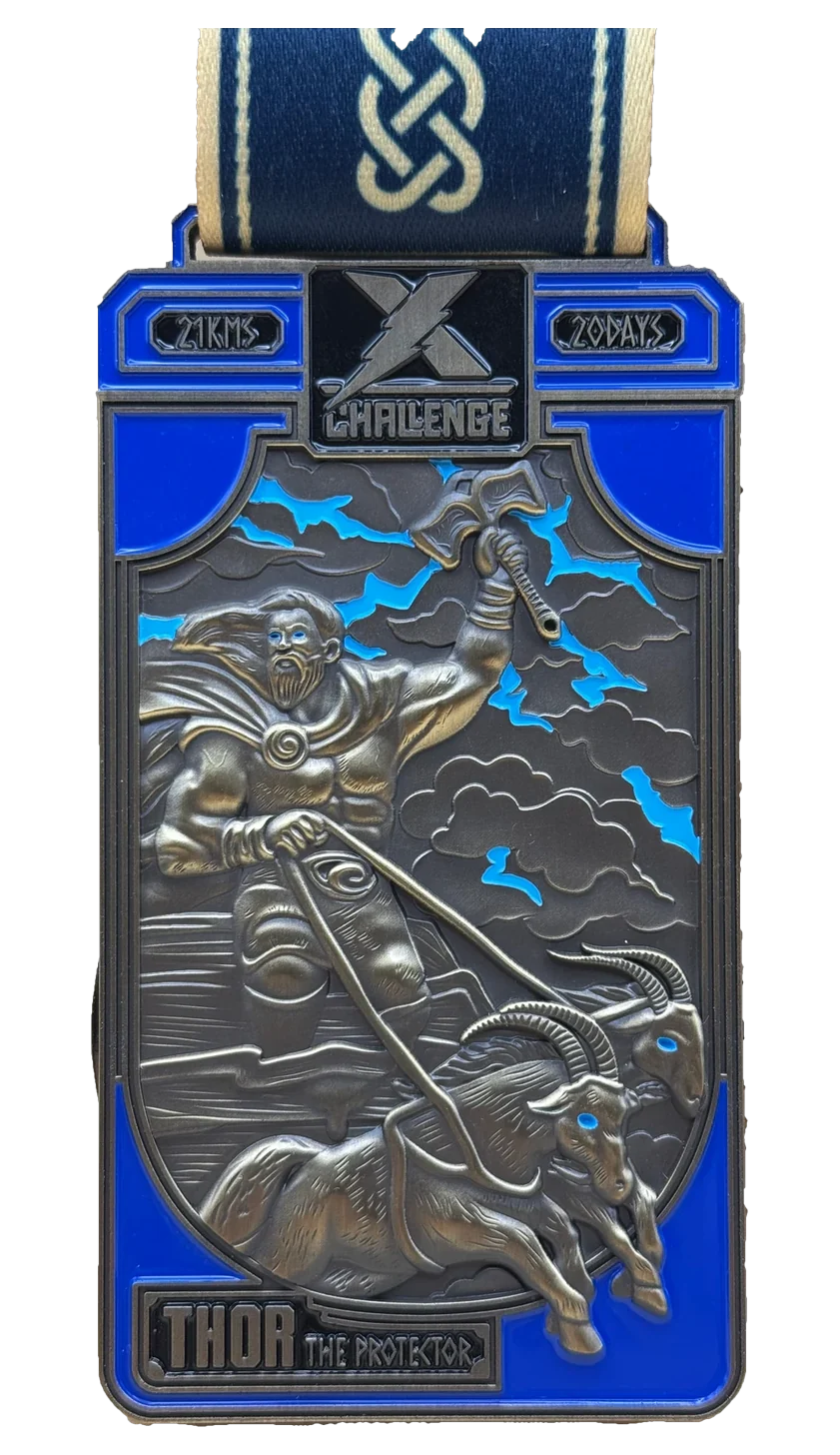
On an X Challenge distance you run or walk on many days in a row, so a short routine after each session adds up. Thor spreads 13 miles (21 km) over 20 days, about 0.7 miles (1.1 km) a day on average. Most of those sessions are short, so the ten-minute routine fits easily. On the days you rest, a gentle stretch or a walk keeps you loose without adding load.
Stretching does not treat an injury. Sharp pain in one spot, pain when you walk normally, or swelling are reasons to stop running for now. See also sore muscles after running, knee pain from running and foam rolling for runners. This is general information, not medical advice. See a doctor or physical therapist if pain lasts, gets worse, comes with swelling, or if you have a health condition.
Common questions
- How long should I hold each stretch? About 30 seconds at mild tension. A tight spot can take a second round.
- Should I stretch before running? Do a dynamic warm-up instead: walking, leg swings, lunges and drills. Save static holds for after.
- Can I stretch on rest days? Yes. A gentle session on a rest day is a good way to stay loose.
- Will stretching stop me getting sore? Probably not by itself. Soreness after a new or longer run is normal and fades within a few days.
Sources
Challenges from this guide


Or take the whole set

More: all guides · how it works · every challenge