
What to eat when you run every day
Updated · 6 min read

In short: When you run every day, eat regular meals with carbohydrate, protein and fruit or vegetables, and never skip the meal after a run. Short daily runs of 20 to 40 minutes need little extra food, just steady eating. Longer daily training needs more carbohydrate: about 5 to 7 grams per kilogram for around an hour a day. Watch for heavy legs, poor sleep, low mood and frequent illness, which can mean you are eating too little. Drink to thirst and keep a snack handy.
Daily running changes the math
One long run a week is easy to recover from. Running every day leaves less time to refill, so small gaps add up. A runner who eats a little too little each day can feel fine for a week and flat by the third. Multi-day challenges and run streaks reward steady eating more than any single meal.
How much carbohydrate
| Training per day | Carbohydrate | For a 150-lb (68 kg) runner |
|---|---|---|
| Light, short easy runs or walks | Normal balanced diet | Your usual meals |
| Moderate, about an hour a day | 5–7 g/kg | About 340–475 g |
| High, 1–3 hours a day | 6–10 g/kg | About 410–680 g |
Most people doing an X Challenge are in the first row. The higher rows are for runners training an hour or more every day, who often under-eat without realizing it.
How much protein
The position paper suggests 1.2 to 2.0 grams per kilogram a day, spread as about 0.3 g/kg after key sessions and every 3 to 5 hours. For a 150-pound runner, that is roughly 20 grams at each meal and after a run. See protein for runners for food examples.
What daily challenge distances mean for food
| Challenge | Distance and window | About per day |
|---|---|---|
| LOKI | 3.1 miles (5 km) in 7 days | 0.4 miles |
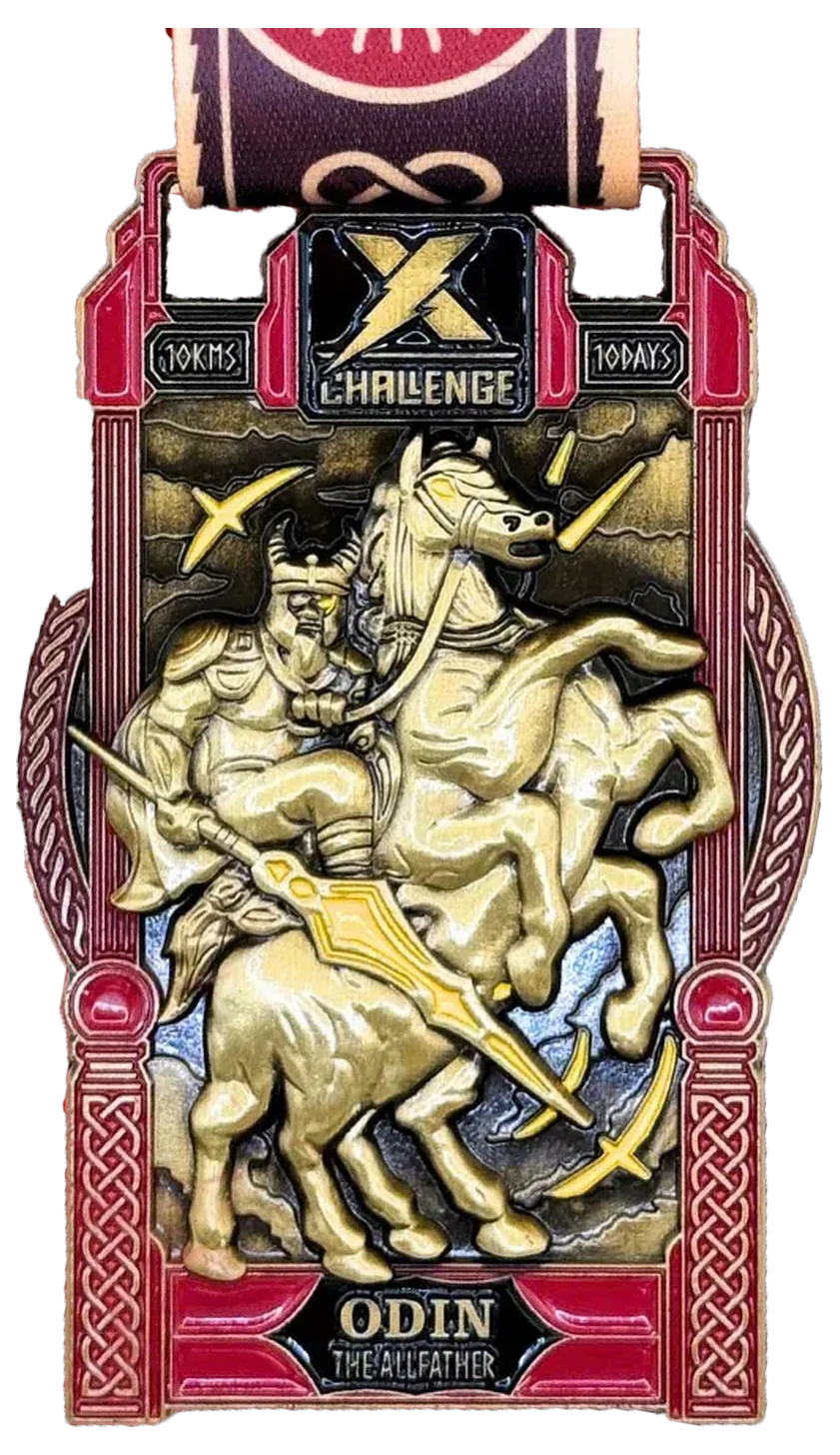
| ODIN | 6.2 miles (10 km) in 10 days | 0.6 miles |
| THOR | 13 miles (21 km) in 20 days | 0.7 miles |
| TURTLE | 42.3 miles (68 km) in 39 days | 1.1 miles |
| KYLIN | 54.7 miles (88 km) in 68 days | 0.8 miles |
| PHOENIX | 86.4 miles (139 km) in 79 days | 1.1 miles |
| DRAGON | 111.2 miles (179 km) in 88 days | 1.3 miles |
None of these daily averages needs gels or special products. They need regular meals. The risk is the opposite one: people who use a challenge to lose weight and cut food at the same time can end up tired and sore. If you bunch the distance into a few long days, eat on those days as you would for a long run.
Two runs in one day, or runs close together
If you run in the morning and again in the evening, recovery time is short. The position paper suggests about 1 to 1.2 grams of carbohydrate per kilogram per hour for the first four hours when there are fewer than eight hours between demanding sessions. Small, regular snacks work well: a bagel, a banana, chocolate milk, rice with chicken.
A simple daily plan
- Breakfast with carbs and protein: oatmeal and yogurt, eggs and toast, or cereal and milk.
- A snack before the run if it is more than three hours after a meal.
- A meal or snack with carbs and protein within an hour or two after the run.
- Lunch and dinner with a protein portion, a carb portion and vegetables.
- Water through the day, more on hot days; pale yellow urine is the goal.
- Sleep seven hours or more if you can. Food works better with sleep.
Signs you are eating too little
- Heavy, dead legs that do not improve with an easy day.
- Poor sleep, low mood or irritability.
- Getting sick more often than usual.
- Losing weight fast without trying.
- In women, missed or irregular periods.
The position paper calls this low energy availability: not enough food left over for normal body functions after exercise. It can affect hormones and bone health. It also notes that eating more can reverse at least some of the effects. If these signs last more than a couple of weeks, eat more and see a doctor or sports dietitian.
A sample week during a challenge
| Day | Run | Food focus |
|---|---|---|
| Monday | 20-minute easy run | Normal meals; protein at breakfast |
| Tuesday | 30 minutes with some faster bits | A snack 60–90 minutes before |
| Wednesday | 20-minute walk or easy run | Normal meals |
| Thursday | 30-minute easy run | Recovery meal within two hours |
| Friday | Rest or a short walk | Normal meals; do not cut carbs just because you rested |
| Saturday | Long run, 60–90 minutes | Carb-rich breakfast; water; a real meal after |
| Sunday | Short easy run | Extra carbs and protein to recover from Saturday |
Adjust the portions to your size and hunger. A bigger runner or a hungrier week needs more. The pattern stays the same: carbs and protein at each meal, a snack before the harder runs, and a real meal after.
Common mistakes
- Eating less on rest days so you can eat more on run days. Your body repairs on rest days.
- Saving all your eating for dinner. Spread food over the day.
- Adding running and cutting food in the same week.
- Ignoring thirst on hot days because the runs are short.
Hot weather and weekend catch-ups
Running every day through a summer heat wave raises both fluid and salt needs. Drink with every meal, eat salty food after sweaty runs, and check your urine color. If you fall behind and plan a long weekend run to catch up, eat for it like a long run: a carb-rich dinner the night before, a tested breakfast, and water and fuel if it lasts over 90 minutes.
Also plan for travel days. Pack snacks like a bagel, fruit and nuts so a run after a long drive or flight is not on an empty stomach.
Rest days still need food
Think of your eating over the whole week. Steady meals across seven days support a challenge far better than a perfect day followed by a skipped one.
Your body repairs and refills on rest days. Eat normal meals with protein and carbohydrate. A slightly smaller portion of carbs is fine if you are less hungry, but skipping meals leaves you flat for the next run.
Common questions
- How many days in a row can I run? Many people run daily with mostly easy days. Listen to aches that do not fade, and take rest when you need it.
- Do I need supplements? The position paper says vitamin and mineral supplements are generally unnecessary for athletes who eat a varied diet. Ask a doctor if you think you are low in iron or vitamin D.
- Should I take rest days? Easy days and rest days help. See rest days and sleep for runners.
- Can I fast intermittently while running every day? Some people do. Keep your runs inside your eating window or keep them easy.
- What if I am never hungry after runs? Try liquids, like milk or a smoothie.
See also what to eat after a run. This is general information for healthy adults. If you have diabetes, heart or kidney disease, are pregnant, or follow a diet set by a doctor, ask your doctor or a registered dietitian first.
Sources
- Nutrition and Athletic Performance, joint position of Dietitians of Canada, the Academy of Nutrition and Dietetics and the American College of Sports Medicine (2016): daily carbohydrate by training load, protein spacing, fast refueling between sessions, low energy availability, supplements.
Challenges from this guide


Or take the whole set


More: all guides · how it works · every challenge