
How much water to drink when running
Updated · 6 min read
In short: For most runs under an hour, drink a glass of water in the two hours before and drink to thirst afterward; you do not need water during the run. For runs over an hour, or in heat, carry water and drink a few sips every 15 to 20 minutes. Pale yellow urine is a simple sign you drank enough. Drinking far more than you sweat can be harmful too, so let thirst guide you.
A simple plan
| When | How much |
|---|---|
| 2–4 hours before | About 2 cups (16 oz / 500 ml), more for larger runners |
| During, under an hour | Usually nothing, unless it is hot and you are thirsty |
| During, over an hour or hot | A few sips every 15–20 minutes, to thirst |
| After | Drink to thirst until urine is pale yellow |
The sports nutrition position paper from Dietitians of Canada, the Academy of Nutrition and Dietetics and the American College of Sports Medicine suggests 5 to 10 milliliters per kilogram of body weight in the 2 to 4 hours before exercise. For a 150-pound (68 kg) runner that is about 12 to 23 ounces. Drinking early gives you time to use the bathroom before you start.
Why too little matters
The same paper says losing more than about 2 percent of your body weight in fluid can hurt aerobic performance and thinking, especially in hot weather. For a 150-pound runner, 2 percent is 3 pounds. On a cool 30-minute run you will not come close. On a two-hour run in a Texas or Florida summer, you might.
Find your sweat rate
Sweat rates vary a lot between people. A simple test tells you roughly how much you lose, so you can plan long runs.
- Weigh yourself without clothes, after using the bathroom, right before a one-hour run.
- Run at your usual pace. Note how many ounces you drink.
- Towel off and weigh yourself again, without clothes.
- Weight lost in pounds times 16, plus what you drank, is about your hourly sweat loss in ounces.
Example: you start at 150 pounds, finish at 148.5 and drank 8 ounces. That is 1.5 pounds, or 24 ounces, plus 8, so about 32 ounces an hour. You do not need to replace all of it during the run. Just avoid losing more than about 2 percent, and do not finish heavier than you started. Repeat the test in summer and winter, because the numbers change with the weather.
Drinking too much is a real risk
Drinking far more than you sweat can dilute the sodium in your blood. This is called exercise-associated hyponatremia. The position paper names over-drinking as its primary cause, and a 2019 review in Medicina says that sodium in sports drinks does not prevent it if you keep over-drinking. Slower runners out for four hours or more are at higher risk, because they have more time to drink.
Early signs include headache, nausea, bloating and feeling unwell, which are easy to mistake for dehydration. Gaining weight during a long run is a warning sign. Confusion, vomiting or a seizure need emergency care right away.
Signs to watch
- Dark urine, headache or dizziness can mean you need more water.
- Nausea, bloating and swelling with lots of water can mean too much, especially without salt.
- White salt marks on your shirt mean you are a salty sweater; electrolytes may help on long runs.
- Feeling thirsty is a useful signal. Drink when you feel it.
How to carry water
- Under an hour: nothing, or plan a loop past a water fountain.
- One to two hours: a handheld bottle or a waist belt with one or two small flasks.
- Over two hours or in heat: a hydration vest, or loops past your car or home where you leave bottles.
- Treadmill: keep a bottle on the console and sip when you want to.
When water is not enough
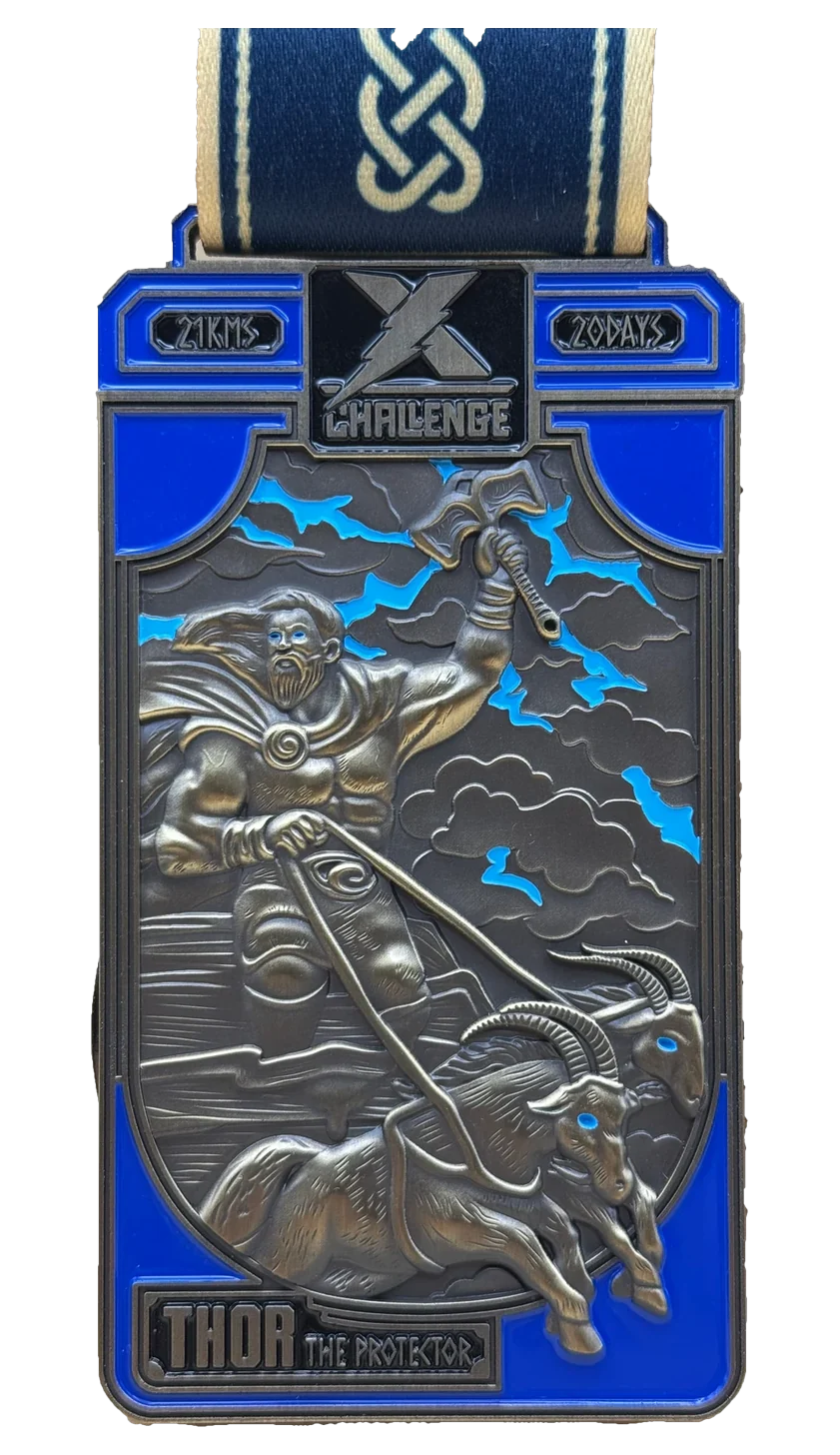
On runs over an hour, or in summer heat, you also lose sodium. See electrolytes for running and running in the heat. Most X Challenge days are short, so water is all you need. If you plan to cover the whole of THOR in one long run, plan your drinks the way you would for a race.
Hot and humid weather
Heat and humidity raise how much you sweat. On a muggy July morning in Atlanta or Houston you can lose far more than on a cool October run. Drink a little more in the hours before, carry water on runs over 45 minutes, and run early or late in the day. Slow your pace too. See running in the heat for heat illness warning signs.
- Plan routes past water fountains or a store.
- Freeze a bottle halfway the night before, then top it up so it stays cold.
- Weigh yourself before and after to see how much you lose in summer.
Older runners
Some medicines and conditions change how your body handles fluid. That is another reason to keep it simple: drink with meals, carry water on longer runs, and let thirst and urine color guide you.
The position paper notes that older athletes can have a weaker sense of thirst and may need a reminder to drink. If you are over 60, drink with meals, sip during long runs even before you feel thirsty, and check the color of your urine. Talk to your doctor if you take water pills or have a heart or kidney condition.
On a long challenge day or race
If you plan a long effort, like a half marathon in one go, set a simple plan in advance. Drink in the hours before, carry a bottle or know where the water stops are, and sip to thirst from early on. Do not try to drink at every single stop if you are not thirsty. Weigh yourself after a few long training runs to learn what works.
Common mistakes
- Drinking a huge amount right before the start. You will need a bathroom in a mile.
- Drinking at every water stop on a cool day, even when not thirsty.
- Carrying no water on a two-hour summer run.
- Judging hydration by a single glass. Look at the whole day.
Common questions
- How do I know if I drank enough on a long run? You finish without strong thirst, your weight is about the same or slightly down, and your urine is pale within a few hours.
- Should I drink 8 glasses a day? There is no single number. Food, coffee and other drinks count, and needs rise with heat and exercise.
- Does coffee dehydrate you? The position paper says the old warnings are overstated for moderate amounts in people who drink it regularly.
- Is clear urine best? No. Pale yellow is the goal. Always clear can mean you are drinking more than you need.
- What about cold water? Cool drinks are pleasant in heat and go down well. Temperature is a matter of taste.
This is general information for healthy adults. If you have diabetes, heart or kidney disease, are pregnant, or follow a diet set by a doctor, ask your doctor or a registered dietitian first.
Sources
- Nutrition and Athletic Performance, joint position of Dietitians of Canada, the Academy of Nutrition and Dietetics and the American College of Sports Medicine (2016): fluid before and after exercise, the 2 percent figure, over-drinking and hyponatremia, caffeine.
- Knechtle and others, Exercise-associated hyponatremia in endurance and ultra-endurance performance, Medicina (2019): over-drinking as the main cause, sports drinks not preventing it, risk with longer events, drinking to thirst.
Challenges from this guide
Or take the whole set

More: all guides · how it works · every challenge