
Achilles tendinitis from running: signs, care and return
Updated · 6 min read
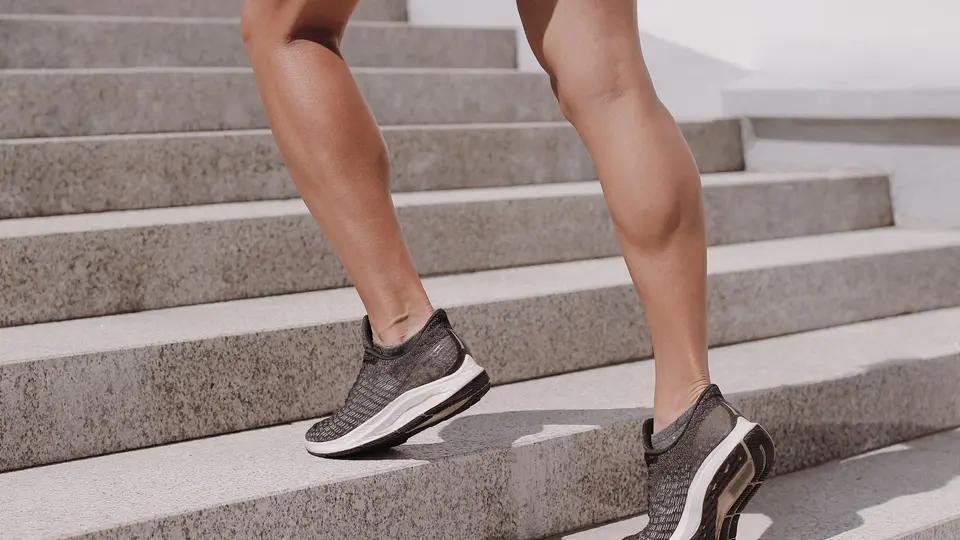
In short: Achilles tendinitis is pain and stiffness in the tendon at the back of your heel, often worst in the morning and after running. It is an overuse injury, usually from a sudden increase in running, a change of shoes or tight calves. Cut back on running, ice the tendon, switch to low-impact exercise, and start gentle calf strengthening. It often takes months to settle. A sudden pop at the back of the heel, or being unable to walk normally, may mean a tear and needs a doctor right away.
Two kinds
The Achilles tendon joins your calf muscles to your heel bone. AAOS describes two kinds of tendinitis, and the difference matters for which exercises are safe.
| Kind | Where | Who |
|---|---|---|
| Noninsertional | The middle of the tendon, a couple of inches above the heel | More often younger, active people, especially runners |
| Insertional | Where the tendon attaches to the heel bone | Any age, often with a bone spur on the back of the heel |
Signs to look for
- Pain and stiffness along the tendon in the morning.
- Pain that gets worse with activity, or bad pain the day after a run.
- Thickening and swelling of the tendon that gets worse through the day.
- Pain at the back of the heel where the shoe presses.
- Trouble standing on one toe, or moving the foot up and down, as MedlinePlus notes.
Why runners get it
- A sudden increase in running, such as more miles, more hills or faster sessions.
- A change of shoes, especially to a lower heel or a much thinner sole.
- Tight calf muscles.
- A bony bump on the back of the heel, which AAOS calls Haglund’s deformity.
It usually builds from repeated stress rather than one bad step. That is good news: changing the load usually helps.
MedlinePlus says your provider will examine your foot and may order an X-ray or MRI. Expect questions about recent changes to your running, your shoes and when the pain is worst.
What to do now
- Cut back or stop the activities that hurt. Swap to cycling, an elliptical or swimming.
- Ice the tendon for 15 to 20 minutes, two to three times a day, wrapped in a cloth. MedlinePlus gives this timing.
- Over-the-counter anti-inflammatory pain relief can ease pain. AAOS notes it does not reduce tendon thickening and says not to use it for more than a month without talking to your doctor.
- Try shoes that do not press on the back of the heel. A heel lift can reduce strain on the tendon.
- When you walk or run, choose soft, smooth surfaces and avoid hills for now.
Exercises that help
Strengthening the calf is the core of recovery. AAOS describes these, and recommends starting under a physical therapist’s guidance:
- Calf stretch: lean on a wall, sore leg straight behind with the heel down, other knee bent. Hold 30 seconds, repeat 10 times. You should feel the calf, not pain in the tendon.
- Two-leg heel drops: stand on the front half of your feet on a step, holding a rail. Rise up, then lower your heels slowly below the step. Repeat 20 times.
- Single-leg heel drops: the same on one leg, only once the two-leg version is easy.
- Add light weight in a backpack as the pain improves.
Important: AAOS says heel drops below the step should not be done for insertional tendinitis, at the heel bone. For that kind, do heel raises on flat ground, and get advice from a physical therapist.
Some discomfort during the exercises is common. As a rough guide, mild pain that settles by the next morning is acceptable. Pain that is worse the next day means do fewer or go back to the easier version.
Common mistakes
- Resting completely for weeks and doing no calf work. Tendons usually need gradual loading to recover.
- Stretching the tendon hard. Gentle calf stretches are enough.
- Switching to flat, thin-soled shoes or going barefoot while it is sore. A little heel height usually feels better.
- Doing hills and speed work early. Both load the Achilles heavily, so bring them back last.
- Ignoring morning stiffness. It is the best daily sign of whether you are doing too much.
Keeping fit while it settles
| Activity | Load on the Achilles | Notes |
|---|---|---|
| Swimming or pool running | Very low | The safest choice in a bad week |
| Cycling | Low | Pedal with the middle of the foot rather than the toes |
| Elliptical | Low to moderate | Keep your heels down |
| Walking on flat ground | Moderate | Counts toward your challenge distance |
Preventing it
- Build your weekly running gradually, and add hills or speed one at a time.
- Keep calf raises in your routine twice a week, even when you feel fine.
- Change shoes gradually. If you move to a lower-drop or lighter shoe, mix it with your old pair for a few weeks.
- Warm up with a few minutes of walking before you run, especially on cold mornings.
- Treat early morning stiffness at the back of the heel as a warning. Cut back for a week before it turns into pain.
Achilles problems tend to come back once you have had one. Keep the heel drops or calf raises going for months after the pain has gone. They take five minutes, twice a week, and they are the best insurance you have.
Getting back to running
| Stage | What to do | Move on when |
|---|---|---|
| 1 | Walking, cross-training and calf exercises | 20 single-leg heel raises with little or no pain |
| 2 | Walk-run on flat ground, every other day | Morning stiffness is no worse the next day |
| 3 | Continuous easy runs, still flat and soft | Two weeks of steady progress |
| 4 | Longer runs, then hills, then faster sessions | Keep the heel drops going |
Morning stiffness is a good guide. If it gets worse the morning after a run, you did too much. A long window like Turtle, 42.3 miles (68 km) over 39 days, leaves room to walk while the tendon settles.
How long it takes, and the warning signs
AAOS says nonsurgical treatment often works but can take several months, and pain can last more than three months. MedlinePlus advises seeing your provider if symptoms do not improve within two weeks of self-care. You may need physical therapy.
- A sudden pop or snap in the back of the calf or heel. AAOS says this may mean the tendon has torn: see a doctor immediately.
- Sudden, severe pain during activity, or being unable to walk normally.
- A sharp pain in the ankle, or trouble standing on your foot.
- Symptoms that get worse despite rest.
This is general information, not medical advice. See a doctor or physical therapist if pain lasts, gets worse, comes with swelling, or if you have a health condition.
Common questions
- Should I stretch my Achilles hard? Gently. MedlinePlus warns that overstretching can injure the tendon.
- Can I run through it? Mild stiffness that eases quickly may allow easy running. Pain that builds means stop.
- Will a walking boot help? A boot may be used briefly for severe pain. AAOS notes that long-term use can weaken the calf.
- Is it the same as plantar fasciitis? No. That pain is under the heel. See plantar fasciitis in runners.
Sources
Challenges from this guide
Or take the whole set

More: all guides · how it works · every challenge