
Plantar fasciitis in runners: heel pain and what helps
Updated · 6 min read
In short: Plantar fasciitis is pain on the bottom of the heel, usually worst with your first steps in the morning or after sitting, then easing as you walk. In runners it often follows a jump in mileage, tight calves, hard surfaces or worn shoes. Most cases get better with simple care: cut back on running, stretch your calves and the sole of your foot, ice the heel, and wear cushioned, supportive shoes. It can take months to settle fully. See a doctor if pain is severe, has not improved after two weeks of self-care, or comes with numbness or tingling.
What it is and how it feels
The plantar fascia is a thick band of tissue along the sole of your foot, from the heel to the toes. It supports your arch. Repeated stress can irritate or damage it where it attaches to the heel bone.
- Pain on the bottom of the foot near the heel, sometimes into the arch.
- Pain on your first steps after getting out of bed or after a long rest, easing after a few minutes of walking.
- Pain that is often worse after exercise than during it, according to AAOS.
- Pain after long periods of standing, and when the sole is stretched, such as climbing stairs.
Why runners get it
AAOS says most cases have no single cause. These are the risk factors it lists, with the running version of each:
| Risk factor | For runners |
|---|---|
| Recent increase in activity | More miles, more runs or a new long run |
| Repetitive high-impact activity | Running on most days, often on pavement |
| Long periods standing on hard surfaces | A standing job on top of your runs |
| Tight calf muscles | Common in runners who skip calf stretches |
| Flat feet or high arches | Shoes that do not suit your foot shape |
| Age and body weight | AAOS says it is most common between 40 and 60 |
Heel spurs show up on some X-rays, but AAOS says they do not cause the pain, and most people with heel spurs have no heel pain at all.
What to do in the first two weeks
- Cut back or pause running. Switch to cycling or swimming, which load the heel much less.
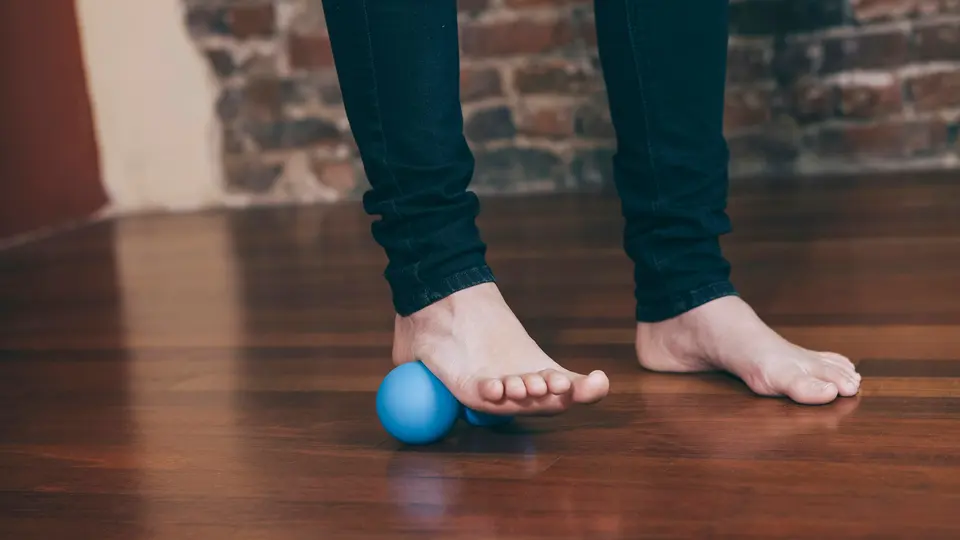
- Ice the heel for up to 20 minutes, a few times a day, wrapped in a towel. A frozen water bottle rolled under the arch works too.
- Stretch your calves and the sole of your foot several times a day, especially before your first steps in the morning.
- Wear cushioned shoes with good arch support all day, including at home. Heel pads or insoles can help.
- Avoid going barefoot on hard floors, flip-flops, backless slippers and high heels, as the NHS advises.
- Over-the-counter anti-inflammatory pain relief can help. AAOS says not to take it for more than a month without talking to your doctor.
Stretches that help
- Calf stretch at a wall: back leg straight, heel down, lean forward. AAOS describes holding for 10 seconds and repeating 20 times on each foot.
- Bent-knee calf stretch: the same position with the back knee bent, to reach the lower calf.
- Plantar fascia stretch: sit, cross one foot over the other knee, and pull your toes back toward your shin until you feel a stretch in the arch. Hold 10 seconds, repeat 10 times.
- Towel stretch in bed: before you stand up in the morning, loop a towel around the ball of your foot and gently pull your toes toward you.
- Arch roll: roll the sole of your foot over a ball or a frozen bottle for a minute or two.
Common mistakes
- Walking barefoot around the house in the morning, the time the heel is most irritable.
- Testing the heel with a long run every few days to see if it has gone. Short, easy runs tell you the same with less risk.
- Stretching only the foot. Tight calves pull on the heel too, so stretch both.
- Stopping the stretches once the pain fades. Keep them going for a few months to stop it coming back.
- Waiting a year before seeing anyone. If two weeks of self-care has not helped, get it looked at.
Running with plantar fasciitis
Many runners keep some running going while it settles, but only if it stays mild. Use this as a guide:
| How the heel feels | What to do |
|---|---|
| Morning stiffness only, gone within minutes, no pain running | Short, easy runs on soft ground are usually fine |
| Pain during the run that stays mild and does not build | Shorten runs, run every other day, add walk breaks |
| Pain that builds as you run, or limping afterward | Stop running and cross-train for two weeks |
| Pain on every step, or worse each morning | Rest and see a doctor or podiatrist |
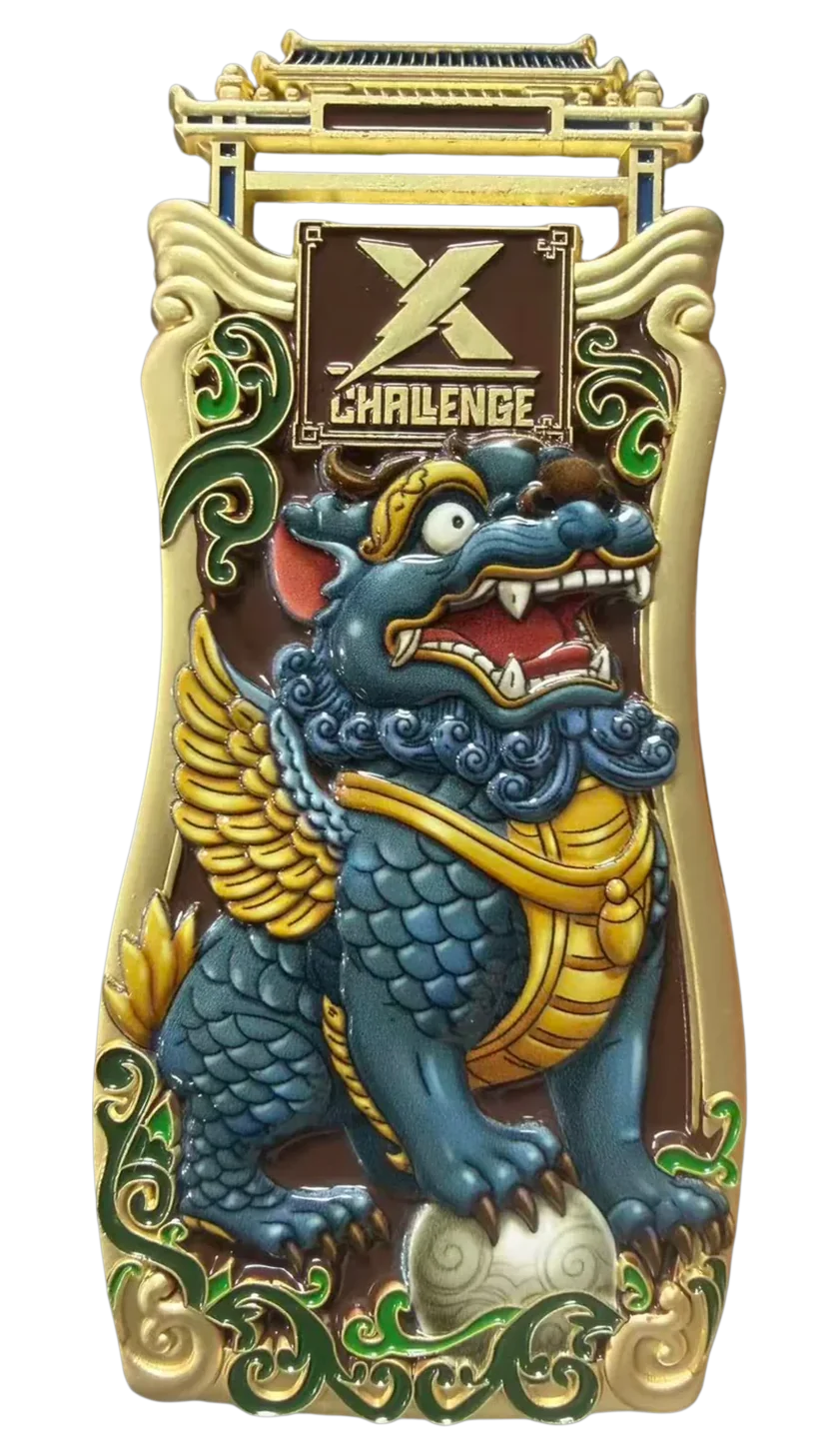
Walking counts toward an X Challenge distance, and a bike ride on an indoor trainer keeps your fitness up. If your challenge window is long, such as Kylin, 54.7 miles (88 km) over 68 days, a couple of weeks of walking and cycling will not cost you the medal.
When you do run, warm up with a few minutes of walking and the foot stretches first. Pick grass, a track or a treadmill over concrete. Keep the pace easy and skip hills and speed work until mornings are pain-free for a week.
How long it takes
Shoes matter more than usual with heel pain. Choose a running shoe with a cushioned heel and firm support under the arch, and replace pairs that are worn flat. Off-the-shelf heel cups or arch-support insoles are worth trying before custom orthotics. Wear supportive shoes at home too. A few days barefoot on hard kitchen floors can undo a week of care.
Plantar fasciitis is slow. AAOS reports that more than 90% of patients improve within 10 months of starting simple treatment. Many people feel clearly better within weeks, but expect some ups and downs. If it does not improve, a doctor may suggest physical therapy, night splints, injections or shockwave therapy. AAOS says surgery is generally only considered after 12 months of nonsurgical treatment.
When to see a doctor
- The pain is severe or stops you doing normal activities.
- It has not improved after two weeks of self-care, or keeps coming back.
- You have tingling or loss of feeling in your foot.
- You have diabetes. The NHS notes that foot problems can be more serious with diabetes.
- The pain is at the back of the heel, or in both feet at once with other joint pain. Those patterns point to other causes.
- The pain started suddenly, with a pop or swelling, or you cannot put weight on the foot.
This is general information, not medical advice. See a doctor or physical therapist if pain lasts, gets worse, comes with swelling, or if you have a health condition.
Common questions
- Will new running shoes fix it? Shoes with good cushioning and arch support can help. They work best with stretching and less running.
- Is it the same as heel pain at the back of the heel? No. Pain at the back is more often the Achilles tendon. See Achilles tendinitis from running.
- Should I ice or heat it? Ice after activity is the usual advice. See ice or heat after running.
- Can I prevent it? Build mileage gradually, stretch your calves, and replace worn shoes.
Sources
Challenges from this guide
Or take the whole set


More: all guides · how it works · every challenge