
What is a brisk walking pace?
Updated · 6 min read
In short: Brisk walking is about 3 to 4 miles an hour for most adults, or a 15- to 20-minute mile. The CDC counts walking at 2.5 mph or faster as moderate intensity, and the NHS puts brisk at about 3 mph. The easiest check is the talk test: at a brisk pace you can talk but not sing. Another is your step rate, since about 100 steps a minute marks moderate effort in adults. Effort matters more than speed, so an older or less fit walker may be brisk at a slower pace.
Three ways to check your pace
- The talk test. Walk at the pace you think is brisk and try to talk. If you can speak in full sentences but could not sing a song, you are at a moderate, brisk effort. If you can sing, speed up. If you can only say a few words, ease off.
- Your step rate. Count your steps for 30 seconds and double it. A lab study of adults aged 21 to 40 found that about 100 steps a minute matched moderate intensity, and about 130 matched vigorous. Many phones and watches show this as cadence.
- A measured mile. Walk four laps of lane one on a school track at your brisk effort and time it. Twenty minutes or faster is 3 mph or more. Fifteen minutes is 4 mph.
Use the talk test most of the time, since it adjusts for hills, heat and how tired you are. Check your step rate or a measured mile now and then to see how your pace is changing.
Brisk walking pace chart
| Speed | Pace per mile | Pace per km | How it usually feels |
|---|---|---|---|
| 2 mph | 30:00 | 18:39 | A stroll, easy to chat and look around |
| 2.5 mph | 24:00 | 14:55 | Moderate for many older or new walkers |
| 3 mph | 20:00 | 12:26 | Brisk for most adults, breathing a little harder |
| 3.5 mph | 17:09 | 10:39 | Clearly brisk, arms swinging, talking in sentences |
| 4 mph | 15:00 | 9:19 | Fast walking, talking in short phrases |
| 4.5 mph | 13:20 | 8:17 | Very fast, close to where most people would rather jog |
The same speed feels different to different people. A fit 30-year-old may stroll at 3 mph while a 70-year-old at the same speed is working hard. Hills, heat, a heavy coat and tired legs all push the effort up. That is why the CDC and NHS describe brisk walking by how it feels, and why the talk test is the best guide for you.
What brisk walking does for you
The CDC recommends that adults get 150 minutes a week of moderate activity, and brisk walking is its first example. Regular activity at that level is linked to a lower risk of heart disease, stroke, type 2 diabetes and several cancers, stronger bones and muscles, better sleep and less anxiety. Some of the benefits show up after a single session, such as lower short-term anxiety.
The NHS notes that even 10 minutes of brisk walking a day has health benefits and counts toward the weekly total. You do not need to walk fast all the time. A daily walk with a brisk stretch in the middle is a good place to start.
How to walk faster
- Take quicker steps, not longer ones. Reaching forward with your heel acts as a brake. Short, fast steps are how race walkers move.
- Bend your elbows to about 90 degrees and swing your arms front to back, not across your body. Your legs follow your arms.
- Stand tall with your chin level and your eyes about 20 feet ahead. Slouching shortens your stride and makes breathing harder.
- Land on your heel and roll through to push off with your toes. A strong push-off gives you speed for free.
- Wear light, flexible shoes. Heavy boots slow you down on pavement.
- Add short fast stretches: one minute quick, two minutes normal, five times in a walk. Over a few weeks your normal pace rises.
Change one thing at a time and give it a week. Arm swing first, then quicker steps, then the fast stretches. If your shins ache when you walk faster, slow down a little and build up more gradually. That ache is common when the muscles at the front of your shin are not used to quick steps.
A four-week plan to 150 brisk minutes
| Week | Walks | Brisk part of each walk | Brisk minutes a week |
|---|---|---|---|
| 1 | 5 walks of 20 minutes | 10 minutes in the middle | 50 |
| 2 | 5 walks of 25 minutes | 15 minutes | 75 |
| 3 | 5 walks of 30 minutes | 20 minutes | 100 |
| 4 | 5 walks of 35 minutes | 30 minutes | 150 |
Start and end each walk with a few easy minutes. If week 1 is too much, start with three walks and add one each week. If you already walk most days, skip ahead. If you have a health condition, are pregnant, or have not exercised in a long time, check with a doctor before you start.
Brisk walking and a challenge
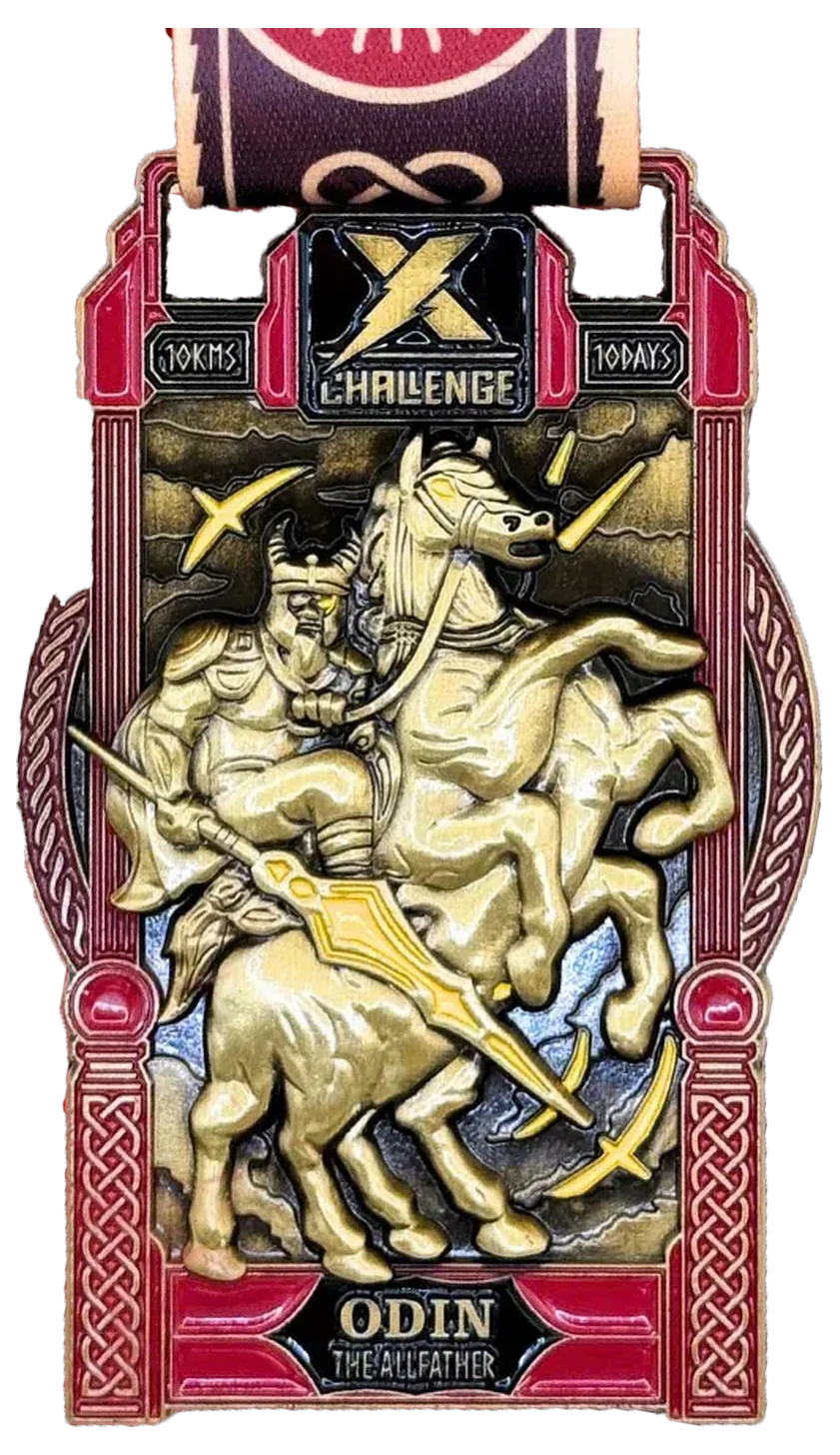
A distance challenge gives your brisk walks a target. At about 3.5 mph, TURTLE averages 1.7 km a day, or roughly 20 minutes of brisk walking, for 39 days. ODIN is 10 km in 10 days, about four 30-minute brisk walks across the window.
Brisk walking also makes the long medals more realistic. The faster your normal pace, the fewer minutes each kilometer takes. Record every walk in the app, brisk or not. They all count toward the total.
Common mistakes
- Going all out on day one. Brisk is moderate, not as fast as you can go.
- Overstriding to go faster. It jars your knees and slows you down.
- Judging by speed alone on hilly routes. Use the talk test instead.
- Holding a phone in your hand the whole way. It stops your arm swing. Use a pocket or a belt.
- Only ever walking at one pace. Mix easy days with brisk ones.
Common questions
Is a 20-minute mile brisk? For most adults, yes. It is 3 mph, which the NHS gives as about brisk walking speed.
Is brisk walking as good as running? For meeting the activity guideline, brisk walking counts as moderate activity and running as vigorous. Running gets there in fewer minutes, but walking is easier on joints and easier to keep up.
Does walking uphill count as brisk? Yes, if it gets you to the talk-test effort. You may be brisk at 2.5 mph on a steep hill.
Should every walk be brisk? No. Easy walks still add to your daily movement and give your legs a lighter day. Two or three brisk walks a week plus easy ones in between is a good balance for a beginner.
Sources
- How to Measure Physical Activity Intensity (CDC): walking at 2.5 mph or faster counts as moderate intensity, and during moderate activity you can talk but not sing.
- Walking for health (NHS): brisk walking is about 3 mph, and even 10 brisk minutes a day counts.
- Walking cadence (steps/min) and intensity in 21–40 year olds: CADENCE-adults (Tudor-Locke and others, 2019): about 100 steps a minute marks moderate intensity, and about 130 marks vigorous.
- Adult Activity: An Overview (CDC): adults need 150 minutes of moderate activity a week, such as brisk walking, plus muscle-strengthening on two days.
- Benefits of Physical Activity (CDC): lower risk of heart disease, type 2 diabetes and several cancers, better sleep, and less short-term anxiety.
Challenges from this guide


Or take the whole set


More: all guides · how it works · every challenge