
IT band syndrome from running: outer knee pain explained
Updated · 6 min read
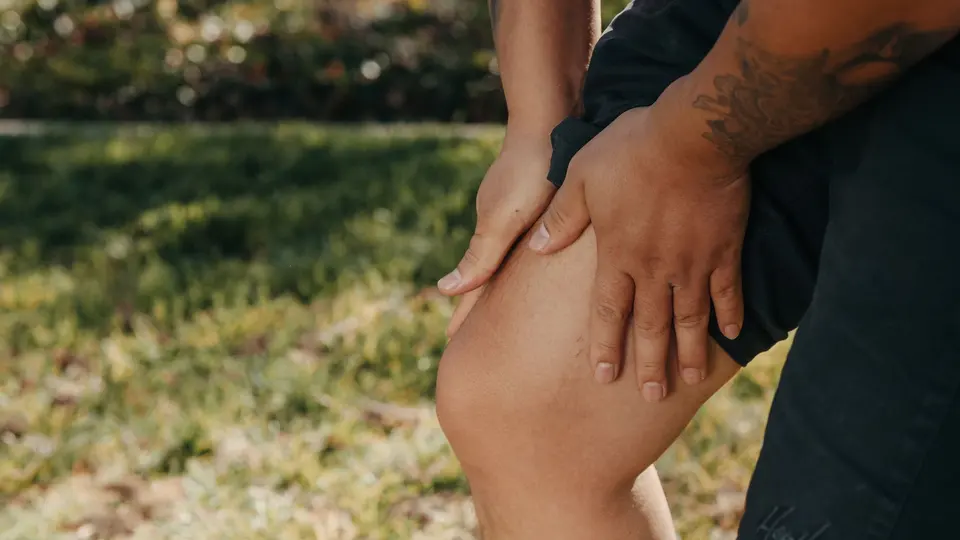
In short: IT band syndrome is pain on the outside of the knee, sometimes the hip, that often starts at the same point on every run and gets worse running downhill. The iliotibial band, a tendon along the outer thigh, becomes irritated where it passes over bone. It usually settles with shorter runs or a break, ice, and strengthening for the hips and core. Return gradually once those exercises are pain-free. See a doctor if the pain gets worse or has not improved within a few weeks.
What the IT band is
The iliotibial band runs from the outside of your hip down the thigh to just below the knee. MedlinePlus describes IT band syndrome as the band becoming swollen and irritated from rubbing against bone at the outside of the hip or knee. A small fluid-filled sac between the band and the bone can become painful too.
A 2020 review in the International Journal of Sports Physical Therapy says it accounts for roughly 10% of running injuries and is the second most common cause of pain in runners, after pain around the kneecap.
How it feels
- Mild pain on the outside of the knee or hip early in a run that fades as you warm up, at first.
- Over time, pain that comes on at a predictable point and makes you stop.
- Worse running downhill, and after sitting for a long time with the knee bent.
- Tenderness on the bony outer part of the knee when you press it.
- Usually no swelling inside the knee itself, and no locking or giving way.
Pain at the front of the knee is more likely runner’s knee. See knee pain from running for the difference.
A doctor or physical therapist usually diagnoses it from your symptoms and an exam, MedlinePlus says. Imaging such as an X-ray, ultrasound or MRI is only needed if the picture is unclear. Tell them where the pain starts, at what point in your runs, and what you changed in your training before it began.
Why runners get it
Running and cycling bend the knee thousands of times, which is why both groups get it. MedlinePlus lists these causes and contributors:
- Sudden changes in activity level, such as a jump in weekly miles.
- Not warming up, and poor exercise form.
- Weak or imbalanced core and hip muscles.
- A tight IT band, and bowed legs.
- Running repeatedly on a sloped road edge or the same direction on a track, a common runner’s trigger.
The 2020 review cautions that research on causes is still thin. Many factors have been linked to it, but cause and effect has not been shown for most of them.
What to do first
- Run shorter distances than usual, on flat ground. If the pain continues, stop running for now and swim or walk instead.
- Ice the outside of the knee for 15 minutes every two to three hours, as MedlinePlus advises, wrapped in a cloth and never directly on skin.
- Use mild heat before your stretching and strength exercises, and ice after activity if it hurts.
- Over-the-counter pain relief can help. Check with your doctor first if you have heart disease, high blood pressure, kidney disease, or a history of stomach ulcers or bleeding.
- Avoid downhills, stairs and long periods sitting with the knee bent.
Strength and stretching
Physical therapists usually focus on the hip and core muscles, plus stretches for the outer thigh. These are common choices. Do them every other day:
- Side-lying leg raises: top leg straight, lift it slightly behind you. 3 sets of 12 each side.
- Clamshells: lie on your side, knees bent, open the top knee. 3 sets of 15.
- Glute bridges, progressing to single-leg bridges. 3 sets of 10.
- Side plank from the knees or feet, 20 to 30 seconds each side.
- Hip hikes: stand on a step on one leg, let the other hip drop, then lift it level. 3 sets of 12.
- Standing IT band stretch: cross the sore leg behind the other and lean your hips toward the sore side. Hold 30 seconds.
Foam rolling the bony outer knee usually hurts and has little evidence behind it. If rolling helps you, roll the glutes and the fleshy muscle near the hip instead. See foam rolling for runners.
Changes to your routes and training
- Run out-and-back on the same side of a sloped road, or switch sides, so one leg is not always on the lower edge.
- On a track, change direction every few laps.
- Walk the steep downhills for now. Downhill running bends the knee into the range where the band is most irritable.
- Shorten your stride a little and land with your foot closer to under your body.
- Split one long run into two shorter ones on the same day if your challenge needs the distance.
- Check your shoes. A pair that has collapsed on one side can change how your leg lines up.
Common mistakes
- Running until it hurts, every time. Each painful run irritates the band again. Stop before the usual pain point.
- Stretching and rolling the band and skipping hip strength. The strength work tends to matter more.
- Returning straight to long runs because short ones felt fine. The pain often shows up at a set distance, so build length slowly.
- Switching to hard cycling while it heals. Cycling bends the knee repeatedly too.
Getting back to running
MedlinePlus advises returning once you can do the stretching and strengthening exercises without pain, then increasing distance and speed slowly.
| Step | Run | Move on when |
|---|---|---|
| 1 | Ten minutes easy on flat ground, every other day | Three runs with no pain |
| 2 | Fifteen to twenty minutes, still flat | No pain during or the next day |
| 3 | Thirty minutes, change direction on loops and tracks | One week pain-free |
| 4 | Longer runs, then gentle hills last | Keep the hip exercises twice a week |
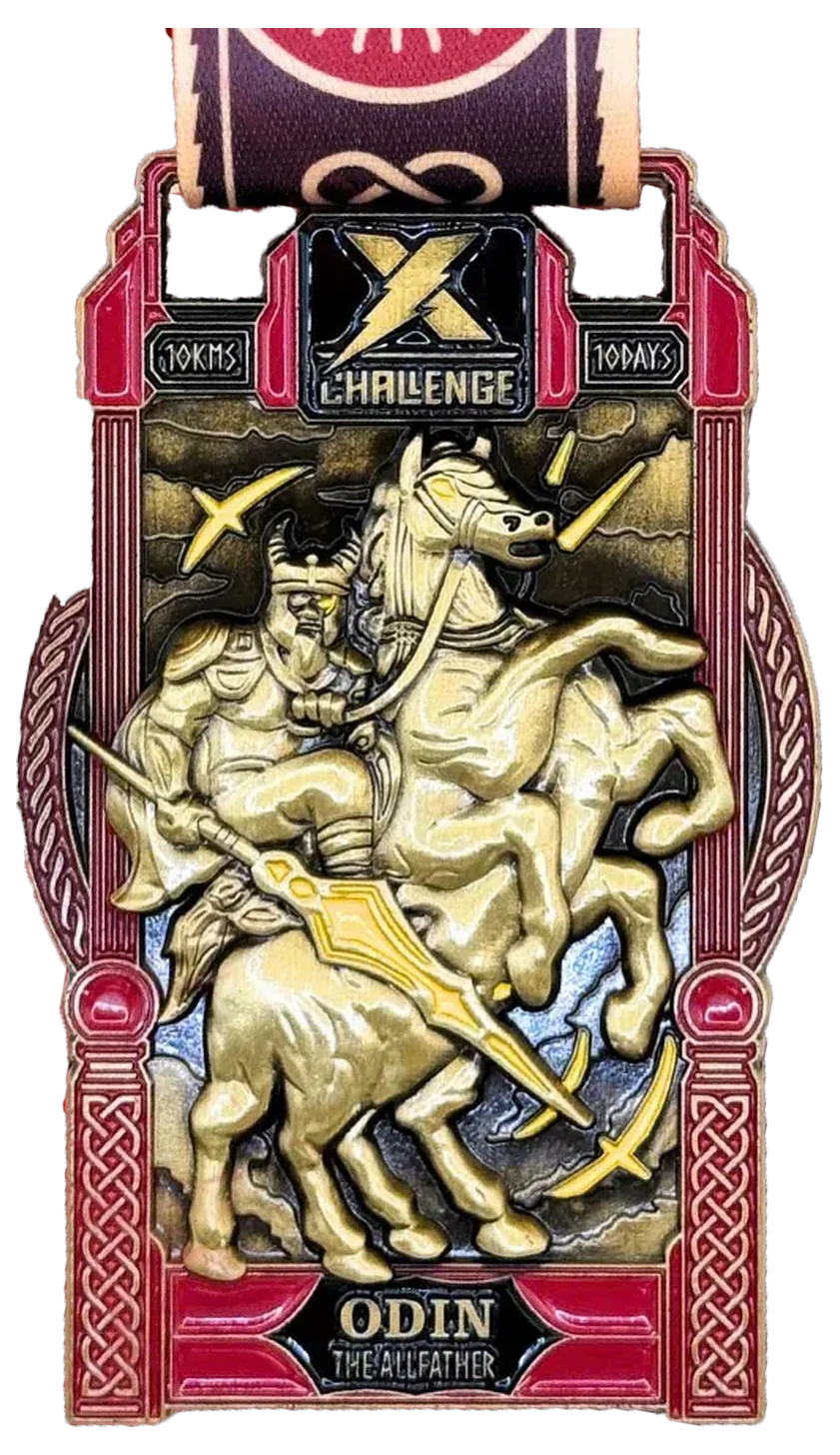
Stop each run before the point where pain usually starts. On a challenge like Odin, 6.2 miles (10 km) in 10 days, several short runs and walks add up as well as one long one.
When to see a doctor or physical therapist
- The pain gets worse, or does not improve within a few weeks.
- The knee swells, locks or gives way. Those point to something other than the IT band.
- Pain started with a twist, fall or blow.
- You keep getting it every time you build up your distance.
MedlinePlus says most people do not need surgery. A physical therapist can check how you move and set a plan. This is general information, not medical advice. See a doctor or physical therapist if pain lasts, gets worse, comes with swelling, or if you have a health condition.
Common questions
- How long does IT band syndrome last? Many runners improve within weeks with less running and hip strength work. Some take longer.
- Can I keep cycling? Cycling bends the knee repeatedly too. Swimming is usually gentler while it is sore.
- Do knee straps help? MedlinePlus notes a knee sleeve may help keep the area warm. Strength work matters more.
- Is it the same as runner’s knee? No. IT band pain is on the outside. Runner’s knee is around the kneecap.
Sources
Challenges from this guide
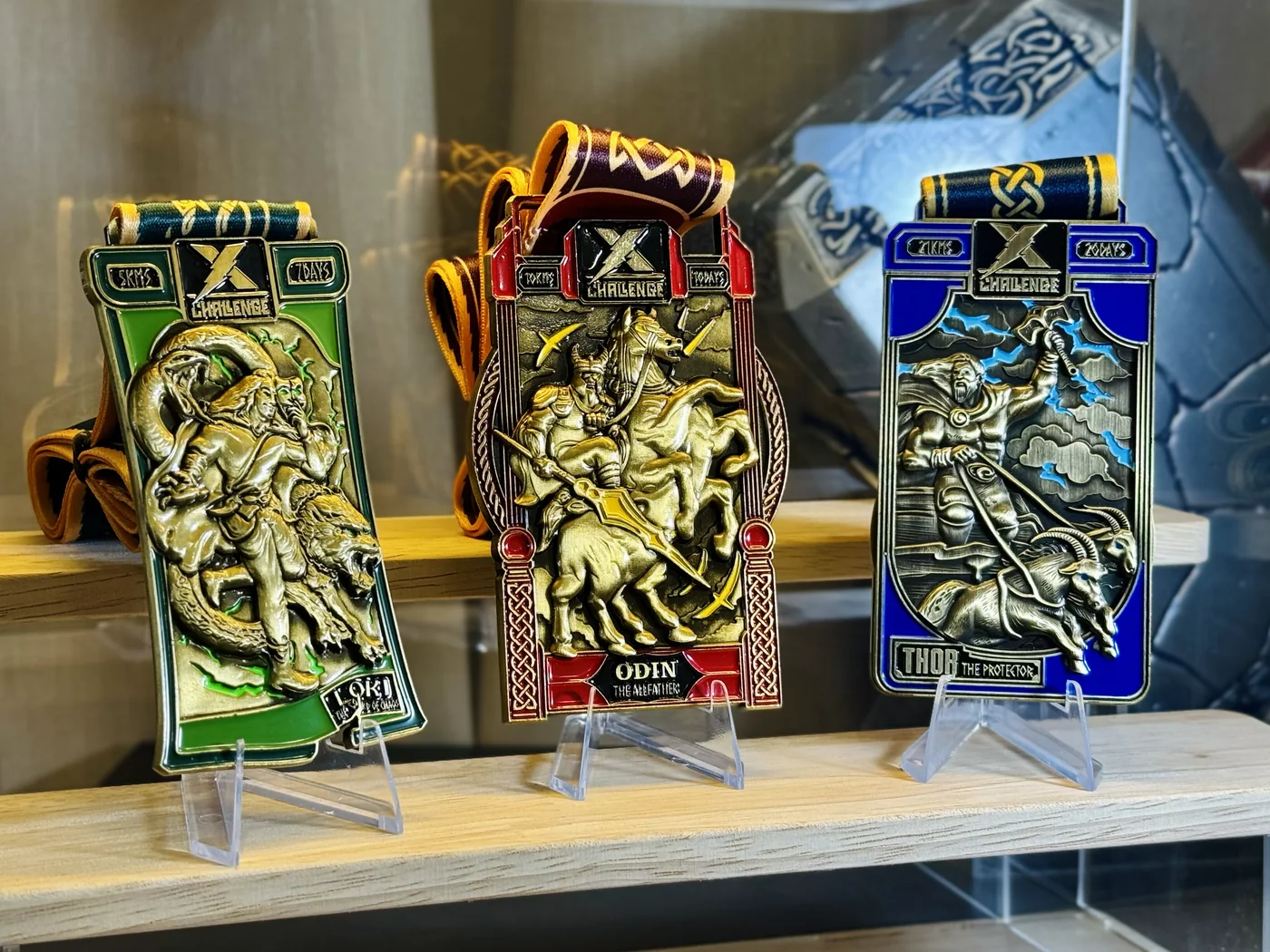
Or take the whole set
More: all guides · how it works · every challenge