
Rucking for beginners: how to start walking with weight
Updated · 6 min read
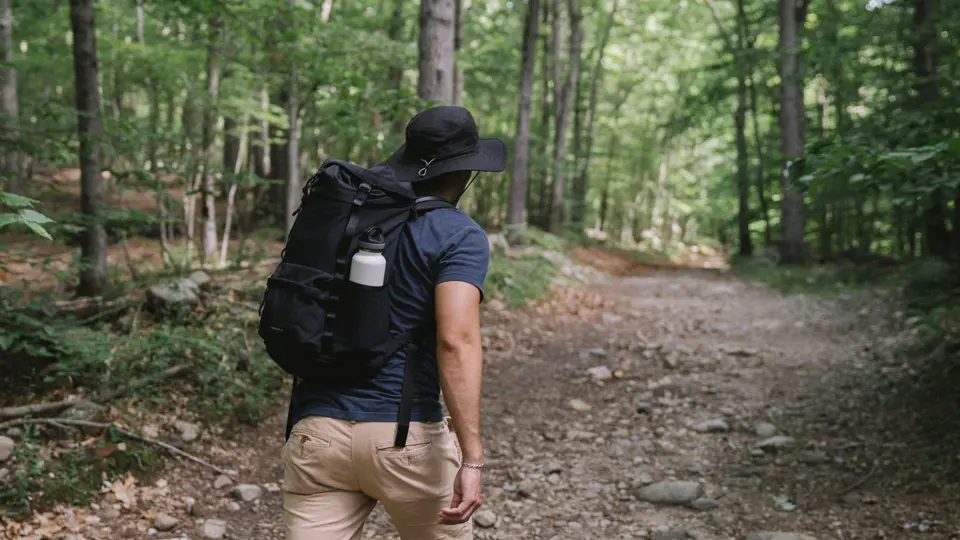
In short: Rucking is walking with weight in a backpack. It turns an ordinary walk into harder work for your legs, back and heart, without running. Start light, around 10 pounds for most healthy adults, on flat routes for 20 to 30 minutes. Add weight or distance slowly, never both in the same week. Keep the load high and close to your back and use a hip belt if your pack has one. Watch for blisters and for back, foot or knee pain, the common problems when people carry loads.
What rucking is
The word comes from the rucksack, and the practice from the military, where soldiers march long distances with heavy packs. A 2004 review in Military Medicine traced how much soldiers carry and what it does to the body. Civilian rucking uses far lighter loads, but the same lessons apply: the load costs energy, and how you carry it matters.
People ruck because it makes walking harder without making it faster. You stay at a walking pace, usually around 3 mph or a little slower, while your heart, legs, hips and upper back work more. It suits walkers who want more of a workout, people who do not enjoy running, and hikers getting ready for trips with a pack.
What you need
- A sturdy backpack with padded shoulder straps. A chest strap and hip belt help a lot. An old school or hiking pack is fine to start.
- Weight: bottles of water, bags of rice wrapped in a towel, books, or a weight plate. Water is handy because you can pour it out if the load is too much.
- Padding between the weight and your back, such as a folded towel or a foam pad, so nothing digs in.
- Shoes you already walk in, or trail shoes for rough ground. Hiking boots suit heavier loads on trails.
- Good socks. Blisters are the most common rucking problem.
Skip ankle weights. Weight at your feet takes more energy to move than the same weight on your back, and it changes the way you walk.
A six-week starter plan
| Week | Pack weight | Each ruck | On flat or hills |
|---|---|---|---|
| 1 | About 10 pounds | 20 minutes | Flat |
| 2 | About 10 pounds | 30 minutes | Flat |
| 3 | About 15 pounds | 30 minutes | Flat |
| 4 | About 15 pounds | 40 minutes | Gentle hills |
| 5 | About 20 pounds | 40 minutes | Gentle hills |
| 6 | About 20 pounds | 45 to 60 minutes | Mixed |
Each week raises either the weight or the time, not both. Two rucks a week is plenty at the start. Your other walks should be without the pack. Leave at least a day between rucks so your feet, back and shoulders have time to recover. If you are lighter or smaller, start with less weight, and if something hurts, drop back a week. If you have a health condition, are pregnant, or have not exercised in a long time, check with a doctor before you start.
Packing the load
The 2004 review found that a load costs the least energy when its center sits as close as possible to your own center of mass. In practice, that means heavy items high and tight against your back, not sagging at the bottom of the pack or hanging off the outside. It also found that hip belts take pressure off the shoulders and make a pack more comfortable.
- Put the heaviest item against the back panel, about level with your shoulder blades.
- Fill gaps with a towel or a jacket so the weight cannot shift as you walk.
- Tighten the shoulder straps so the pack sits close, then fasten the hip belt and chest strap.
- Stand tall. If you lean far forward to balance the pack, it is too heavy or packed too low.
Injuries to watch for
The review lists the common injuries from carrying loads: foot blisters, stress fractures, back strain, metatarsalgia (pain in the ball of the foot), knee pain, and rucksack palsy, a numbness or weakness in the arms from straps pressing on nerves in the shoulder. Soldiers carry far more than a beginner should, but the same problems can show up with lighter packs over long distances.
- Blisters: wear socks that wick sweat and tape hot spots early.
- Back strain: keep the load light and close, and stop if your lower back aches.
- Foot and shin pain in one spot: rest. Pain on a bone that gets worse with each walk needs a doctor.
- Tingling or numbness in your hands or arms: loosen the straps, use the hip belt, and take the pack off for a few minutes.
- Knee pain on downhills: shorten your stride and slow down, or use walking poles.
Hiking a challenge distance
A hike is rucking with a view. Your phone’s GPS records trail miles the same way as a walk around the block, so a weekend hike can add a big chunk to a challenge. Trails are slower than pavement, especially with climbing, so plan on 2 mph or less on hilly ground.
The National Park Service lists ten essentials for a hike: navigation, sun protection, extra clothing, a light, first-aid supplies, a way to make fire, a repair kit, extra food, water and emergency shelter. Most of those also make good rucking weight. Tell someone where you are going and when you expect to be back. Carry a backup map, since your phone may lose signal or battery.
Rucking toward a medal
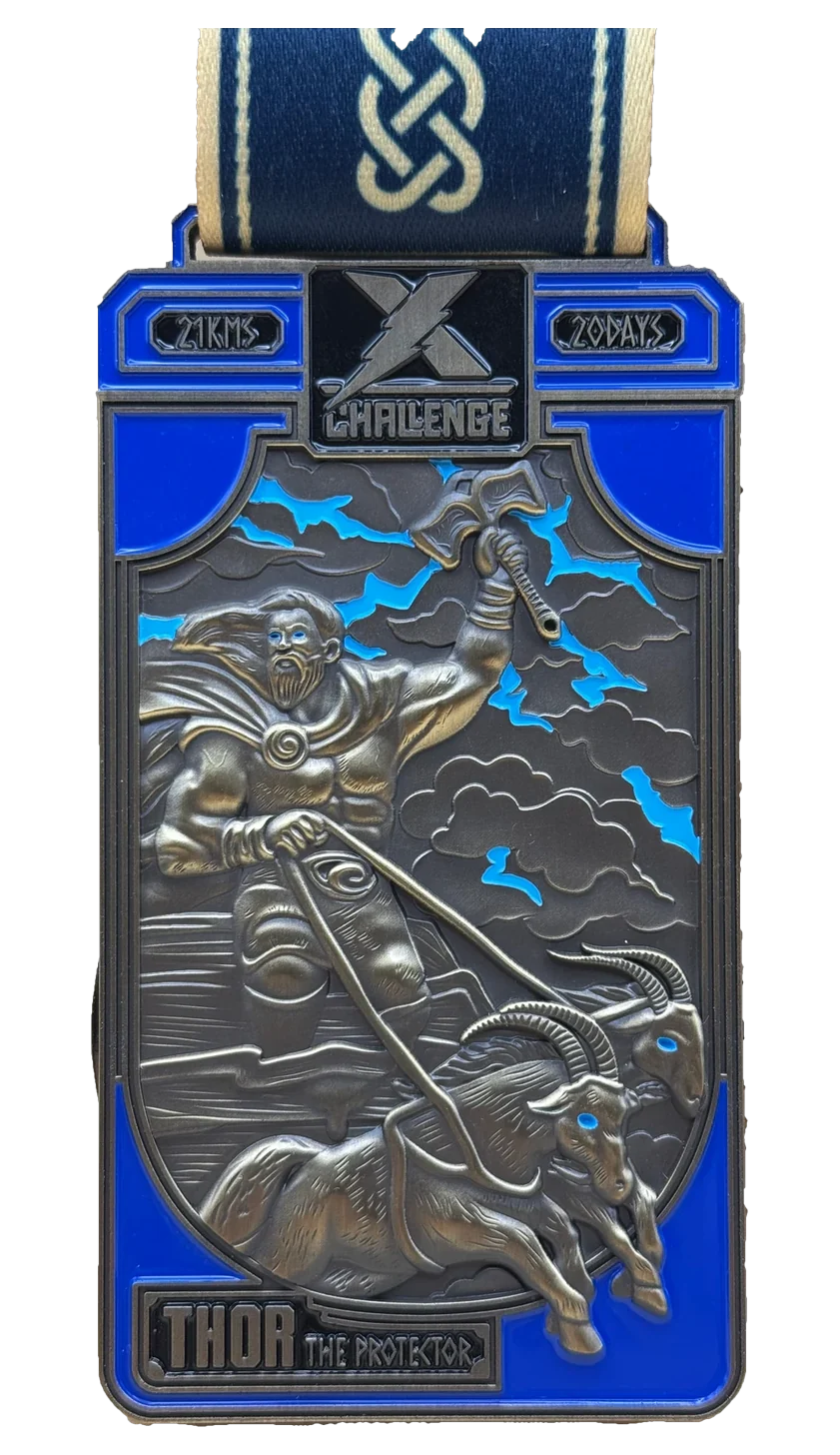
Rucking counts as walking, so every ruck adds distance. TURTLE averages 1.7 km a day, which two 45-minute rucks a week plus short daily walks cover easily. THOR is a half marathon in 20 days, a good target for building up to one long ruck.
For a season-long goal, PHOENIX is 139 km, about 29 hours on foot at a steady pace. Weekend hikes and a couple of rucks a week get you there. Record every session in the app, with or without the pack.
Common questions
Is rucking better than walking? It is harder, which is the point. For most people, two rucks a week plus easy walks is a good mix. Rucking every day adds risk without much extra benefit for a beginner.
Can I use a weighted vest instead? Yes. A vest spreads the weight around your chest and back, which many people find comfortable. Start at the low end of its weight range.
How heavy should I go? Most beginners do well with 10 to 20 pounds. There is no need to chase heavier loads unless you are training for something that requires them.
Sources
- Soldier Load Carriage: Historical, Physiological, Biomechanical, and Medical Aspects (Knapik and others, Military Medicine, 2004): a load close to the body’s center of mass costs the least energy, hip belts ease shoulder pressure, and blisters, stress fractures, back strain, foot pain, rucksack palsy and knee pain are the common injuries.
- Ten Essentials (US National Park Service): what to carry on a hike, and to tell someone where you are going and when you will be back.
- How to avoid exercise injuries (MedlinePlus, NIH): warm up slowly, cool down for 5 to 10 minutes, do not raise frequency, length and effort all at once, and stop if you feel pain.
- Adult Activity: An Overview (CDC): adults need 150 minutes of moderate activity a week, such as brisk walking, plus muscle-strengthening on two days.
Challenges from this guide


Or take the whole set


More: all guides · how it works · every challenge