
Running in the dark safely
Updated · 6 min read
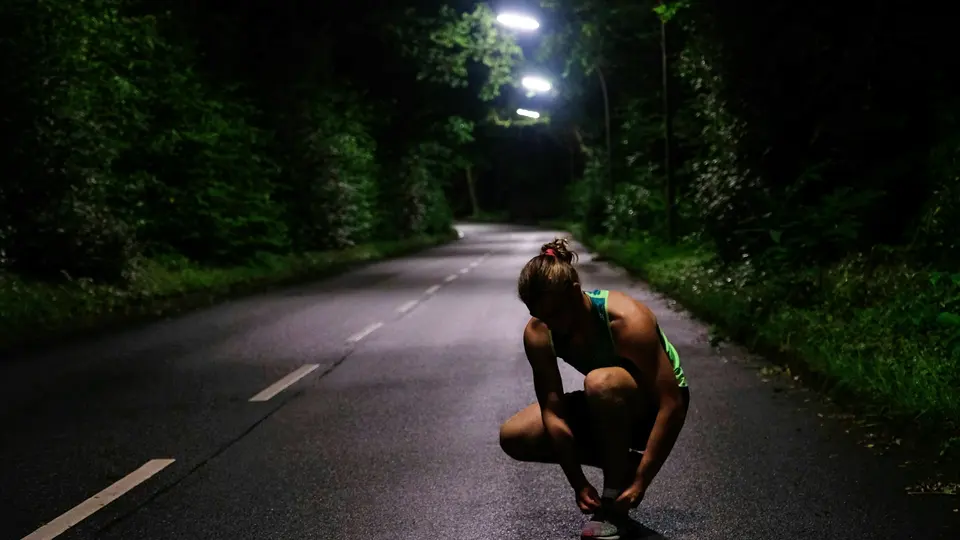
In short: Running in the dark is safer when drivers can see you and you can see the ground. Wear bright clothing with reflective strips, carry a headlamp or clip-on light, and pick a familiar, well-lit route with little traffic. Run facing traffic where there is no sidewalk, keep one earbud out or the music off, and tell someone your route and when you will be back. Slow down a little, too. Curbs, potholes and ice are harder to judge at night.
Why the dark matters so much
Federal crash data counts runners and joggers as pedestrians. In NHTSA’s 2024 figures, 76% of pedestrian deaths happened in the dark, against 20% in daylight. The single worst stretch of the day was 6 to 8:59 p.m., with 24% of deaths. In the winter months that window alone held a third of them. That is exactly when many people head out after work.
None of this means you should stop running at night. It means the two jobs that matter most after sunset are making yourself obvious to drivers and choosing where you run.
Be seen
Drivers see light and movement before they see shapes. Put reflective material and lights where they move and where headlights will hit them.
| Gear | Where it goes | Why it helps |
|---|---|---|
| Reflective vest or jacket with strips | Torso, front and back | A large surface that lights up in headlights from either direction |
| Reflective bands | Ankles and wrists | They move as you run, so a driver reads you as a person sooner |
| Flashing clip-on light | Back of your waistband or vest | Covers drivers coming up behind you |
| Headlamp or chest light | Head or chest | Lets you see the ground and makes you visible from the front |
| Bright or light-colored top | Outer layer | Helps at dusk and dawn, before reflectors do much |
Skip all-black clothing along roads. Dark navy and charcoal disappear just as easily. If you only buy one thing, make it a set of reflective ankle bands and a small rear light.
See where you are going
- A headlamp works almost everywhere. Angle it down so the beam lands a few strides ahead.
- A chest or waist light sits lower, so curbs and roots throw longer shadows and are easier to read. Some runners use both.
- A handheld light is fine for short, mostly lit routes.
- Bring a light even on lit streets. Streetlights leave dark gaps between them, and those gaps hide potholes.
- Shorten your stride and slow your pace by a little. Your run will feel faster in the dark anyway.
- Charge the light after every run. A dying light halfway round a loop is a common way to end up on a dark road.
Choose a route for the dark
A night route should be one you already know in daylight. You will remember the cracked slab and the driveway that drops away, even when you cannot see them.
- Lit park paths and residential streets with sidewalks come first.
- A short loop near home beats one long route. You can stop at any point, and you pass your door often.
- Avoid roads with no shoulder and fast traffic. Most pedestrian deaths in the NHTSA data happened away from intersections, on the open road.
- Keep unlit trails for daylight unless you know them well and run with others.
- A school track or a lit running path is often the calmest option in winter.
Habits that help
- Tell someone your route and when you will be back, or share your location while you run.
- Where there is no sidewalk, run on the shoulder facing traffic, so you can see what is coming and step aside.
- Never assume a driver has seen you. Make eye contact before you cross.
- Keep the volume low or one earbud out. You want to hear engines and footsteps.
- Carry your phone and some ID. A medical ID in your phone or on your shoe helps if something goes wrong.
- Vary your nights and routes if you run alone, so your pattern is hard to predict.
See also road safety for runners and running alone safely.
Dawn, dusk and running in a group
Twilight catches people out. It still feels light to you, but a driver heading into a low sun, or one whose headlights are not on yet, may barely see you. Put your reflective gear and light on before you leave, even if you expect to be home before full dark.
Low sun causes glare in winter, too. A driver heading east at 7 a.m. or west at 5 p.m. may be half blind for a few seconds. Give those crossings extra time.
A group is easier to see than one runner, but only if everyone carries a light. Put the brightest rear light on the last runner and run single file on roads without a sidewalk. Agree a route and a regrouping point before you start, so nobody ends up alone on a dark stretch. Many running clubs and stores host evening group runs through the winter, see running with friends and groups.
A winter week built around the dark
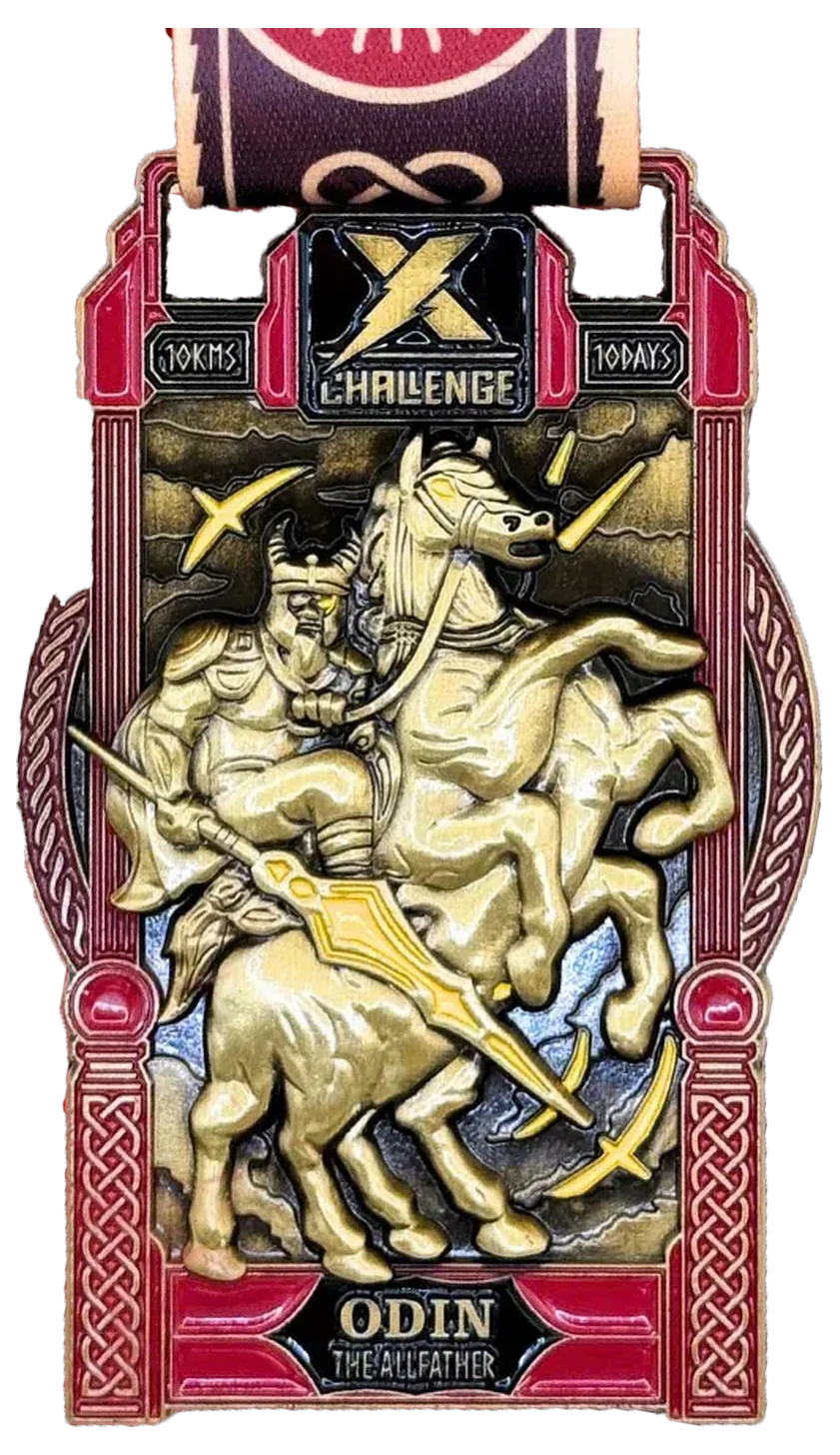
From November to February, many people get only dark weekday runs. A shorter challenge fits that well. ODIN is 6.2 miles (10 km) in 10 days, about 0.6 miles a day on average, and the app records night runs like any other. Here is one way to spread it out.
| Day | When | Session |
|---|---|---|
| Monday | After work, dark | Easy loop near home, about 20 minutes |
| Tuesday | — | Rest or a walk at lunch in daylight |
| Wednesday | Before work, dark | Easy run on a lit park path |
| Thursday | — | Rest |
| Friday | After work, dark | Short loop, or a treadmill session |
| Saturday | Daylight | The longest run of the week, on a route you would not use at night |
| Sunday | Daylight | Easy walk or rest |
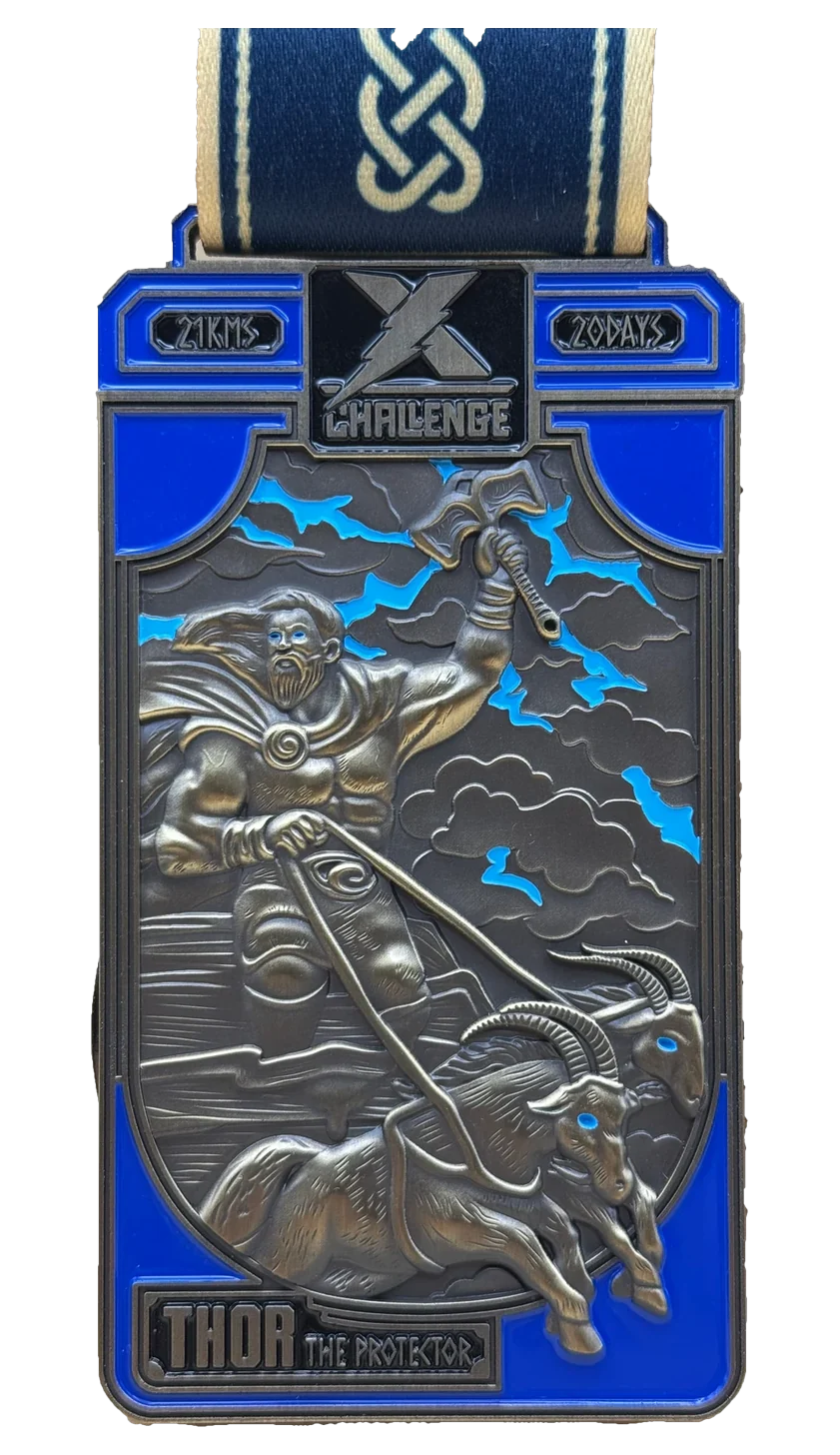
If a full challenge feels like too much for winter evenings, THOR gives you 20 days, so most of the distance can land on weekends.
Common mistakes
- Relying on a phone screen as a light. It is too dim and blinds you to the edges.
- Wearing reflectors only on the front. Drivers coming up behind you need to see you too.
- Running with traffic on a road with no shoulder, so you cannot see what is coming.
- Trying a new route for the first time after dark.
- Going at your usual daytime pace on uneven ground.
- Leaving the light at home because the run starts at dusk. It will be dark by the time you turn around.
None of this gear has to be expensive. Reflective bands and a clip-on light cost little, and a basic rechargeable headlamp lasts years. Spend on whatever you will actually wear every time.
Common questions
- Is it safer to run in the early morning or the evening? Both are dark for much of the year. In the NHTSA data, evenings from 6 to midnight held the most pedestrian deaths, so early mornings on quiet roads are often the calmer choice.
- How bright should a running headlamp be? Bright enough to light the ground several strides ahead on your darkest stretch. A few hundred lumens covers most streets and parks.
- Do reflective clothes work in the rain? Yes, though rain and spray cut how far drivers can see. Add a flashing light on wet nights.
- Should I run with music at night? If you do, keep it quiet or use one earbud, so you can hear cars and people around you.
Sources
Challenges from this guide
Or take the whole set

More: all guides · how it works · every challenge