
Trail running safety: a checklist before you head out
Updated · 6 min read
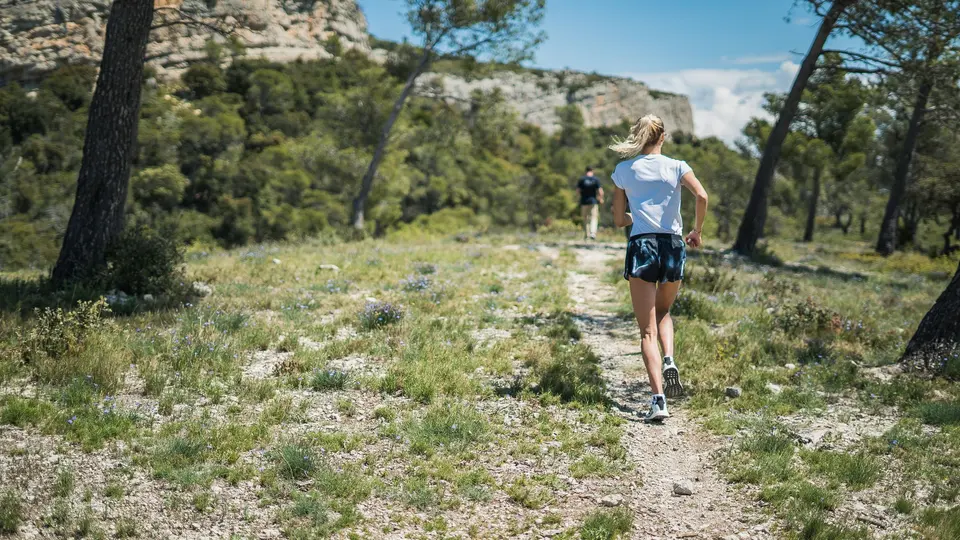
In short: Before a trail run, tell someone your route and when you will be back, and carry water, a charged phone and a map, since cell service often drops out. On the trail, shorten your stride, look a few steps ahead, and walk steep or rocky sections. Keep to marked trails, call out before passing, and give wildlife plenty of room. Use tick repellent and check yourself afterward, turn back early if storms build, and plan to finish well before dark.
Before you go
Trails take you further from help than any road. A turned ankle two miles from the trailhead is a long, slow walk out, and there may be no signal to call anyone. Most trail problems are solved before you leave the car. RRCA, the national association of running clubs, publishes trail safety tips that cover most of this list.
- Tell someone your route and expected return time, and who to call if you are late.
- Download an offline map, and carry a paper map in an area you do not know.
- Check the forecast. RRCA suggests planning for the worst conditions you could meet over the length of your run.
- Check sunset time and plan to be out with time to spare.
- Read the trailhead board for closures, wildlife warnings and rules about dogs.
- Start with well-marked, popular trails before you try remote ones.
An out-and-back route is the simplest way to start on a new trail. You know exactly how far you are from the car at every point, and you can turn around the moment you feel tired or the weather turns.
What to carry
| Run | Carry |
|---|---|
| Under an hour on a busy park trail | Phone, a little water on warm days, ID |
| One to two hours | Phone, water, a snack, a light layer, a basic map |
| Over two hours or remote | Phone and backup battery, plenty of water, food, a warm layer, a rain shell, map, whistle, small first-aid kit, a headlamp |
| Any length in summer | Water, sunscreen, tick repellent |
There are fewer places to refill on trails, so carry more water than you would on a road run of the same time. A handheld bottle covers short runs. A waist pack or a hydration vest suits longer ones.
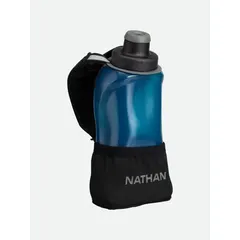
Nathan QuickSqueeze Lite Handheld 12ozNS40160-00030-12OZ
12 oz handheld bottle
List price at nathansports.com, checked Nov 6, 2026 · Photo: nathansports.com
$28Brand site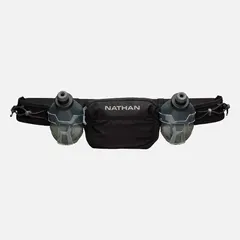
Nathan TrailMix Plus 3.0 Hydration BeltNS30490-60458-OSFM
Two 10 oz flasks
List price at nathansports.com, checked Nov 6, 2026 · Photo: nathansports.com
$60Brand site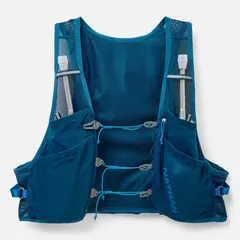
Nathan Pinnacle Breeze 4 Liter Hydration Race VestNS30730-60526-S-M
4 L race vest
List price at nathansports.com, checked Nov 6, 2026 · Photo: nathansports.com
$140Brand site
Footing: how not to fall
- Shorten your stride and keep your feet under you. Quick, light steps recover from a slip better than long ones.
- Look three or four steps ahead, not at your feet. Your brain remembers the rocks you just scanned.
- Walk steep climbs. Most trail runners do, and it saves energy for the flats.
- On steep downhills, lean slightly forward, keep your arms out for balance and take small steps.
- Run through the middle of the trail, through mud and puddles, rather than widening it, as RRCA suggests.
- Roots and wet rocks are slick after rain. Step over them, not on them.
- Trail shoes with deeper lugs grip better on dirt and mud. On dry, smooth trails, road shoes are often fine.
Run slower than you think you need to on your first few trail runs. Your pace per mile will be well behind your road pace, and that is normal. Plan trail runs by time rather than distance. A 5-mile trail loop with climbs can take as long as 7 miles on the road.
Trail etiquette
- Stay on official, marked trails. Do not cut switchbacks.
- Call out early when you come up behind someone: "On your left."
- Yield to horses, and to hikers on narrow single track.
- On climbs, RRCA notes that uphill runners generally yield to downhill runners. Local signs may say otherwise.
- Run no more than two abreast on wider trails, and single file on narrow ones.
- Leave plants, rocks and trail markers where you found them, and pack out everything you bring in.
Wildlife and ticks
Keep your distance from all wildlife, and especially from mothers with young. Do not run up on an animal you can see on the trail. Stop, give it time to move off, or turn back. Rules for bears, mountain lions, moose and snakes differ by region, so read the trailhead signs and the land agency’s advice for the area.
Ticks are the wildlife most runners meet. The CDC’s advice on tick bites applies straight to trail runs:
- Use an EPA-registered repellent such as DEET or picaridin.
- Treat shoes, socks and clothing with permethrin, or buy them pre-treated.
- Walk or run in the center of trails, away from tall grass and leaf litter.
- Shower within two hours of coming indoors.
- Check your whole body, including your scalp, behind your knees and your groin.
- Tumble-dry your running clothes on high heat for 10 minutes to kill any ticks.
Weather, lightning and daylight
Weather changes faster in hills and mountains, and you are often far from shelter. NOAA notes there is no safe place outside when thunderstorms are around, and that lightning can strike more than 10 miles from where rain is falling. Ridges, peaks and open meadows are the worst places to be. If you hear thunder, head down and toward a building or your car, and plan summer runs for the morning, before afternoon storms build.
Set a turnaround time before you start, and stick to it. Running out of daylight on a trail is much worse than on a road. Carry a headlamp on any run that finishes near sunset.
If something goes wrong
- If you get lost, stop. Retrace your steps to the last marker you are sure of.
- If you are hurt and cannot walk out, stay put, keep warm, and call 911 if you have signal. A text can sometimes get through when a call cannot.
- Three blasts on a whistle is a widely used distress signal.
- Keep your phone warm and in airplane mode when not in use, to save battery for an emergency.
Trail miles and your challenge
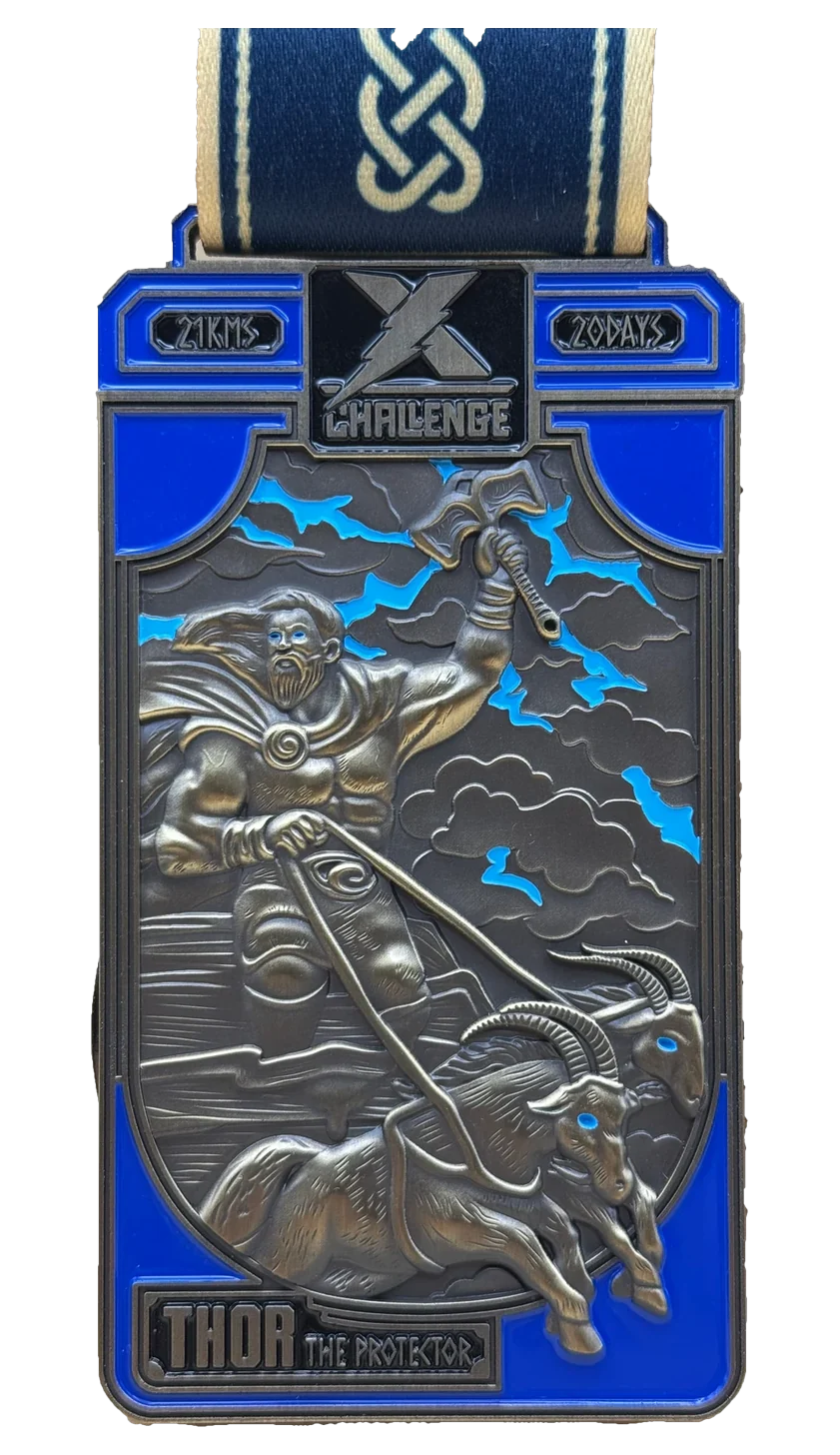
Trail miles count like any other. GPS can drift under thick trees and in narrow canyons, so your distance may read a little short or long, but it evens out over a challenge. The long X Challenge medals suit weekend trail running well: DRAGON is 111.2 miles (179 km) over 88 days. THOR at 13 miles (21 km) in 20 days is a good first target if you mix trails and roads.
Common questions
- Is trail running safe for beginners? Yes, on easy, well-marked trails, with someone knowing where you are. Build up to remote or technical trails.
- Do I need trail shoes? For muddy, rocky or loose trails, they help. For smooth, dry paths, road shoes are fine.
- Is it safe to trail run alone? Many people do. Pick popular trails, share your route and location, and keep music off. See running alone safely.
- How do I check for ticks after a run? Check your whole body, including your scalp, behind your knees and your groin, and shower within two hours.
Sources
Challenges from this guide

Or take the whole set


More: all guides · how it works · every challenge