
How long does it take to run a 5K?
Updated · 6 min read
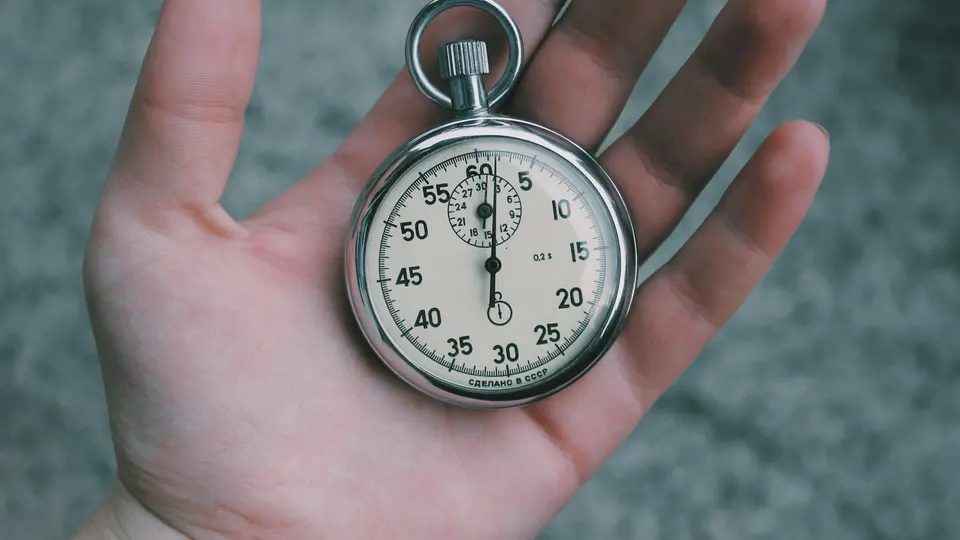
In short: Most new runners finish a 5K (3.1 miles) in about 30 to 40 minutes. Regular runners usually take 25 to 30 minutes, and walk-run beginners about 40 to 50. Walking the whole way takes about an hour. There is no time you need to hit, and heat, hills and experience all change the number. If you are starting from scratch, getting to the point where you can run 5K without stopping usually takes eight to twelve weeks of walk-run training, three times a week.
5K times by pace
| Pace per mile | Per km | 5K time | Often seen in |
|---|---|---|---|
| 8:00 | 4:58 | About 25 minutes | Experienced recreational runners |
| 9:00 | 5:36 | About 28 minutes | Regular runners |
| 10:00 | 6:13 | About 31 minutes | Regular runners |
| 12:00 | 7:27 | About 37 minutes | Newer runners |
| 14:00 | 8:42 | About 43 minutes | Walk-run beginners |
| 15:00 | 9:19 | About 47 minutes | Walk-run beginners |
| 20:00 | 12:26 | About 1 hour 2 minutes | Walkers at a steady pace |
To work out your own from a recent run, use the pace calculator. Divide your time by 3.1 and you have your pace per mile.
Typical 5K times by level
- Walking all the way: about 50 minutes to 1 hour 5 minutes, depending on stride and how brisk you are.
- Walk-run beginner: about 40 to 50 minutes, with walking breaks every few minutes.
- New runner who can jog the whole way: about 30 to 40 minutes.
- Regular runner after a few months of steady training: about 25 to 30 minutes.
- Experienced recreational runner: under 25 minutes is common, and some get well under 20.
These are rough bands. Age, sex, body size and how long you have been active all shift them, so the most useful comparison is with your own time from a month ago.
Walking breaks change the number less than you might expect. Jogging at 12 minutes a mile and walking briskly at 17, a 5K takes about this long:
| Run : walk | 5K time |
|---|---|
| Running only | About 37 minutes |
| 4 minutes : 1 minute | About 40 minutes |
| 2 minutes : 1 minute | About 41 minutes |
| 1 minute : 1 minute | About 44 minutes |
| Walking only | About 53 minutes |
More on choosing a ratio in the run-walk method.
How long to get to your first 5K
The NHS Couch to 5K plan takes nine weeks, with three runs a week. It starts with one-minute jogs between walks and ends with 30 minutes of running without stopping. Many people take longer by repeating weeks, and the plan allows for that.
If you can already walk briskly for 30 minutes, you are ready to start. If not, spend two or three weeks building up your walks first. The full plan is in your first virtual 5K, and how to start running covers the weeks before it.
Milestones that tell you the plan is working:
- Around week 3: the warm-up walk feels easy and the one-minute jogs no longer leave you gasping.
- Around week 5: you jog for 20 minutes without a walking break for the first time. Most people are surprised they can.
- Around week 9: you run 30 minutes without stopping. For many beginners that is 2.5 to 3.5 miles.
- The weeks after: the last half mile to a full 5K comes with a few more weeks of the same three runs.
What changes your time
- Experience. Most early improvement comes from running regularly for a few months. A beginner who runs three times a week often takes several minutes off their 5K in the first season.
- Heat and humidity. Hot, sticky days are slower for everyone. A July run in Houston is not comparable with an October run in Denver. See running in the heat.
- Hills and surface. A flat bike path and a hilly trail are not the same 5K. A treadmill at zero incline is usually the quickest of all.
- Starting too fast. Running the first mile far quicker than the rest is the most common way to finish slower than you could have.
- Sleep, food and stress. A bad night or a skipped meal shows up in your legs.
How to run a faster 5K once you can finish one
Keep most of your running easy and conversational. Once you have run three times a week for two or three months without aches, you can add one faster session a week. Two simple ones:
- Strides. At the end of an easy run, run 20 seconds at a quick but relaxed pace, walk back, and repeat four to six times.
- Steady intervals. After a warm-up, run three to five minutes at a pace that feels hard but controlled, then walk or jog two minutes. Start with three rounds.
Start each 5K a little slower than you think you can manage, and speed up in the last mile if you feel good. Even pacing almost always beats a fast start.
Timing your first 5K
If you want a number to beat later, run one timed 5K at the end of your beginner plan. Pick a flat route you know, a cool part of the day and a morning after a good night’s sleep. Then:
- Walk for five minutes, then jog gently for five more.
- Run the first mile at your normal easy pace. It should feel too slow.
- Run the second mile a little quicker if you feel good.
- Give whatever you have left in the last mile, saving the hardest push for the final few hundred yards.
- Write the time down, along with the temperature and route, so you can compare like with like.
Repeat it every six to eight weeks on the same route. Seeing the time drop is one of the best reasons to keep going.
When time does not matter at all
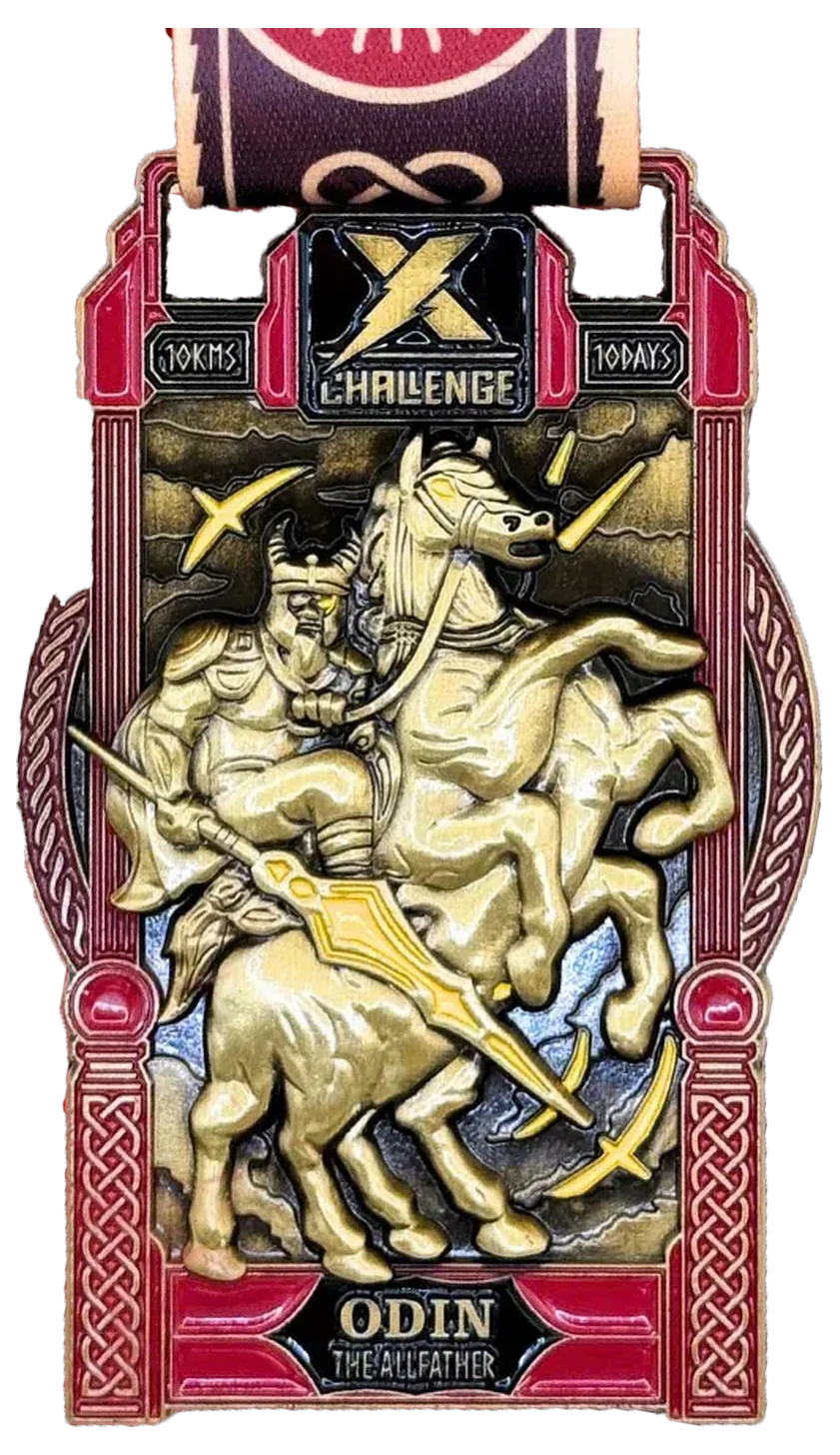
Plenty of people never time a 5K. On the X Challenge Loki challenge there is no finish time. You have 7 days to cover 5 km, in one session or several, and the app adds up every session it records. A die-cast medal ships when you finish. $45. See Loki.
Common questions
- Is 30 minutes a good 5K time? Yes. It is a common goal for new runners and means a pace of just under 10 minutes a mile.
- Is 40 minutes a good 5K time? For a beginner, yes. Finishing is the achievement, and the time will drop with practice.
- How long does a 5K take on a treadmill? About the same as outdoors at the same pace. Set the belt to 6 mph and you will finish in about 31 minutes.
- How long does a 10K take? Roughly double your 5K time plus a few minutes. See how many miles a 10K is.
- Can I run a 5K with no training? Many reasonably active people can walk-run one. Running the whole way without training is hard, and you will probably be very sore for a few days.
- Why is my watch time different from the clock? Auto-pause stops the watch at traffic lights. The clock keeps going, so its time is longer.
Sources
- Get running with Couch to 5K, NHS: nine weeks, three runs a week, ending with 30 minutes of running.
- Couch to 5K running plan, NHS: the week-by-week intervals and repeating weeks when you need to.
- If you have a health condition, are pregnant, or have not exercised in a long time, check with a doctor before you start.
Challenges from this guide

Or take the whole set

More: all guides · how it works · every challenge