
The run-walk method explained: ratios, pace and when to use it
Updated · 6 min read

In short: The run-walk method means alternating set periods of running and walking from the start of a run, before you get tired, instead of walking only when you have to. Beginners often start with 30 to 60 seconds of jogging and one to two minutes of walking. More experienced runners use ratios like four minutes running to one minute walking. In one study of non-elite marathon runners, a run-walk group finished in a similar time to a running-only group and reported less muscle pain and fatigue afterward.
How run-walk works
You decide the ratio before you start and stick to it from the first interval. The walking breaks come while you still feel fresh. That is the difference from the way most people walk during a run, which is when they have run out of energy.
The method was popularized in the US by coach Jeff Galloway, and many beginner programs use a version of it. The NHS Couch to 5K starts with one-minute runs and 90-second walks and shortens the walks week by week. Many marathon training groups keep walking breaks all the way to race day.
For beginners the appeal is simple. A 30-minute run sounds daunting. Twelve rounds of one minute jogging and a minute and a half walking sound doable, and they fill the same half hour. Each interval is short enough to finish, so every session ends with a win instead of a forced stop.
What the research says
The evidence is small but encouraging. In a 2016 trial, 42 non-elite runners ran a marathon either running the whole way or with planned walking breaks. Finish times were statistically similar, about 4 hours 14 minutes for run-walk and 4 hours 8 minutes for running only. The run-walk group reported less muscle pain and fatigue after the race.
The same study found that walking breaks did not reduce stress on the heart, measured by blood markers. Both groups had similar rises that returned to normal within four days. Run-walk seems to help your legs more than your heart, and it is no substitute for training.
Choosing your ratio
| Run | Walk | Who it suits |
|---|---|---|
| 15 to 30 seconds | 30 to 60 seconds | Complete beginners, people returning after a long break, heavier runners |
| 1 minute | 1½ to 2 minutes | The first weeks of a beginner plan |
| 2 minutes | 1 minute | Beginners a month or two in |
| 3 to 4 minutes | 1 minute | Newer runners covering 5 to 10 km |
| 5 to 8 minutes | 30 to 60 seconds | Regular runners on long runs or a half marathon |
These are starting points, not rules. Pick the ratio where the last running interval feels about as easy as the first. If you are gasping by the end, shorten the run part or lengthen the walk.
How to do it well
- Use a timer. Most running watches and many phone apps have an interval setting that beeps or vibrates. Counting in your head works until you get distracted.
- Walk with purpose. A brisk walk with arms swinging keeps your pace up. A stroll loses more time than you think.
- Run easy. The walking breaks are not permission to sprint the running parts.
- Start the breaks from the first minute. Saving them for later defeats the point.
- Keep the same ratio for at least two weeks before changing it, so you can tell whether it is working.
Run-walk for a 5K, 10K or half marathon
The walking breaks cost less time than people expect. The table assumes a jog at 12 minutes a mile and a brisk walk at 17 minutes a mile. Your own numbers will differ, but the gaps between ratios will be similar.
| Ratio (run : walk) | Average pace per mile | 5K | 10K | Half marathon |
|---|---|---|---|---|
| Running only | 12:00 | 37 minutes | 1 hour 15 minutes | 2 hours 37 minutes |
| 8 : 1 | 12:24 | 39 minutes | 1 hour 17 minutes | 2 hours 43 minutes |
| 4 : 1 | 12:45 | 40 minutes | 1 hour 19 minutes | 2 hours 47 minutes |
| 2 : 1 | 13:18 | 41 minutes | 1 hour 23 minutes | 2 hours 54 minutes |
| 1 : 1 | 14:04 | 44 minutes | 1 hour 27 minutes | 3 hours 4 minutes |
A 4:1 ratio adds only two or three minutes to a 5K compared with running the whole way. Many people find they can hold a slightly quicker jog with the breaks, which closes some of that gap.
- 5K: most beginners use 1:1 to 2:1. See your first virtual 5K.
- 10K: 3:1 or 4:1 is common for newer runners. See the virtual 10K guide.
- Half marathon: many first-timers use 4:1 to 8:1 and finish feeling stronger than people who ran it straight. See the virtual half marathon guide.
Run-walk on a challenge spread over days
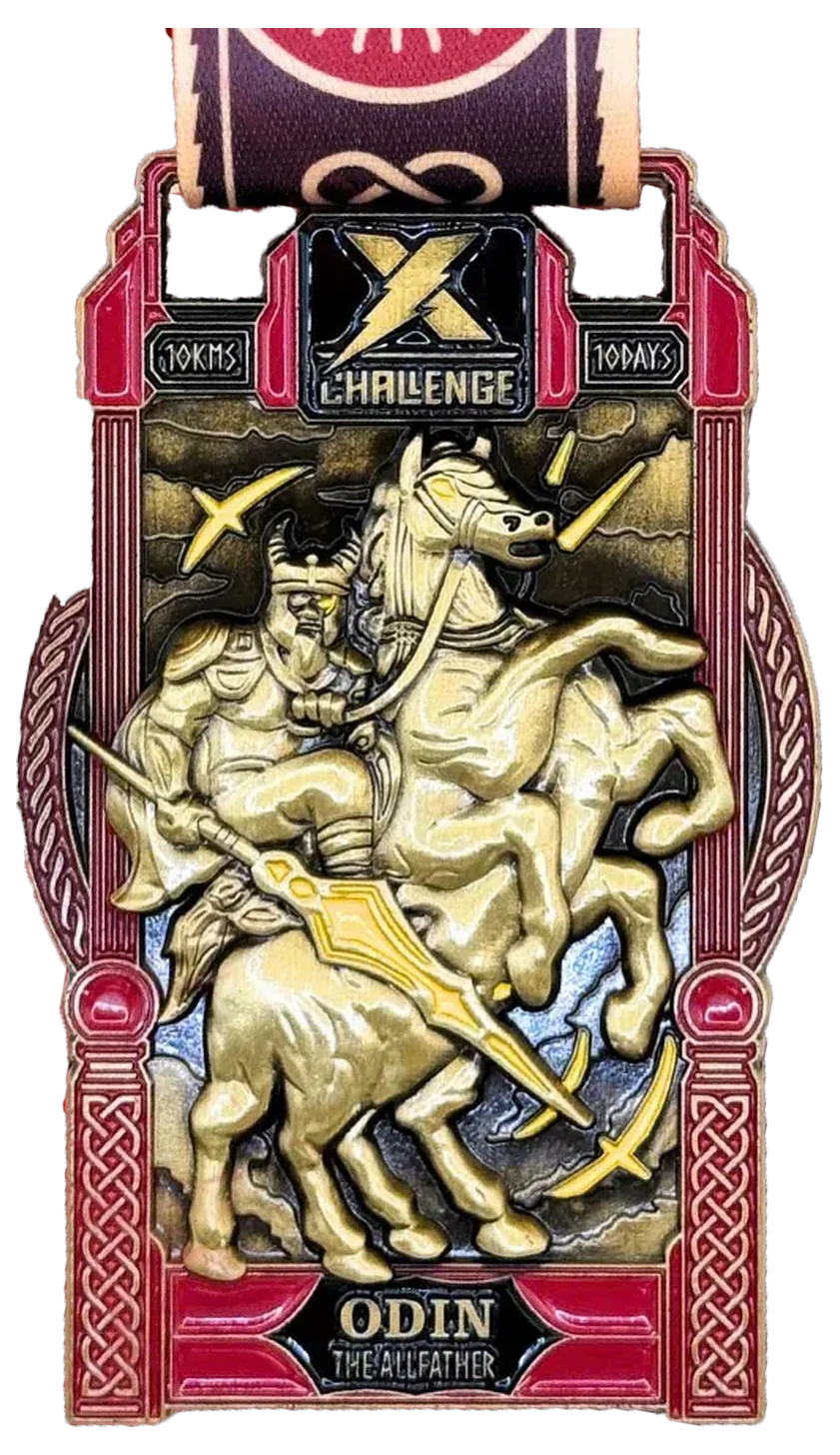
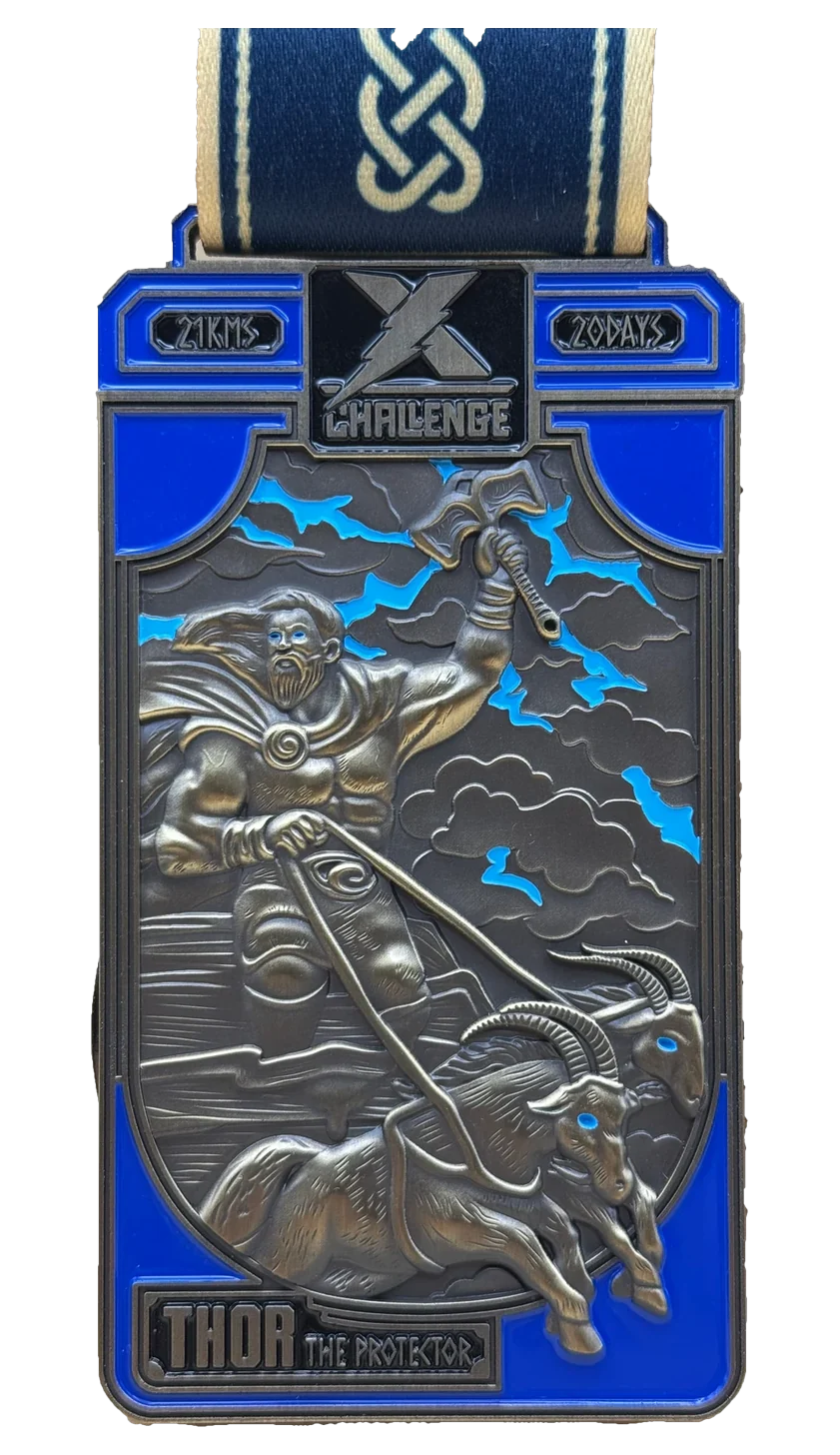
When the distance is split across several sessions, run-walk lets you get out more often without wearing yourself down. Thor is 21 km, about 13 miles, over 20 days. At three sessions a week that is about 2.3 km per session. A 2:1 ratio covers it in roughly half an hour. On Odin the same three sessions a week need about 2.5 km each.
The X Challenge app records the whole session as one activity, walking breaks included, so the distance all counts.
Common run-walk mistakes
- Running the intervals too fast to make up for the walks. You end up as tired as if you had run straight through.
- Walking too slowly. A stroll at 25 minutes a mile drags your average down much more than a brisk walk.
- Changing the ratio mid-run when you feel good. Feeling good is the method working. Keep the plan and finish strong.
- Stopping the clock or the app during walk breaks. Let it run, so your distance and time are true.
- Treating it as a phase to get through. Plenty of runners use walking breaks for years, on purpose.
Do you ever have to stop walking?
No. Some runners move to continuous running because they enjoy it. Others keep the breaks for years, including on long runs, because they recover faster. A sensible middle path is to run easy days continuously once you can, and keep walking breaks for long runs and hot days. See running in the heat.
Common questions
- Is run-walking cheating? No. The distance is the same and many events allow it. Check the rules if a cutoff time applies.
- Will run-walk make me slower? Over long distances, often not by much. In the 2016 marathon study the difference was not statistically significant.
- What ratio should a beginner use? One minute running and 90 seconds to two minutes walking is a common start.
- Does walking count on X Challenge? Yes. Every activity the app records distance for counts toward the total.
Sources
- Does a run/walk strategy decrease cardiac stress during a marathon in non-elite runners?, Hottenrott and others, Journal of Science and Medicine in Sport, 2016: similar marathon finish times, less muscle pain and fatigue in the run-walk group, no reduction in cardiac stress markers.
- Couch to 5K running plan, NHS: one-minute runs with 90-second walks in week 1, building to 30 minutes of running.
- If you have a health condition, are pregnant, or have not exercised in a long time, check with a doctor before you start.
Challenges from this guide

Or take the whole set

More: all guides · how it works · every challenge