
Running pace calculator, and what a good pace is
Updated · 6 min read
In short: Pace is how long one mile or kilometer takes you. Divide your time by your distance: 5 km in 30 minutes is 6:00 per km, or about 9:39 per mile. A lower number is faster. Many beginners run between 11 and 14 minutes per mile, and walkers usually cover a mile in 15 to 20 minutes. There is no single right pace. For most of your runs, the right one is slow enough that you can still talk in full sentences.
Pace calculator
How pace is calculated
Turn your time into minutes, then divide by the distance. The whole-number part is minutes. Multiply what is left by 60 to get seconds.
- 3.1 miles in 36 minutes: 36 ÷ 3.1 = 11.6. That is 11 minutes and 0.6 × 60 = 36 seconds, so 11:36 a mile.
- 10 km in 1 hour 5 minutes: 65 ÷ 10 = 6.5, so 6:30 a kilometer.
- Per kilometer to per mile: multiply by 1.609. A 6:30 kilometer is a 10:28 mile.
- From speed: divide 60 by your miles per hour. 5 mph is 60 ÷ 5 = 12:00 a mile.
Apps and watches often show two numbers. Moving pace leaves out the time you were stopped at lights or tying a shoe. Average or elapsed pace includes it. For a run with walking breaks, the average pace includes the walks, which is what you want when planning how long a session will take.
Pace chart
| Pace per mile | Per km | 5K | 10K | Half marathon |
|---|---|---|---|---|
| 8:00 | 4:58 | 25 minutes | 50 minutes | 1 hour 45 minutes |
| 10:00 | 6:13 | 31 minutes | 1 hour 2 minutes | 2 hours 11 minutes |
| 12:00 | 7:27 | 37 minutes | 1 hour 15 minutes | 2 hours 37 minutes |
| 15:00 | 9:19 | 47 minutes | 1 hour 33 minutes | 3 hours 17 minutes |
| 20:00 (walking) | 12:26 | 1 hour 2 minutes | 2 hours 4 minutes | 4 hours 22 minutes |
Treadmill speed to pace
Treadmills in the US show speed in miles per hour. This is what each setting means as a pace.
| mph | km/h | Per mile | Per km | 5K |
|---|---|---|---|---|
| 3.0 | 4.8 | 20:00 | 12:26 | 1 hour 2 minutes |
| 4.0 | 6.4 | 15:00 | 9:19 | 47 minutes |
| 4.5 | 7.2 | 13:20 | 8:17 | 41 minutes |
| 5.0 | 8.0 | 12:00 | 7:27 | 37 minutes |
| 5.5 | 8.9 | 10:55 | 6:47 | 34 minutes |
| 6.0 | 9.7 | 10:00 | 6:13 | 31 minutes |
| 6.5 | 10.5 | 9:14 | 5:44 | 29 minutes |
| 7.0 | 11.3 | 8:34 | 5:20 | 27 minutes |
Many people set the incline to 1 percent to make a treadmill feel closer to running outside. It is a habit more than a rule.
What is a good pace?
It depends on age, fitness, heat and hills, so comparing yourself with last month says more than comparing yourself with anyone else. As rough bands:
- Walking: 15 to 20 minutes a mile.
- Walk-run beginners: 13 to 16 minutes a mile, averaged over the whole session.
- New runners jogging continuously: 11 to 14 minutes a mile.
- Regular recreational runners: 9 to 11 minutes a mile on easy days.
For most training, an easy pace is the right one. The CDC’s talk test puts it simply: at a moderate effort you can talk but not sing, and at a vigorous effort you cannot say more than a few words without a breath. Going too fast too soon is the most common reason beginners stall. If you are gasping, see how to breathe while running. For a pain under the ribs, see side stitch when running.
Easy, steady and hard: the paces you will use
Once you run regularly, you will hear about different paces for different runs. The labels vary between coaches, but most plans use three. The pace ranges below assume a 5K at about 10 minutes a mile. Slower runners shift them all down.
| Effort | Talk test | Rough pace per mile | Share of your running |
|---|---|---|---|
| Easy | Full sentences | 11:30 to 12:30 | Most of it |
| Steady | A few words at a time | 10:30 to 11:00 | Some long-run sections |
| Hard | A word or two | 9:30 to 10:00 | Short intervals, once a week at most |
Beginners can ignore everything but easy for the first two or three months. When you add one faster session a week, keep the rest easy. Running every run at a medium-hard effort is a common habit, and it tends to leave you tired without making you much faster.
Why your pace changes from run to run
- Heat and humidity. A muggy August morning can add a minute or more per mile at the same effort.
- Hills and wind. Going up costs more than coming down gives back.
- Tired legs. A run the day after a hard one will be slower, and that is fine.
- GPS drift. Tall buildings, trees and tunnels confuse phones and watches. A single mile that looks far faster or slower than the rest is often the signal, not your legs.
- Time of day. Many people feel stiffer and slower first thing in the morning.
Look at the trend over a few weeks rather than any single run. See how to track your running progress.
Pace on a challenge that spans several days
When the distance is spread over days, pace tells you how much time to set aside. Two examples from X Challenge:
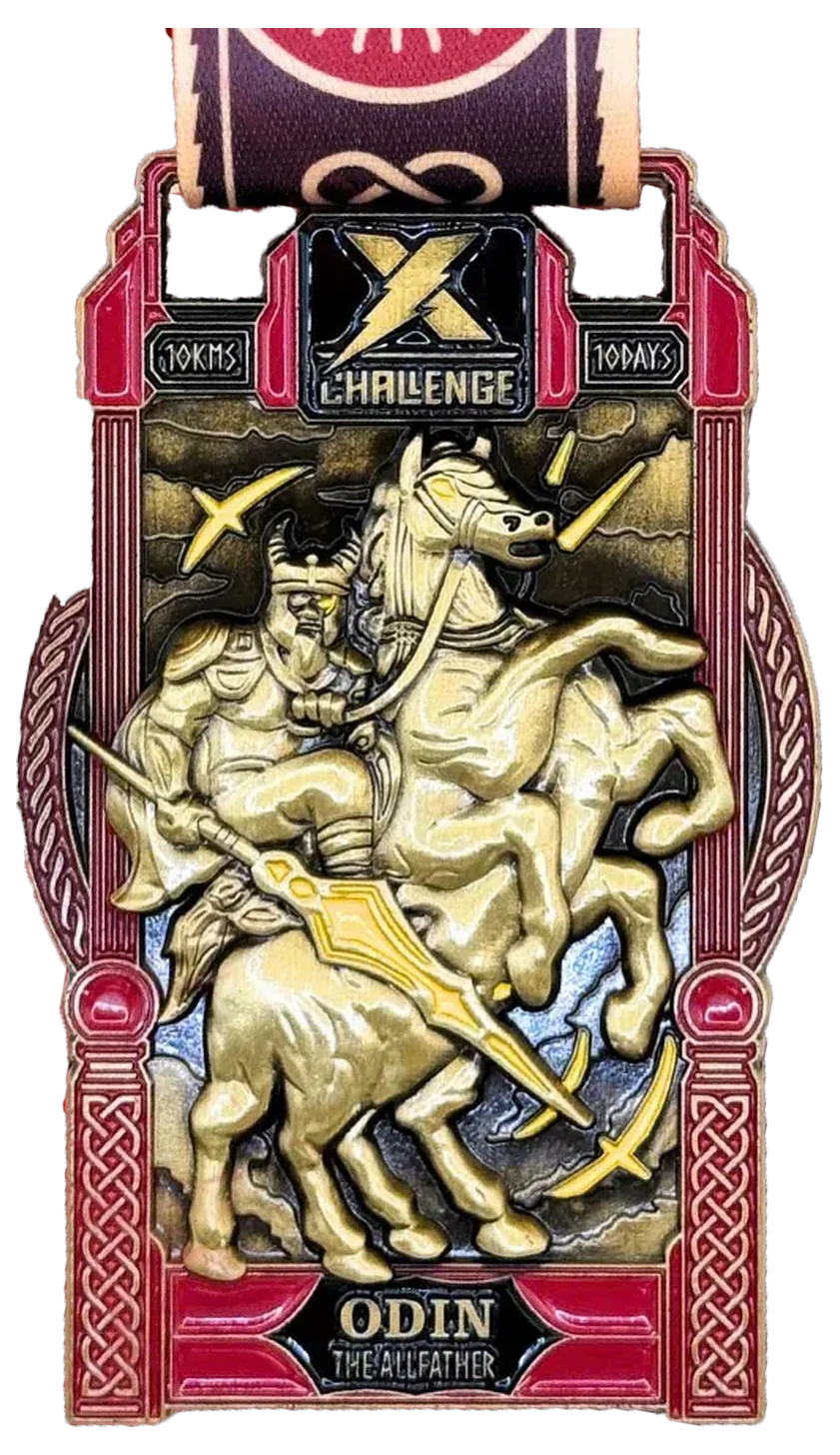
- Odin is 10 km in 10 days, about 1 km a day. At a 12:00 mile (7:27 per km) that is under 8 minutes a day. At three sessions a week it is about 2.5 km, or 19 minutes, per session.
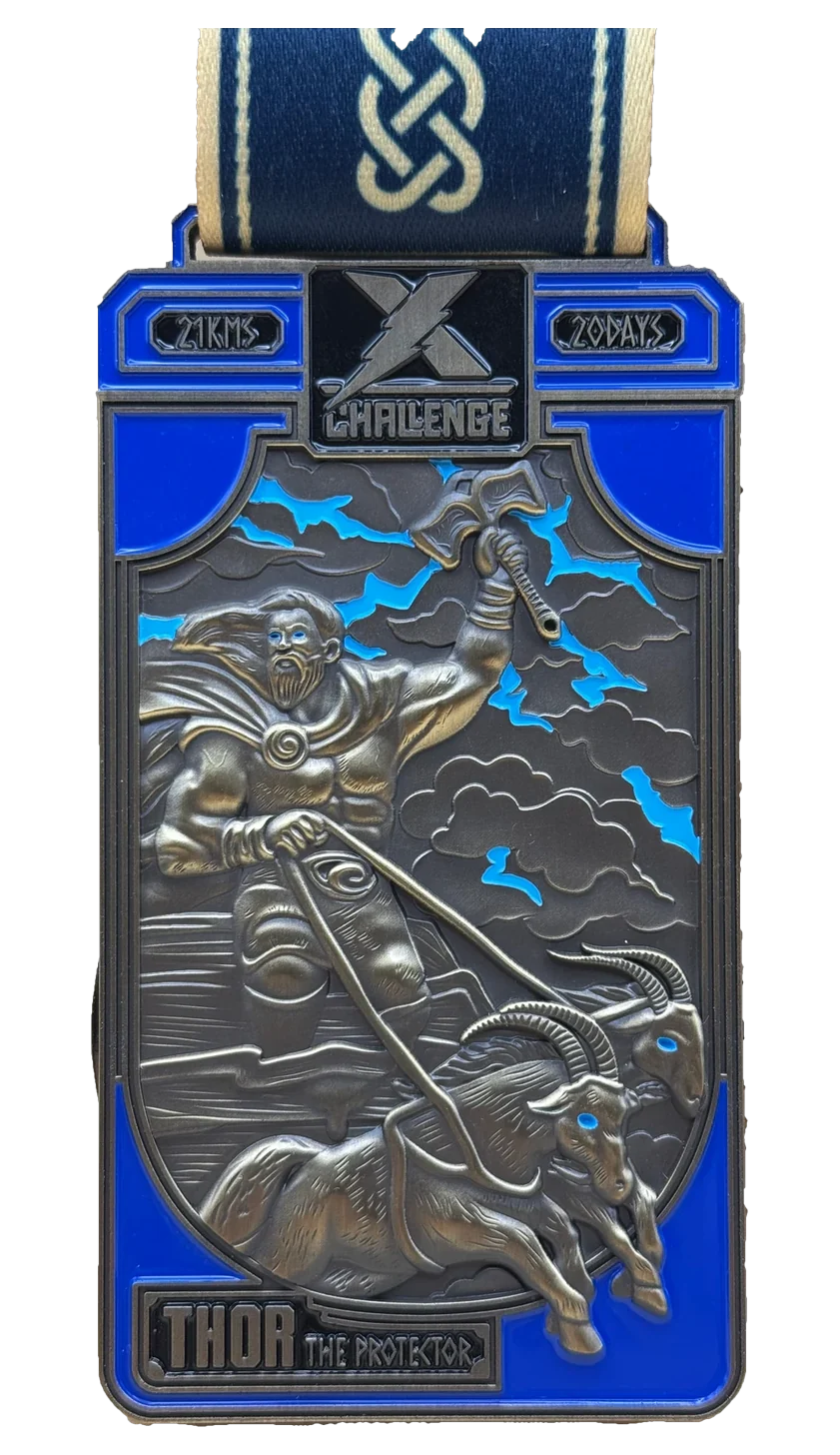
- Thor is 21 km in 20 days. At three sessions a week you need about 2.3 km each time, which is about 17 minutes at a 12:00 mile or 34 minutes at a walk.
Pace does not affect whether you finish. The app adds up distance only, so a slow week and a fast week count the same.
Walking works the same way. At 17 minutes a mile, Loki’s 5 km is about 53 minutes of walking in total, spread over 7 days. Knowing your pace turns a distance into a time you can put in your calendar, which is often the difference between a plan and a wish.
Common questions
- Is a 12-minute mile slow? It is a normal pace for a newer runner and a common easy pace for experienced ones.
- What pace is jogging and what is running? There is no official line. Many people call anything slower than about 10 minutes a mile jogging.
- Why is my pace slower in summer? Heat and humidity raise your effort at any speed. Run by feel on hot days. See running in the heat.
- Should I run by pace or by feel? By feel at first. Pace is useful for planning and for tracking progress over months, but on any single day the talk test is the better guide.
- How do I get my pace down? Run regularly for a few months, mostly at an easy pace, and add one faster session a week once three runs a week feel routine. See how long it takes to run a 5K.
- New to running? Start with your first virtual 5K. Walking instead? See virtual walking challenges with medals.
Sources
- How to Measure Physical Activity Intensity, CDC: the talk test for moderate and vigorous effort.
- If you have a health condition, are pregnant, or have not exercised in a long time, check with a doctor before you start.
Challenges from this guide

Or take the whole set

More: all guides · how it works · every challenge