
How to carry water when running: handhelds, belts and vests
Updated · 6 min read
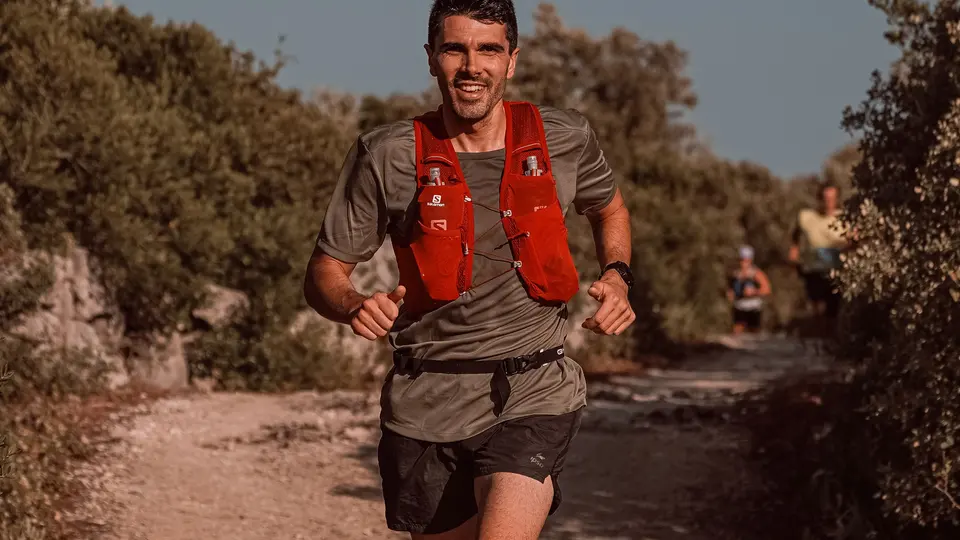
In short: Most runs under about an hour in mild weather need no water on the go. Drink before and after instead. For longer runs, hot days or routes without fountains, carry it. A handheld bottle of 12 to 18 oz suits runs of an hour or so. A hydration belt keeps your hands free with one or two flasks. A running vest carries the most, with room for gels, a phone and a jacket, and suits runs of two hours or more.
Do you need to carry water
How much a runner sweats varies a lot with heat, effort and body size. The American College of Sports Medicine recommends a fluid plan fitted to the person, aiming to avoid losing more than about 2% of body weight to sweat, and warns against drinking far more than you lose. In practice, for healthy adults:
- Under about 60 minutes, mild weather: drink before and after; carry nothing.
- About 60 to 90 minutes, or a warm day: carry a small bottle and sip when thirsty.
- Over 90 minutes, or hot and humid: carry more water, and consider electrolytes.
- Any length with no fountains or shops on the route: carry something.
For how much to drink, see how much water to drink when running. If you have a heart or kidney condition, ask your doctor about fluids.
A simple way to learn your own needs is to weigh yourself before and after a long run, without clothes. A big drop means you lost a lot of sweat; a gain means you drank more than you needed. Use what you learn to decide how much to carry next time.
Signs you may need more on your runs: a dry mouth well before the end, a headache afterward, or dark urine for hours after. Signs you are drinking more than you need: a sloshing stomach or needing to stop often. Feeling dizzy, confused or very unwell on a run is a reason to stop and get help.
Handhelds, belts and vests compared
| Option | Holds | Best for | Downside |
|---|---|---|---|
| Handheld bottle | 12–20 oz | Runs up to about 90 minutes | Occupies one hand |
| Hydration belt | One or two flasks, 10–20 oz in all | Hands free on medium runs | Can bounce if loose |
| Running vest | Two flasks or a bladder, plus storage | Long runs, trails, hot days | Warmer on your back; costs more |
| Loop route | A bottle left at home or in the car | Any run, no gear | Plan the route around it |
For scale, 12 oz is about 355 ml, a little more than a can of soda. 18 oz is about 530 ml, and a typical running vest with two 17 oz flasks carries about a liter.
Handheld bottles
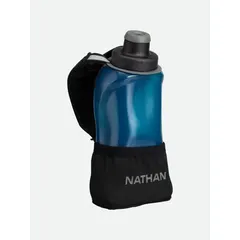
Nathan QuickSqueeze Lite Handheld 12ozNS40160-00030-12OZ
12 oz handheld bottle
List price at nathansports.com, checked Nov 6, 2026 · Photo: nathansports.com
$28Brand site
Nathan SpeedDraw 2 Flask 18ozNS70840-00010-OSFA
18 oz handheld; mesh pocket fits most phones, small zip pocket
List price at nathansports.com, checked Nov 6, 2026
Prices are the brand’s list price on the day checked. Some links are affiliate links: as an Amazon Associate, X Challenge earns from qualifying purchases, at no extra cost to you.
A handheld is the cheapest way to start. The strap holds the bottle so you do not need to grip it. The 12 oz QuickSqueeze is light enough to forget; the 18 oz SpeedDraw adds a pocket for a phone or key. Switch hands every mile or so.
Handhelds suit beginners best because there is nothing to fit or adjust. Fill it, slip your hand through the strap and go. If carrying something in your hand bothers you, try it for a few runs; most people stop noticing within a week.
Hydration belts

Nathan Peak Hydration Waist PackNS4873-00108-OSFM
Single-flask waist belt, insulated holder
List price at nathansports.com, checked Nov 6, 2026
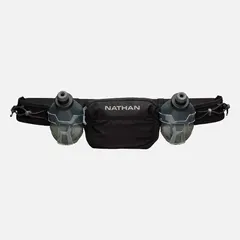
Nathan TrailMix Plus 3.0 Hydration BeltNS30490-60458-OSFM
Two 10 oz flasks
List price at nathansports.com, checked Nov 6, 2026 · Photo: nathansports.com
$60Brand site
Prices are the brand’s list price on the day checked. Some links are affiliate links: as an Amazon Associate, X Challenge earns from qualifying purchases, at no extra cost to you.
A belt sits on the hips and carries the weight close to your center. The Peak holds one insulated flask; the TrailMix Plus 3.0 holds two 10 oz flasks for longer runs. Wear it snug and low on the hips to stop it bouncing.
Belts work best with small, full flasks. A half-empty bottle sloshes, so drink from it early or squeeze the air out of a soft flask. If the belt rides up, it is too loose or sitting too high.
Running vests

Nathan QuickStart 3.0 4 Liter Hydration PackNS30770-00010-OSFM
4 L minimalist running vest; a soft-flask version is sold separately
List price at nathansports.com, checked Nov 6, 2026
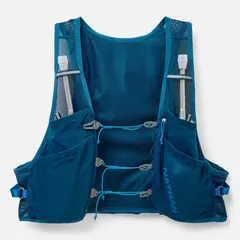
Nathan Pinnacle Breeze 4 Liter Hydration Race VestNS30730-60526-S-M
4 L race vest
List price at nathansports.com, checked Nov 6, 2026 · Photo: nathansports.com
$140Brand site
Prices are the brand’s list price on the day checked. Some links are affiliate links: as an Amazon Associate, X Challenge earns from qualifying purchases, at no extra cost to you.
A vest spreads the load across your chest and shoulders and carries the most: flasks on the front, a jacket and phone behind. The QuickStart 3.0 is a simpler, cheaper vest; the Pinnacle Breeze is a 4 L race vest. Check whether flasks are included on the product page. Vests come in sizes; fit them snug so they do not slosh.
- Measure your chest and pick the size from the brand’s chart, not your T-shirt size.
- Tighten the side straps first, then the chest straps, with the vest full.
- Soft flasks shrink as you drink and bounce less than hard bottles.
- A vest also holds a phone, keys, gels and a jacket, which is why many long-distance runners wear one even when water is not the main reason.
Matching it to your runs
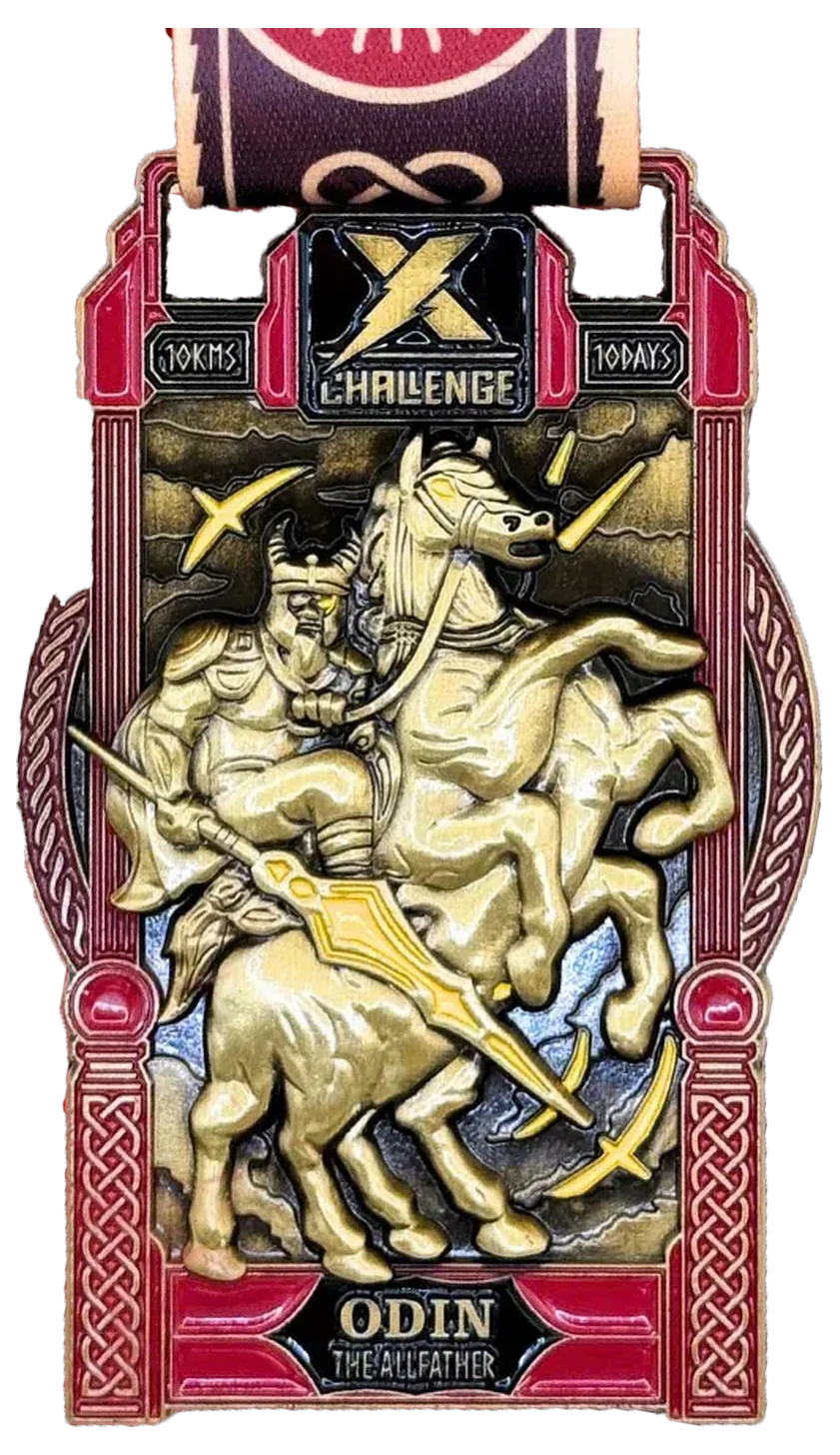
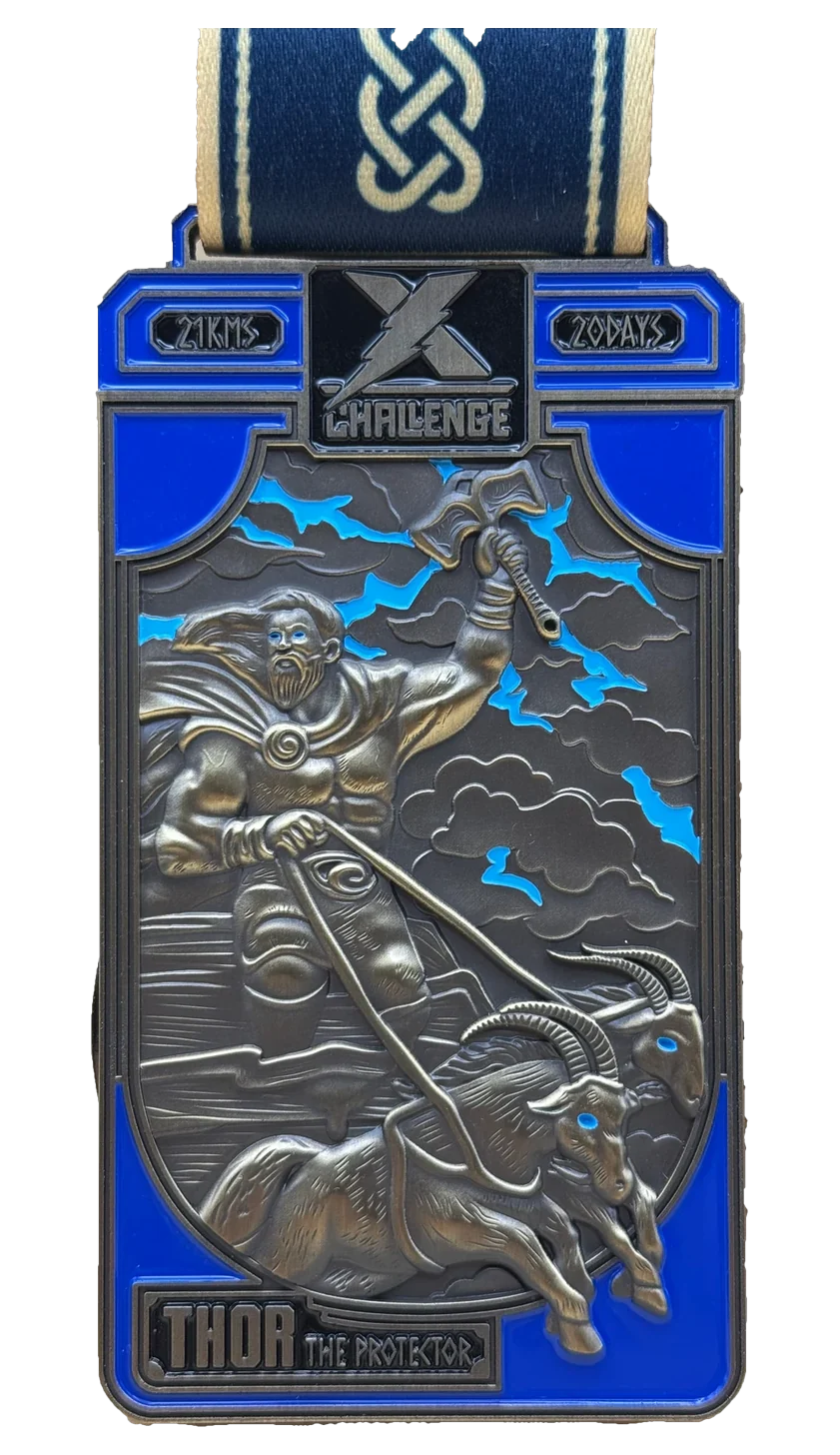
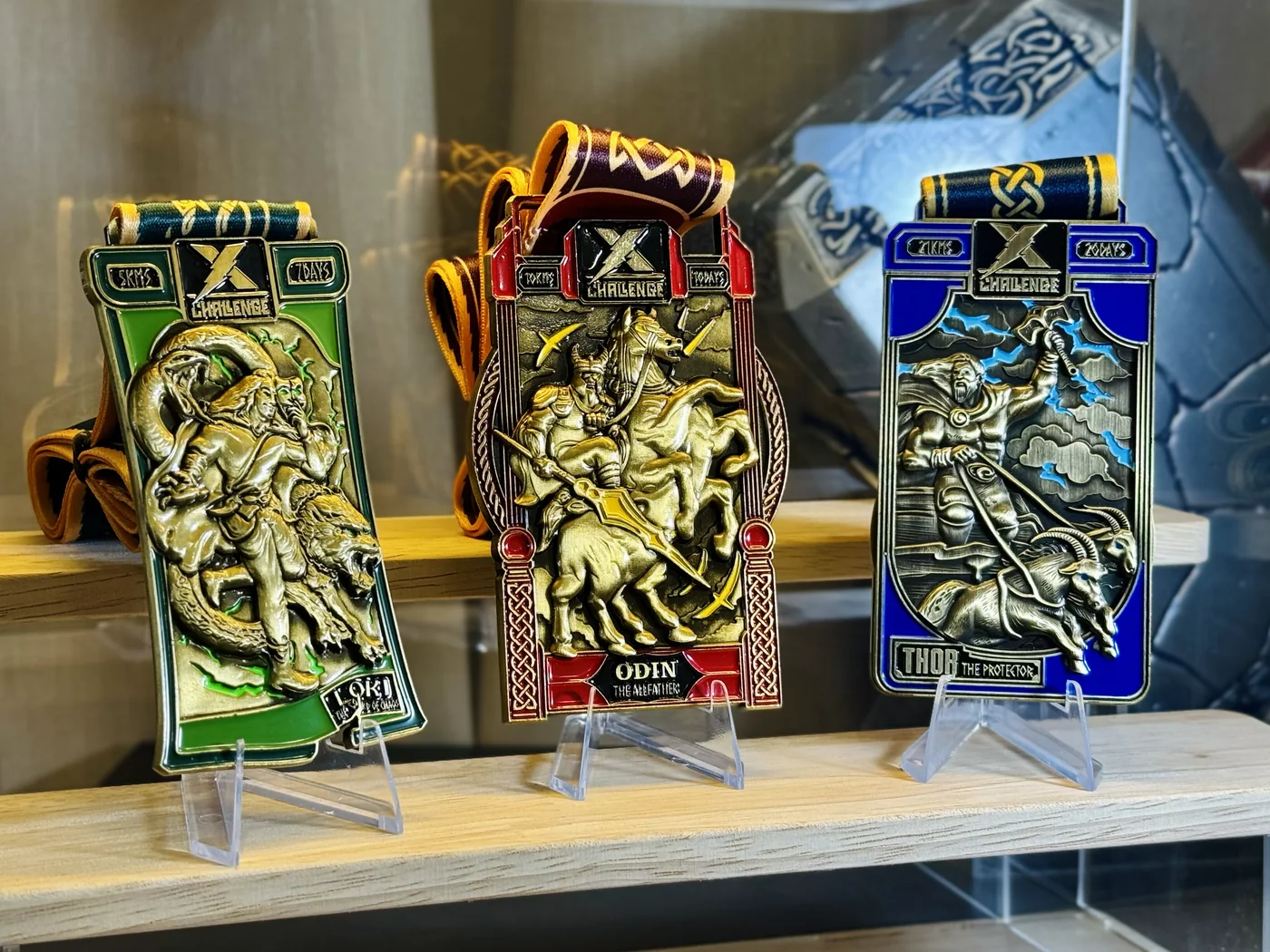
For most X Challenge distances you can split the total into short sessions and skip carrying water. LOKI at 0.7 km a day, or ODIN at 1 km a day, rarely needs a bottle. Training for THOR, long runs of 90 minutes and more are where a belt or vest earns its place, especially on summer mornings. On a walking challenge the same rule holds: a long weekend walk of two hours or more in summer is worth a bottle, while short daily walks need nothing but a drink before you leave.
Tips and mistakes
- Test any new bottle or vest on a short run first, filled, to check for bounce and rubbing.
- Freeze a half-full bottle overnight and top it up in the morning for cold water on hot days.
- Rinse flasks after every run and let them dry open, or they grow mold.
- Do not force water you do not want. Drink to thirst, and more on hot days.
- Plan fountains or a loop past home on long runs to carry less.
- Use the same bottle or vest on training runs that you plan to use on your longest day.
- Carry a little more than you think you need on a new route; you can always pour it out.
Common questions
- Is a bladder better than flasks? Bladders hold more but are harder to refill and clean. Flasks are easier for most runners.
- Do I need electrolytes? For long or very sweaty runs, often yes. See electrolytes for running.
- Should I carry water on a treadmill? Keep a bottle on the console. It is easy to drink and costs nothing extra.
- Belt or vest for a half marathon? Either. A belt is lighter; a vest carries more if it is hot.
- Can I put sports drink in a soft flask? Yes. Rinse it with warm water soon after, because sugar left inside goes sticky and grows mold faster.
Sources and prices
Prices are list prices at the brand’s own store on the day checked. They change, and sales are common, so check the live page before you buy. We picked by specs, fit notes and price; we have not run in every item.
Challenges from this guide
Or take the whole set
More: all guides · how it works · every challenge