
Incline treadmill walking and the 12-3-30 workout
Updated · 6 min read
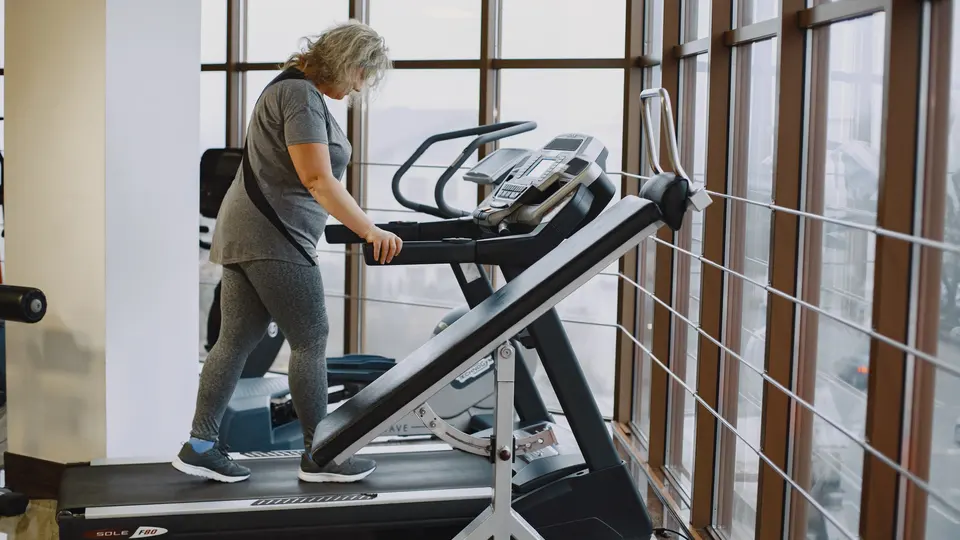
In short: Incline treadmill walking means walking with the deck raised, usually between 3 and 15 percent. It makes your heart and legs work harder without running. The popular 12-3-30 workout is 30 minutes at a 12 percent incline and 3 mph. In a small 2025 study it burned about 10 calories a minute, against about 13 for self-paced running, with a larger share of energy from fat. Start at 3 to 5 percent, keep your hands off the rails, and build up over several weeks.
What the incline numbers mean
The incline on a treadmill is a percentage grade. At 5 percent, the belt rises 5 feet for every 100 feet you walk. At 12 percent, it rises 12 feet. Most home and gym treadmills go up to 10 or 15 percent. A few go higher.
| Incline | Feels like | Good for |
|---|---|---|
| 0–1% | Flat road | Easy walks, warm-ups, running |
| 2–4% | A gentle rise you barely notice outside | First weeks of incline walking |
| 5–8% | A steady hill in a neighborhood | Building strength and fitness |
| 9–12% | A steep street or a hiking trail climb | Hard sessions, 12-3-30 |
| 13–15% | A very steep trail | Short intervals for fit walkers |
What the research says about 12-3-30
The 12-3-30 workout spread on social media, but few studies have looked at it directly. One exploratory study, published in 2025 in the International Journal of Exercise Science, had 14 young, regularly active adults do 12-3-30 and a self-paced treadmill run that burned the same total calories, about 310.
- 12-3-30 burned about 10 calories a minute. Running burned about 13.
- The run reached the same total in about 24 minutes, against 30 for the walk.
- About 41 percent of the energy in 12-3-30 came from fat, against about 33 percent in the run.
The authors conclude that 12-3-30 is less time-efficient than running for burning calories, but may suit people who want more of their energy to come from fat. The study was small, the people were young and fit, and it measured single sessions, not weight change over time. A higher share of fat during a session does not mean more fat lost over months. What it does show is that steep walking is real exercise, at about three-quarters of the calorie rate of a self-paced run, with no running at all.
A six-week path to 12-3-30
| Week | Incline | Speed | Time |
|---|---|---|---|
| 1 | 3% | 2.8 to 3.0 mph | 15 to 20 minutes |
| 2 | 5% | 3.0 mph | 20 minutes |
| 3 | 6 to 7% | 3.0 mph | 20 to 25 minutes |
| 4 | 8% | 3.0 mph | 25 minutes |
| 5 | 10% | 3.0 mph | 25 to 30 minutes |
| 6 | 12% | 3.0 mph | 30 minutes |
You do not have to reach 12 percent. Plenty of people stay at 6 to 8 percent for months and get a good workout. If a week leaves your calves very sore, repeat it. Lower the speed before you lower the incline if you cannot talk in short sentences. On days when you feel flat, do the previous week’s session instead. Progress comes from showing up, not from forcing each step. If you have a health condition, are pregnant, or have not exercised in a long time, check with a doctor before you start.
Form and the handrails
Holding the rails is the most common habit on a steep treadmill, and it changes the workout. In a 2014 study, people who leaned back while gripping the rails at 10 percent used about the same energy as walking unsupported at 5 percent. Holding on while staying upright made less difference. If you need the rails to keep up, the incline is too high for now.
- Stand tall and lean very slightly forward from the ankles, as you would on a real hill.
- Let your arms swing. Touch the rail lightly only if you need balance.
- Take short steps and keep your whole foot working. Do not walk on your toes.
- Stay in the middle of the belt, with the safety clip attached.
- Lower the incline gradually at the end before you step off. Your legs can feel strange on flat ground.
Who should go carefully
Steep walking loads your calves, Achilles tendons and lower back more than flat walking. Sore calves in the first weeks are common and should ease within a couple of days. Pain at the back of your heel, pain that gets worse as you walk, or pain in your lower back is a sign to drop the incline and rest.
If you have had Achilles, knee or back trouble, build up more slowly and stay at lower grades. Do not increase incline, speed and time all in the same week. Stop if you feel pain, as opposed to effort, and see a doctor if it does not settle. Chest pain, dizziness or unusual breathlessness mean stop straight away and get medical help.
Does incline walking count toward a challenge?
The distance on the belt counts. The height you climb does not add extra. Thirty minutes at 3 mph is 1.5 miles, about 2.4 km, whatever the incline. Record the session in the app’s indoor mode and it adds to the same total as your outdoor walks.
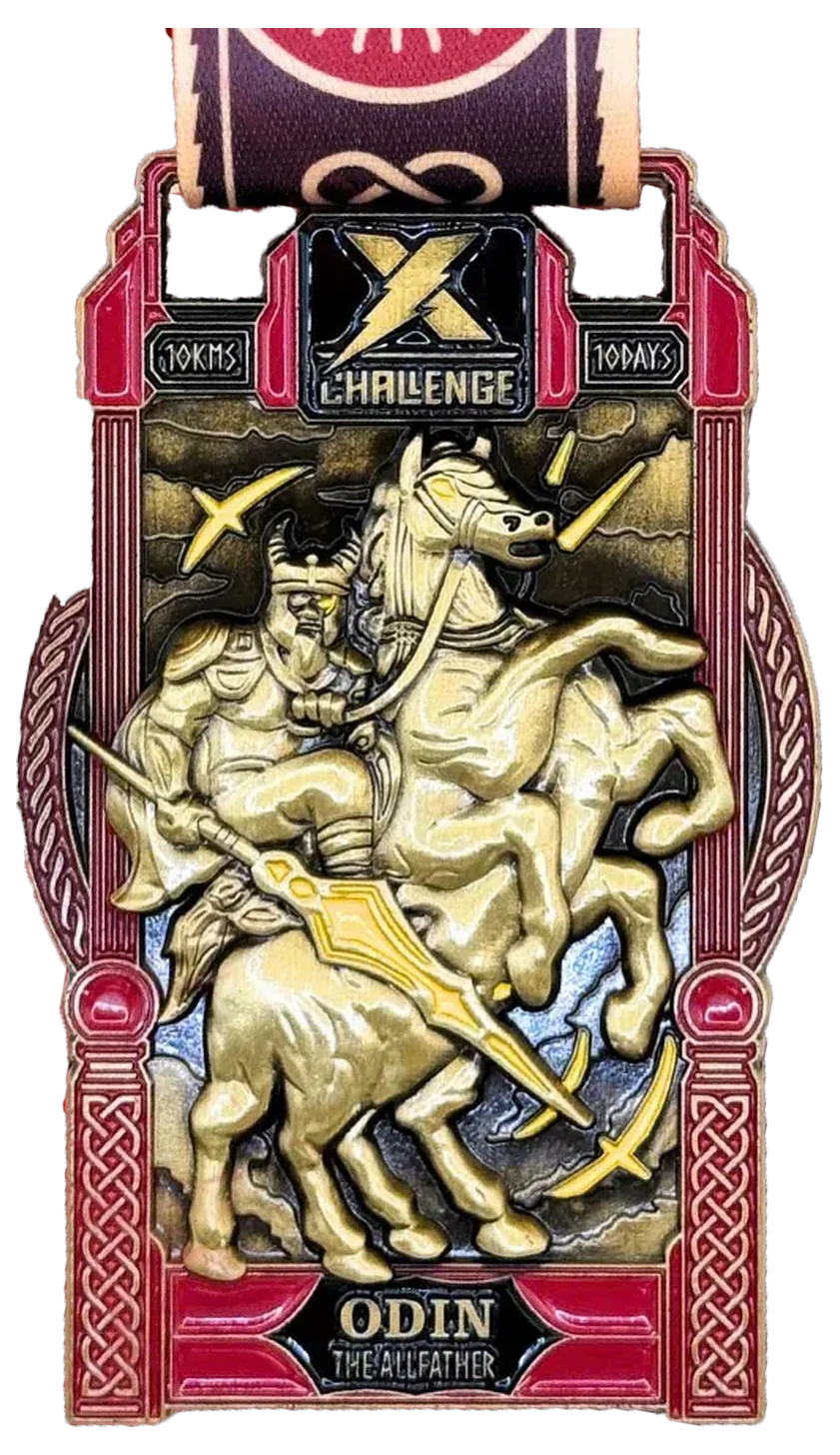
That makes incline walking a good way to get more from limited time while still moving a medal forward. Four or five 12-3-30 sessions cover ODIN in its 10 days, and two cover most of LOKI. For flat treadmill sessions and a beginner run plan, see the treadmill guide.
Common mistakes
- Starting at 12 percent on day one. Most people end up hanging on the rails or with very sore calves.
- Walking too fast for the grade. On a steep incline, 2.5 to 3 mph is plenty.
- Doing it every day. Two or three incline sessions a week, with flat walks in between, is easier on your tendons.
- Skipping the flat warm-up. Five easy minutes first makes the climb feel better.
- Judging it by the calorie number on the console. That number is an estimate, and holding the rails makes it less accurate.
Common questions
Is incline walking better than running? Neither is better for everyone. Running burns more per minute. Steep walking is lower impact and easier to start. Many people do both.
Is 12-3-30 good for beginners? Not on day one. Build up from a lower incline over several weeks, as in the plan above.
Can I do incline walking outdoors? Yes. A steady hill or a hiking trail does the same job. Short, steep hills repeated a few times work well.
Sources
- An Exploratory Study Comparing the Metabolic Responses between the 12-3-30 Treadmill Workout and Self-Paced Treadmill Running (Wong and others, International Journal of Exercise Science, 2025): 12-3-30 used about 10 calories a minute against about 13 for running, with a higher share from fat, in 14 young, active adults.
- The Reduction of Metabolic Cost While Using Handrail Support During Inclined Treadmill Walking is Dependent on the Handrail-use Instruction (Hofmann and others, International Journal of Exercise Science, 2014): leaning back on the rails at a 10% incline cut the energy cost to about that of unsupported walking at 5%.
- How to avoid exercise injuries (MedlinePlus, NIH): warm up slowly, cool down for 5 to 10 minutes, do not raise frequency, length and effort all at once, and stop if you feel pain.
- Adult Activity: An Overview (CDC): adults need 150 minutes of moderate activity a week, such as brisk walking, plus muscle-strengthening on two days.
Challenges from this guide

Or take the whole set

More: all guides · how it works · every challenge