
Interval training for beginner runners
Updated · 6 min read

In short: Interval training means alternating short bursts of faster running with easy jogging or walking to recover. Beginners are ready once they have run easily three times a week for about a month without pain. Start with one session a week: a 10-minute warm-up, six rounds of 1 minute at a hard but controlled effort with 2 minutes easy, then a cool-down. Hard means you can say only a few words, not an all-out sprint. Keep every other run easy.
What interval training is
An interval is a short stretch of faster running, followed by a recovery of easy jogging or walking. You repeat that pair several times. Because each hard stretch is short, you can spend more total time at a faster pace than you could in one continuous effort.
Intervals teach your body to run faster with less strain. They give your heart and lungs a harder workout than easy running does, and over weeks your normal pace tends to feel easier. They also break up a routine. Many runners find one interval session a week the most interesting run they do. The catch is that hard running is tiring. Well-trained endurance athletes keep it to a small share of their training, and beginners should too.
Are you ready?
- You have been running about three times a week for four to six weeks.
- You can run 20 to 30 minutes at an easy pace without stopping.
- Nothing hurts. Soreness the day after is fine. Pain in one spot that gets worse when you run is not.
Not there yet? Keep building easy runs, or start with strides only. If you have a health condition, are pregnant, or have not exercised in a long time, check with a doctor before you start.
Three first sessions
Every session starts with 10 minutes of easy jogging and ends with 5 to 10 minutes of easy jogging or walking. Do one of these a week, in this order.
| Session | Main set | Recovery | Total time |
|---|---|---|---|
| 1. Strides | 6 × 20 seconds fast but relaxed | Walk back, about 60 seconds | About 25 minutes |
| 2. Minute-ons | 6 × 1 minute hard | 2 minutes easy jog | About 35 minutes |
| 3. Ladder | 1-2-3-2-1 minutes hard | Equal time easy jog | About 40 minutes |
Once session three feels manageable, you can stretch the work: 5 × 2 minutes, then 4 × 3 minutes, keeping 2 minutes of easy jogging between them. Add one or two repeats at a time, not more.
How hard is hard?
The CDC uses a simple talk test. At a vigorous effort you cannot say more than a few words without pausing for breath. That is the right zone for the hard part of an interval. On a 1–10 effort scale, aim for 7 or 8. It is never a 10.
- The last repeat should be as fast as the first. If you fade, slow the next session down.
- You should finish feeling you could have done one more.
- Recovery jogs are slow. Walking is fine if you need it.
If you prefer numbers, hard 1-minute intervals sit around your current 5K pace or a little quicker. The running pace calculator works it out.
Intervals for walkers and run-walkers
Intervals are not only for runners. If you walk or run-walk, the same idea works at your own level:
- Walkers: after 10 minutes of easy walking, alternate 1 minute of very brisk walking with 2 minutes of easy walking, six to eight times.
- Run-walkers: turn some of your walk breaks into slightly faster running segments, then walk a little longer to recover.
- Newer runners: 30 seconds of easy jogging and 90 seconds of walking is an interval session too.
The rule is the same for everyone. The hard part should leave you able to say only a few words, and the easy part should let you recover fully.
An eight-week progression
One interval session a week, building slowly. If a week feels hard, repeat it before moving on.
| Week | Main set | Recovery between |
|---|---|---|
| 1 | 6 × 20-second strides | Walk back |
| 2 | 8 × 20-second strides | Walk back |
| 3 | 6 × 1 minute hard | 2 minutes easy jog |
| 4 | 8 × 1 minute hard | 2 minutes easy jog |
| 5 | Ladder: 1-2-3-2-1 minutes | Equal time easy jog |
| 6 | 5 × 2 minutes hard | 2 minutes easy jog |
| 7 | 6 × 1 minute uphill | Walk down |
| 8 | 4 × 3 minutes hard | 2 minutes easy jog |
Where and when to run them
Anywhere flat and safe. A school track, a quiet park path or a bike trail all work. Run by time, not distance, so you do not need exact markers. A treadmill is useful in bad weather. Set the speed for the hard part and step to the side rails or slow the belt for recovery. The treadmill guide explains how treadmill miles count.
Hills are another option. Run up a gentle hill for 30 to 60 seconds and walk down. Uphill running is hard on the lungs but easier on the legs than flat sprinting.
| Day | Session |
|---|---|
| Monday | Rest or walk |
| Tuesday | Intervals |
| Wednesday | Rest, walk, or strength |
| Thursday | Easy run + 4 strides |
| Friday | Rest |
| Saturday | Long easy run |
| Sunday | Rest or walk |
Keep at least 48 hours between your interval session and your long run. If you are training for a 10K or a half marathon, intervals replace one easy run. They are not an extra day.
Common mistakes
- Sprinting the first repeat. Start controlled and finish strong.
- Skipping the warm-up because the session is short.
- Jogging the recoveries too fast. They are meant to be easy.
- Doing intervals the day before a long run, or two days in a row.
- Adding intervals and more weekly distance at the same time.
- Pushing through sharp pain to finish the set. Stop and walk home.
Intervals pair well with a short goal. On LOKI or ODIN, every interval session also adds its warm-up, repeats and cool-down to your total. For speed sessions beyond these, read how to run faster.
A watch helps, but your phone works
A GPS watch with an interval timer beeps when to start and stop, so you can keep your eyes on the path. A phone timer works just as well, and the X Challenge app records the distance either way. If you want a watch, these are two of the simpler running watches. The GPS watches by budget guide compares more.
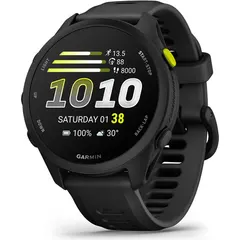
Garmin Forerunner 70010-04307-00
AMOLED; up to 13 days battery, per Garmin
List price at garmin.com, checked Nov 6, 2026 · Photo: garmin.com
$249.99Brand site
COROS PACE 4
AMOLED; up to 41 h GPS, 19 days daily use
List price at coros.com, checked Nov 6, 2026 · Photo: coros.com
$249Brand site
Common questions
- How often should beginners do intervals? Once a week is enough. Twice a week only after several months of steady running.
- Is HIIT the same as running intervals? Similar idea. HIIT often means very short all-out efforts. Beginner running intervals are longer and controlled.
- Can I do intervals by walking? Yes. Alternate brisk walking with easy walking, or add short jogs to a walk.
- What if I feel sick or dizzy? Stop, walk, and rest. If it happens again, check with a doctor before your next hard session.
Sources
Challenges from this guide


Or take the whole set

More: all guides · how it works · every challenge