
Strength training for runners: a 20-minute routine
Updated · 6 min read
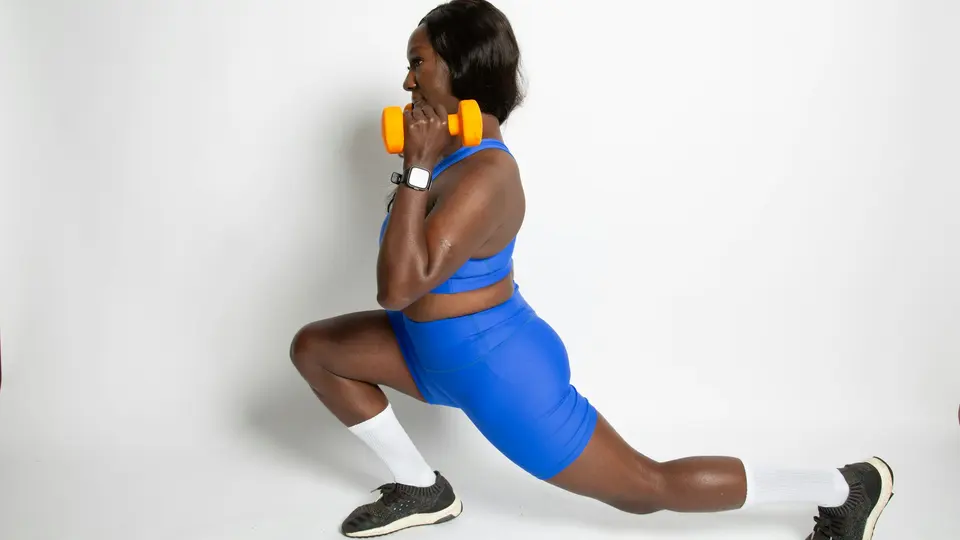
In short: Runners benefit from strength training two days a week. The CDC recommends that all adults do muscle-strengthening activity on at least two days a week, working every major muscle group. For runners, that means legs, hips and core first: squats, lunges, glute bridges, calf raises, step-ups and planks. A 20-minute bodyweight routine is enough to start. Add load slowly over weeks. Do it on easy-run days or rest days, and keep heavy leg work away from the day before your long run.
Why runners should strength train
- Fewer injuries. A 2014 meta-analysis of 25 trials across many sports found that programs built on strength training cut sports injuries to roughly a third of the rate in comparison groups. Stretching alone showed no clear effect.
- Easier running. Reviews of trained distance runners found that several weeks of strength work improved running economy, meaning less energy at the same pace.
- Better hills and finishes. Stronger hips and calves help when you are tired late in a long run.
Most of that research involves athletes in organized sport, not recreational runners, so the exact numbers may not carry over. The direction is consistent, and the CDC recommends strength work for all adults anyway.
How often and how long
Two sessions a week, 20 to 30 minutes each, is a solid start. Leave at least a day between them. One session a week is better than none, and it keeps the habit going in busy weeks.
You do not need a gym. Body weight, a step or a sturdy chair, and later a pair of dumbbells or a backpack with some books in it cover everything here.
The research on runners points the same way. In the running-economy meta-analysis mentioned above, most programs used just two to four lower-body exercises, two or three times a week, for 8 to 12 weeks. That is a small amount of work. Consistency over months matters far more than any single hard session.
A 20-minute bodyweight routine
Warm up with 3 to 5 minutes of brisk walking, marching or easy jogging. Then work through the list. Rest 30 to 60 seconds between sets.
| Exercise | Sets × reps | What it works |
|---|---|---|
| Squat (to a chair) | 2–3 × 10–12 | Thighs and glutes |
| Reverse lunge | 2 × 8 each leg | Thighs, glutes, balance |
| Glute bridge | 2–3 × 12 | Glutes and hamstrings |
| Step-up | 2 × 8 each leg | Single-leg strength, like running |
| Single-leg calf raise | 2 × 10–15 each leg | Calves and Achilles |
| Side plank | 2 × 20–30 seconds each side | Hips and side of the trunk |
| Bird dog | 2 × 8 each side | Lower back and balance |
Move slowly and with control. Stop each set with one or two good reps still in the tank.
How to do each move
- Squat: feet about hip-width apart, sit back toward a chair until you lightly touch it, then stand. Knees track over your toes. Chest stays up.
- Reverse lunge: step one foot back and lower until both knees are bent at about 90 degrees. Push through the front heel to return.
- Glute bridge: lie on your back, knees bent, feet flat. Squeeze your glutes and lift your hips until your body is straight from knees to shoulders. Hold for a second.
- Step-up: one foot on a sturdy step or low bench. Press through that foot to stand tall on the step, then lower slowly. Do not push off the back foot.
- Single-leg calf raise: stand on one foot on the edge of a step, holding a wall for balance. Rise onto your toes, then lower your heel below the step slowly.
- Side plank: lie on your side, forearm under your shoulder. Lift your hips so your body forms a straight line. Bend the bottom knee to make it easier.
- Bird dog: on hands and knees, reach one arm forward and the opposite leg back. Hold for two seconds without letting your back sag.
How to progress
- Weeks 1–2: learn the moves with body weight only.
- Weeks 3–4: add reps until the top of each range feels manageable.
- Weeks 5–8: hold dumbbells or a loaded backpack for squats, lunges and step-ups. Drop back to the lower rep count.
- After two months: move to harder versions, such as split squats with the back foot raised or single-leg bridges.
Short jumps, like small hops in place or skipping, can come later. Add them only once your calves and knees are comfortable with calf raises and step-ups.
A 10-minute version for busy weeks
Short on time? Keep the habit with three moves, done as a circuit twice:
- 12 squats.
- 8 reverse lunges on each leg.
- 15 single-leg calf raises on each leg, then a 30-second side plank on each side.
That takes about 10 minutes and fits after an easy run. In the last week before a race or a long challenge run, drop to this version and skip anything new.
Where it fits in a running week
| Day | Running | Strength |
|---|---|---|
| Monday | Rest | Strength session |
| Tuesday | Easy run or intervals | |
| Wednesday | Rest or walk | |
| Thursday | Easy run | Strength after the run |
| Friday | Rest | |
| Saturday | Long easy run | |
| Sunday | Rest or walk |
If you do strength and a run on the same day, run first, or leave a few hours between them. Keep hard leg sessions at least two days away from your long run. Sore legs on the day of a long run usually mean a slower, harder run.
Soreness, pain and safety
Mild muscle soreness a day or two after a new exercise is normal and fades as you repeat it. Sharp pain in a joint, pain that stays in one spot, or pain that changes how you move is a signal to stop. The guide to sore muscles after running explains the difference.
Stretching is fine if you enjoy it, but it does not replace strength work. In the 2014 meta-analysis above, stretching programs showed no clear effect on injuries. Gentle mobility after a run can feel good. See the stretches after running guide or foam rolling for runners.
If you have a health condition, are pregnant, or have not exercised in a long time, check with a doctor before you start.
Common mistakes
- Starting heavy. Use body weight for two weeks first.
- Rushing reps. Slow and controlled works the muscle and protects the joint.
- Only doing core. Hips, thighs and calves matter more for most runners.
- Stopping when race training gets busy. Keep one short session even in your biggest weeks.
Common questions
- Will strength training make me bulky? Two short sessions a week alongside running is very unlikely to add much size.
- Can I strength train on a running day? Yes. Run first, or space them a few hours apart.
- Do I need weights? Not at first. Add load once body weight feels easy.
- Does it help on a multi-day challenge? Yes. On a goal like THOR, stronger legs make back-to-back days easier.
Sources
- Adult Activity: An Overview, CDC
- Lauersen J.B. et al. The effectiveness of exercise interventions to prevent sports injuries: a systematic review and meta-analysis. Br J Sports Med, 2014
- Balsalobre-Fernández C. et al. Effects of strength training on running economy in highly trained runners. J Strength Cond Res, 2016
- Blagrove R.C. et al. Effects of strength training on the physiological determinants of middle- and long-distance running performance. Sports Med, 2018
Challenges from this guide


Or take the whole set

More: all guides · how it works · every challenge