
How fast should your long run be?
Updated · 6 min read

In short: Your long run should be slow enough that you can talk in full sentences the whole way. For most people that is roughly 1 to 2 minutes per mile slower than their current 5K pace. If your 5K pace is 10:00 per mile, a long run between about 11:00 and 12:00 per mile is right. Go by effort, not the watch: on hot, humid or hilly days your pace will be slower at the same effort, and that is fine. Walk breaks are allowed.
What counts as a long run
Your long run is simply the longest run of your week. For a new 10K runner it might be 4 or 5 miles. For a half marathon plan it builds to 10 or 11. Many plans keep it to about a quarter to a third of your weekly running.
Its job is time on your feet. It trains your heart, legs and mind to keep going. That only works if you finish it able to run again in two or three days.
Three ways to find your pace
- The talk test. The CDC describes moderate effort as being able to talk but not sing. On a long run you should be able to say full sentences. If you can only get out a few words, slow down.
- Your 5K time. Add about 1 to 2 minutes to each mile of your current 5K pace. Use a recent time, not a best from two years ago.
- How it feels. On a 1–10 scale of effort, a long run is a 3 or 4. You should feel you could keep going at the end.
| 5K time | 5K pace | Long-run pace |
|---|---|---|
| 22:00 | 7:05 | 8:05–9:05 |
| 25:00 | 8:03 | 9:03–10:03 |
| 30:00 | 9:39 | 10:39–11:39 |
| 35:00 | 11:16 | 12:16–13:16 |
| 40:00 | 12:53 | 13:53–14:53 |
Your time is not in the table? The running pace calculator converts any time to a pace per mile or per kilometer.
Why slow works, and how the long run grows
Endurance athletes across many sports do the bulk of their training at low intensity, with only a small share of hard work. Slow running lets you stay out longer, which is what builds endurance. It also means you recover in a day or two instead of four, so the rest of your week stays on track.
A long run that turns into a race does the opposite. You arrive at your next run tired, cut it short, and the plan starts to slip. Save fast running for a short interval session instead.
Pace stays easy. Distance is what changes, a little each week, with an easier week every third or fourth week. Here is where the long run usually starts and peaks for the two most common goals:
| Goal | First long run | Longest run | When the longest comes |
|---|---|---|---|
| First 10K | 3–4 | 6–6.2 | The final week or the week before |
| First half marathon | 4–5 | 10–11 | About two weeks before the day |
Add about half a mile to a mile at a time. A 2025 study of more than 5,000 runners linked single runs more than 10% longer than their longest of the previous month with more overuse injuries, so small steps are worth it. Full plans are in the 10K guide and the half marathon guide.
Heat, hills and wind
Effort matters more than pace. On a hot, humid summer morning your heart works harder at the same speed, so the same effort gives a slower pace. The same goes for hills and a headwind. Let the pace drop and keep the effort easy.
- Hot days: run early, carry water, and expect to be 30 seconds to a minute or more per mile slower. The running in the heat guide has more.
- Hills: shorten your stride and let the pace go on the way up. Do not try to win it back on the way down.
- Cold, windy days: start into the wind so it is behind you on the way home.
Walk breaks on long runs
Walking is a tool, not a failure. A planned walk keeps the effort easy and can help you cover more distance with less fatigue. Two common patterns:
| Pattern | Run | Walk | Good for |
|---|---|---|---|
| Minutes | 4 minutes | 1 minute | Newer runners, hot days |
| Miles | Each mile | 30–60 seconds at the marker | Half marathon builds |
| Hills | Flats and downhills | Every steep uphill | Hilly routes |
Take the walk breaks from the start, not only once you are tired. That is when they work best.
Water and fuel
For long runs under an hour, most people only need water before and after. Past about 75 minutes, carry water and practice with a gel or sports drink so you know what your stomach accepts. See what to eat before a run, energy gels for running and how much water to drink.
Long runs on a treadmill
Snow, ice, storms or a summer heat wave can push a long run indoors. That is fine. Set the belt to your easy pace and use the same talk test. Many runners set a 1% incline so the effort feels closer to running outside. Break the time into chunks: change the speed slightly every mile, or watch something for the middle section. Bring water and a towel, because there is no breeze. The treadmill guide explains how indoor miles count toward a challenge.
Common mistakes, and the day after
- Starting at your usual pace. The first mile should feel almost too slow.
- Chasing yesterday’s pace on a hotter or hillier day.
- Running the long run with a faster friend. Run with someone your speed, or let them go.
- Skipping breakfast before a long morning run. Try a light snack you have tested.
- Adding several miles at once because you feel good. Save it for next week.
Some stiffness the next day is normal. Rest, walk, or run very easily for 20 to 30 minutes. Eat a proper meal with carbohydrate and protein within a few hours of finishing. See what to eat after a run. If you are still very tired two days later, the long run was too fast or too long, so cut back next week.
Long runs on an X Challenge
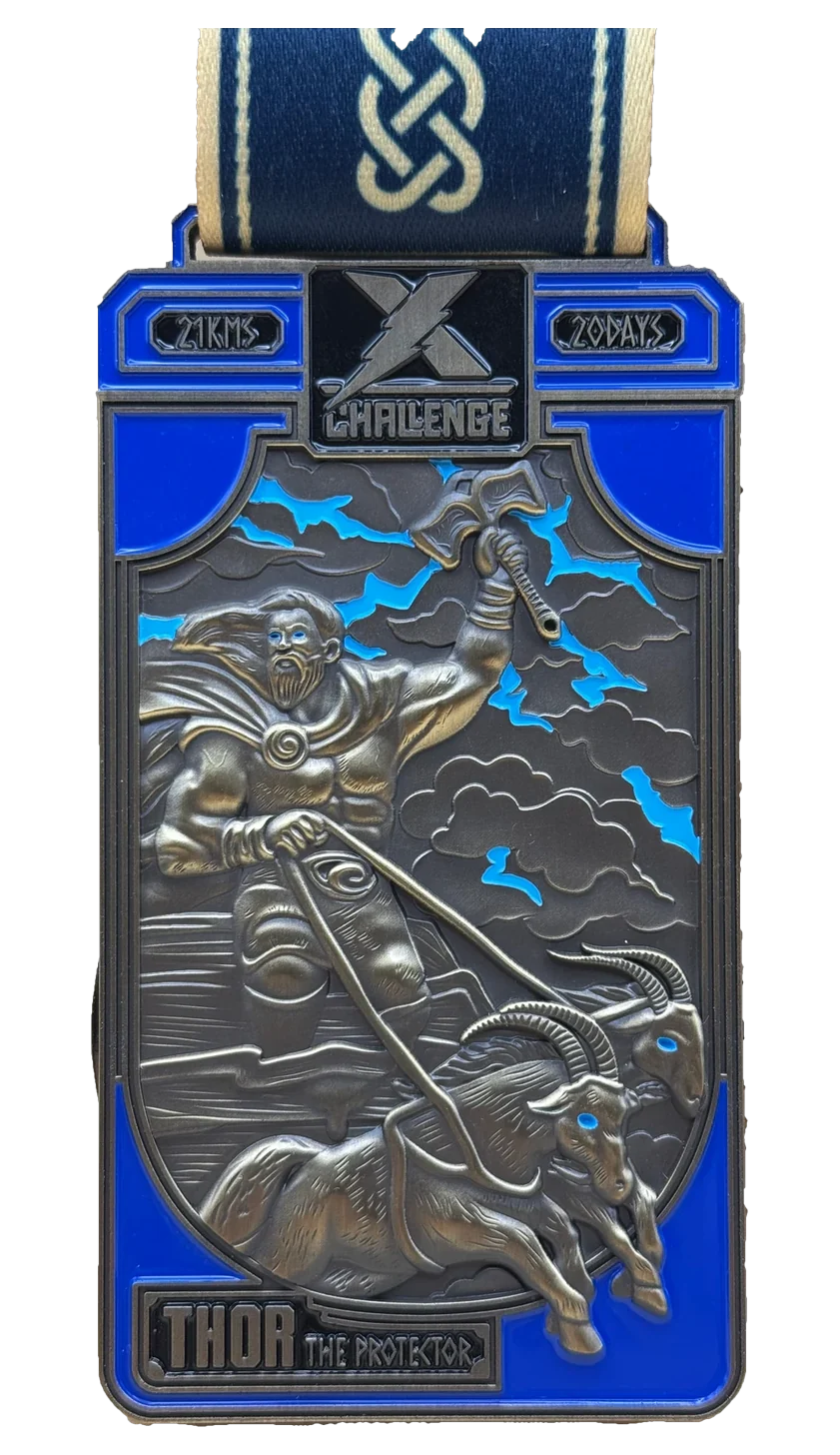
On THOR you have 20 days for 21 km. You can run it as one long run, or as two or three long-ish runs of 4 to 6 miles. Either way, keep them easy. ODIN gives you 10 days for 10 km: a single slow 6.2 miles is a good first long run. The app adds up every session, so a walk on the same day still counts.
Common questions
- Is it OK if my long run feels too slow? Yes. That is what it should feel like, especially in the first half.
- Should I ever run long runs fast? Experienced runners sometimes finish the last mile or two faster. For a first 10K or half, keep the whole run easy.
- How much should my long run grow each week? About half a mile to a mile, with an easier week every three or four weeks.
- Can I split a long run into two? For fitness, two shorter runs are not quite the same as one long one. For a distance goal that counts every session, they add up the same.
- What if my heart rate is high even at a slow pace? Heat, poor sleep and illness all raise it. Slow down or walk. If it feels unusual, stop and check with a doctor.
Sources
Challenges from this guide

Or take the whole set

More: all guides · how it works · every challenge