
Running lights and reflective gear: what to buy
Updated · 7 min read
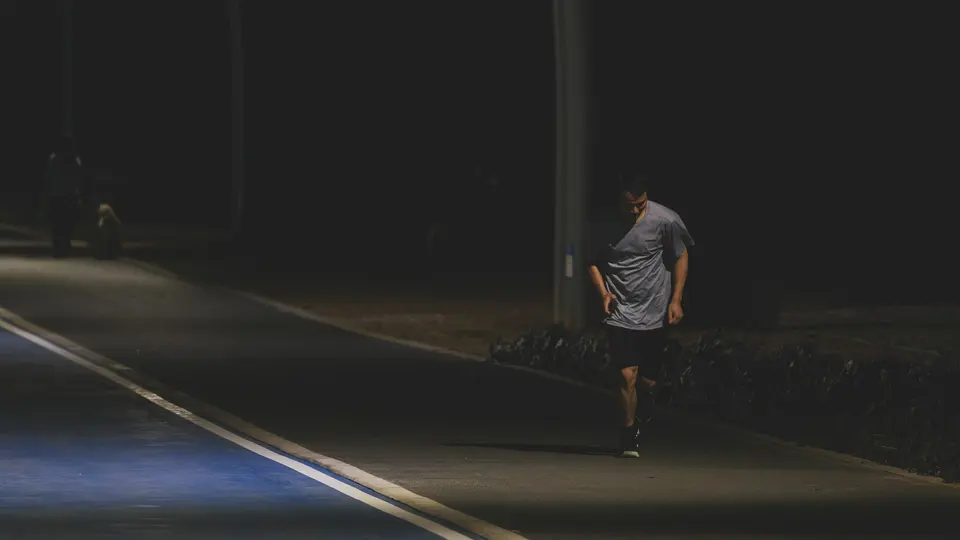
In short: Running in the dark needs two things: drivers must see you, and you must see the ground. To be seen, wear reflective gear on parts that move, such as ankles and wrists, plus a vest, and add a small flashing light. To see, carry a headlamp or chest light of at least 100 to 250 lumens wherever streetlights are patchy. A basic be-seen kit costs under $60. Add a headlamp once you run on unlit paths.
Be seen, then see
Reflective material bounces a car’s headlights back to the driver, so it works only when light hits it. A light of your own works from every angle, and a flashing one catches the eye sooner. You want both. The CDC lists reflective clothing among the ways pedestrians can stay safer near traffic.
Movement makes you recognizable as a person. A reflective band on each ankle moves as you run, so drivers read it quickly. That is why the cheapest piece of night gear is also one of the most useful.
Dark clothing is the main thing to avoid. A black jacket on an unlit road is close to invisible until a driver is very near. Even in daytime, dusk, fog and heavy rain make runners hard to see, so the same gear earns its place on gray winter afternoons.
Types of night gear
| Gear | Helps you | Notes |
|---|---|---|
| Reflective slap bands | Be seen | Wrists and ankles; very cheap; work only in headlights |
| Reflective vest | Be seen | Large reflective area front and back; light enough for summer |
| Clip-on strobe | Be seen | Clips to a shirt, hat or belt; front white, back red |
| LED armband | Be seen | Lights up on its own, visible without headlights |
| Headlamp | See and be seen | 100–250 lumens for running on dark roads or paths |
| Chest or waist light | See | Steadier beam than a headlamp, casts shadows on bumps |
Where you put it matters. Lights and reflectors on the parts of you that move, such as ankles, wrists and arms, are easier for drivers to recognize as a person. A white light on the front and a red one on the back, like a bike, tells drivers which way you are heading.
A useful test: stand at the end of your driveway or street at night while someone shines a phone flashlight at you from a distance, then switch roles. You will see quickly which pieces of your kit show up and which disappear.
A be-seen kit under $60

Nathan Reflex Reflective Slap BandsNS1014-0227-00
Snap-on wrist or ankle bands; reflective up to 400 ft, per Nathan
List price at nathansports.com, checked Nov 6, 2026
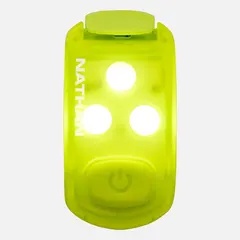
Nathan StrobeLight 2.0 Safety LED Light ClipNS60560-40046-OSFM
8-lumen clip-on strobe; up to 110 h flashing, IPX4
List price at nathansports.com, checked Nov 6, 2026 · Photo: nathansports.com
$13Brand site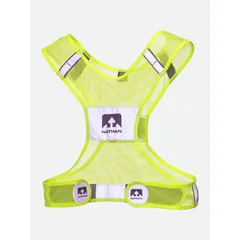
Nathan Streak Reflective Vest 2.0NS60420-40046-XS-M
Lightweight 360-degree reflective vest; two sizes
List price at nathansports.com, checked Nov 6, 2026 · Photo: nathansports.com
$33Brand site
Total at list price$57
Prices are the brand’s list price on the day checked. Some links are affiliate links: as an Amazon Associate, X Challenge earns from qualifying purchases, at no extra cost to you.
Bands on the ankles, a light vest over your top and a flashing clip on your back cover most lit streets. Together they cost less than a pair of running shorts, and they fold small enough to live in a jacket pocket all winter. The vest is light and works over a T-shirt or a jacket. Choose bright yellow or orange if you can.
Put the strobe on the back of your shorts, belt or vest, set to flashing. Wear one band on each ankle rather than both on the wrists. If you run with a dog, a reflective collar or a clip light on the leash makes the leash visible too, which drivers and cyclists often miss.
Lights that let you see
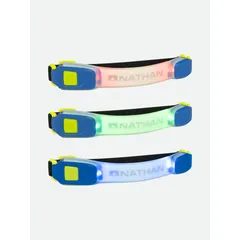
Nathan LightBender RX Armband LightNS5084-0186-00
6-lumen LED armband; steady or flashing; waterproof
List price at nathansports.com, checked Nov 6, 2026 · Photo: nathansports.com
$33Brand site
Nathan Neutron Fire RX Runner's Headlamp 2.0NS60260-80003-OSFM
250 lumens; colored side strobes; USB-rechargeable
List price at nathansports.com, checked Nov 6, 2026
Prices are the brand’s list price on the day checked. Some links are affiliate links: as an Amazon Associate, X Challenge earns from qualifying purchases, at no extra cost to you.
The LightBender is an LED armband that makes you visible from the side and behind, even without headlights. It suits lit streets where you do not need to see the ground but want to be seen from every side. The Neutron Fire RX 2.0 headlamp puts out 250 lumens, plenty for unlit roads and park paths, with colored side strobes. Point a headlamp slightly down so you light the ground a few steps ahead.
Headlamps feel strange for the first run or two. Wear the strap snug, low on the back of the head, and tilt the lamp so the beam lands a few steps ahead. If the bounce bothers you, a chest or waist light sits steadier, and its low angle throws shadows that make curbs and potholes easier to spot.
How bright is enough
- Lit city streets: a strobe and reflective gear; you do not need a headlamp.
- Dawn and dusk: reflective gear and a flashing light, since drivers have the low sun or half-light in their eyes.
- Suburbs with patchy lights: 100 lumens or more to spot curbs and potholes.
- Unlit roads and paths: 200 to 300 lumens, with a lower setting to save battery.
- Trails: more light still, and a second light on the waist helps show bumps.
Higher modes drain batteries fast. Charge lights after every run in winter.
Lumens are the total light a lamp puts out. Battery claims are usually for the lowest mode, so expect much shorter run times on high. Pick a light whose medium mode covers your longest run, and charge it after every run in winter; cold weather drains batteries faster.
Habits that matter as much as gear
- Run facing traffic where there is no sidewalk.
- Assume drivers cannot see you, even with gear on, especially when they are turning.
- Run with a friend or a group on the darkest routes; two runners with lights are easier to see than one.
- Vary your route and time if you run alone often, and stay where there are people and lights.
- Pick familiar, lit routes, and slow down on uneven ground.
- Keep music low or one earbud out.
- Tell someone your route. See running in the dark and road safety for runners.
- Do not shine a headlamp into the eyes of drivers, cyclists or other runners. Tilt it down as they pass.
- Cross at crosswalks and lit intersections, and make eye contact with drivers before you step out.
Winter evenings and challenges
Winter puts many weekday runs in the dark. A long challenge such as DRAGON, 88 days for about 111.2 miles, means running through dark mornings and evenings for weeks, so a kit that is always by the door is worth it. Keep the bands, strobe and headlamp in one bag with a charging cable, so getting out the door in the dark takes no extra thought. The X Challenge app records a night run like any other. On dark, icy days, a treadmill session counts too.
Common questions
- Is reflective clothing enough? On lit streets, often. On dark roads, add a light; reflectors need headlights to work.
- Headlamp or chest light? Headlamps follow your gaze; chest and waist lights bounce less and show bumps better. Many runners use both.
- Are cheap lights fine? For being seen, yes. For seeing on unlit paths, look for a stated lumen figure and a rechargeable battery.
- Does white clothing help? Light colors help a little; reflective material helps much more.
- Does reflective gear need replacing? Reflective prints and tapes fade with washing and wear. Check them in a car’s headlights or with a phone flash each autumn.
- Which should I buy first? Ankle bands and a flashing clip light. They are cheap and cover most lit routes.
- Do I need gear for a treadmill or a lit track? No. Save it for roads, paths and parking lots.
Sources and prices
Prices are list prices at the brand’s own store on the day checked. They change, and sales are common, so check the live page before you buy. We picked by specs, fit notes and price; we have not run in every item.
Challenges from this guide

Or take the whole set

More: all guides · how it works · every challenge