
Virtual running challenges compared
Updated · 6 min read

In short: Virtual running challenges come in four broad formats. In a one-run virtual race you cover a set distance in a single go. In a cumulative challenge every session adds to a total. In a journey challenge your distance moves you along a route. In an app-verified challenge a tracking app records the distance, so there is nothing to submit. They differ most in how finishing is checked and when the medal is sent. Some organizers mail it at sign-up, others only once you finish.
What is a virtual race?
A virtual race is a set distance you complete wherever you are, on your own schedule, instead of on a course on race day. Virtual walking challenges work the same way, and many events accept both.
You sign up online, cover the distance alone or with friends, and either submit your result or let a tracking app record it. A finisher medal is then mailed to you, or was already sent at sign-up. The formats below differ on exactly those points.
The formats side by side
| Format | How distance counts | Time allowed | How finishing is checked | When the medal is sent |
|---|---|---|---|---|
| One-run virtual race | A single continuous run of the set distance, anywhere | Usually an event window of a few days to a month | Usually self-reported: a time you submit, sometimes with a screenshot from a watch or app | Varies by organizer: some mail it at sign-up, others after a result is submitted |
| Cumulative distance challenge | Every run, walk or ride adds to a total until you reach the goal | Usually weeks or months | Self-reported logs or a synced tracking app, depending on the organizer | Usually once the total is reached; some send it at sign-up |
| Journey challenge | Your logged distance moves you along a real or imagined route on a map | Often open-ended or several months | Usually logs you submit or sync from another app | Usually when you reach the end of the route |
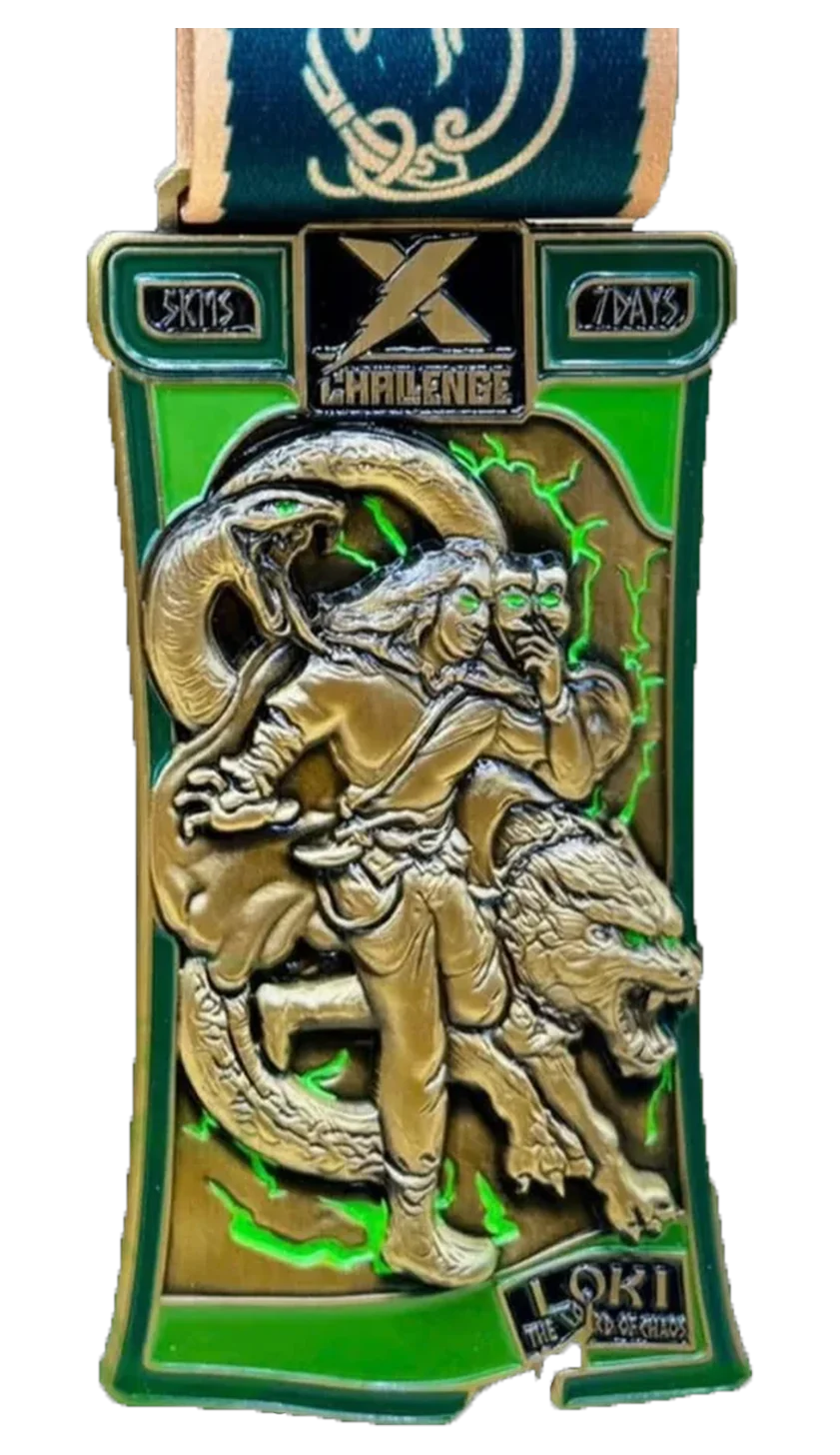
| X Challenge (app-verified) | Any activity the X Challenge app records distance for, in one session or many | A fixed window per challenge, from 7 days (Loki, 5 km) to 88 days (Dragon, 179 km), starting when you tap Start | The app records the distance; there is nothing to submit | Ships 5–10 business days after the app records your finish |
One-run virtual races
This is the closest thing to a race day. You pick a morning inside the event window, run the full distance in one go, and report your time. It suits runners who want a time to beat and who already cover the distance comfortably.
The catch is that one bad morning is the whole event. If it rains, or your legs feel heavy, you either run anyway or try again another day. Check whether the organizer allows more than one attempt, and whether walking breaks are fine. They nearly always are.
Cumulative distance challenges
Here every session adds up. A 10 km challenge might be four 2.5 km walks, or one long run and some short ones. The goal shifts from one big effort to showing up often enough, which is why this format suits beginners, walkers and anyone with a full calendar.
The time allowed matters as much as the distance. A long window makes a big number friendly, while a short one makes a small number a real push. Work out the daily average before you sign up.
Journey challenges
A journey challenge is a cumulative challenge with a map on top. Your miles move a marker along a famous trail, a coastline or a made-up route, and you often unlock postcards or facts along the way. The map is the motivation. They tend to be long, sometimes hundreds of miles, and many have no deadline at all.
Without a deadline, some people drift. If you know you need a date to aim for, pick one that has a window.
App-verified challenges
In an app-verified challenge, the tracking app is the record. On X Challenge you open the app, choose your challenge and tap Start. The phone’s GPS records outdoor sessions, and treadmill and indoor bike sessions go through the app’s indoor mode. You do not need a Strava or Garmin account, and there is no screenshot to upload.
Because the app sees the distance, the medal ships only after you finish, so it stands for distance you actually covered.
What to look for in the rules
Whatever the format, the rules page tells you more than the sales page. Read it for these points before you pay.
- Which activities count: running only, or walking, treadmills, cycling and swimming too.
- When the clock starts: a fixed date for everyone, or the day you choose.
- How long you get, and what happens if you miss the end.
- How you prove it: a form, a screenshot, a synced platform, or the organizer’s own app.
- When the medal ships, how long shipping takes, and where they ship.
- Whether you can see real photos of the medal, front and back.
Questions to ask yourself first
- Do I want to cover the distance in one go, or would I rather split it up? That alone rules out half the formats.
- How many weeks can I realistically commit to? Two weeks and three months need different formats.
- Do I care how finishing is checked? If the medal should stand for real distance, look for recorded tracking.
- Will I walk, run, or mix in a bike or a swim? Make sure every activity you plan to use counts.
- Is the medal something I want to keep? If not, a free goal may serve you just as well.
Which format suits whom
| You are | Format that tends to suit you | Why |
|---|---|---|
| A runner chasing a time | One-run virtual race | One effort, one number to beat |
| A beginner | Cumulative challenge with a short window | A first finish without a long run |
| A walker | Cumulative challenge with a long window | Short daily walks add up |
| Someone who loves maps and travel | Journey challenge | The route keeps it interesting |
| A medal collector | App-verified challenge | Each medal stands for distance actually covered |
How to choose
- Want a race-day feeling and a time? A one-run virtual race.
- Want a reason to move most days? A cumulative or journey challenge.
- Want the medal to mean you actually did it? Look for one that ships only after your distance is recorded.
- Collecting? Look at the medal itself. See what makes a good finisher medal.
- Not sure you will stick with it? Pick a short window first, then go longer.
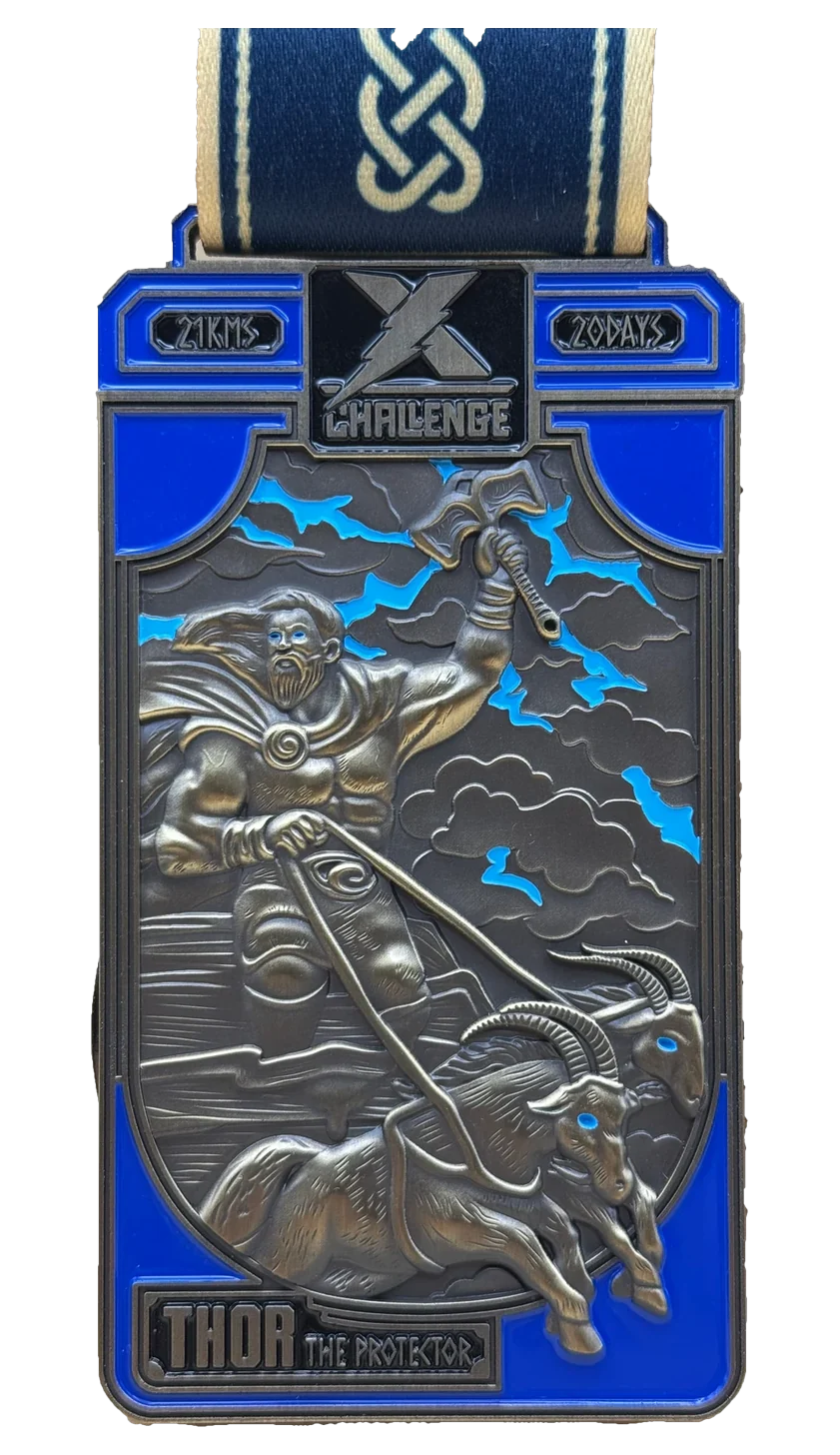
X Challenge runs cumulative, app-verified challenges from Loki at 5 km to Dragon at 179 km. See how it works or all challenges, or read how virtual races work step by step.
Common questions
- Is a virtual race a real race? It is a real distance, covered by you, with no start line or ranking. Most people do it for the goal, not the time.
- Can I mix running and walking? In nearly every format, yes. On X Challenge any activity the app records distance for counts, including cycling, swimming and rowing.
- Which format is easiest to finish? A cumulative challenge with a generous window, because you can split it into short sessions.
- Do I need a GPS watch? Not for X Challenge. The app uses your iPhone’s GPS outdoors and its indoor mode on a treadmill.
Challenges from this guide

Or take the whole set


More: all guides · how it works · every challenge