
5K, 10K or half marathon: which should you do first?
Updated · 6 min read

In short: If you are not active yet, start with a 5K. If you already walk or run a few times a week, a 10K is a good next goal. A half marathon suits anyone who can already cover 10K or wants a big milestone with time to prepare. On X Challenge the windows grow with the distance, so the daily average barely moves: 0.7 km for Loki, 1 km for Odin and 1.1 km for Thor. What grows is how many days you keep it up.
How the three distances compare
| Distance | Typical beginner training | First-timer’s time | On X Challenge |
|---|---|---|---|
| 5K (3.1 miles) | 8 to 9 weeks | 30 to 40 minutes | Loki: 7 days, $45 |
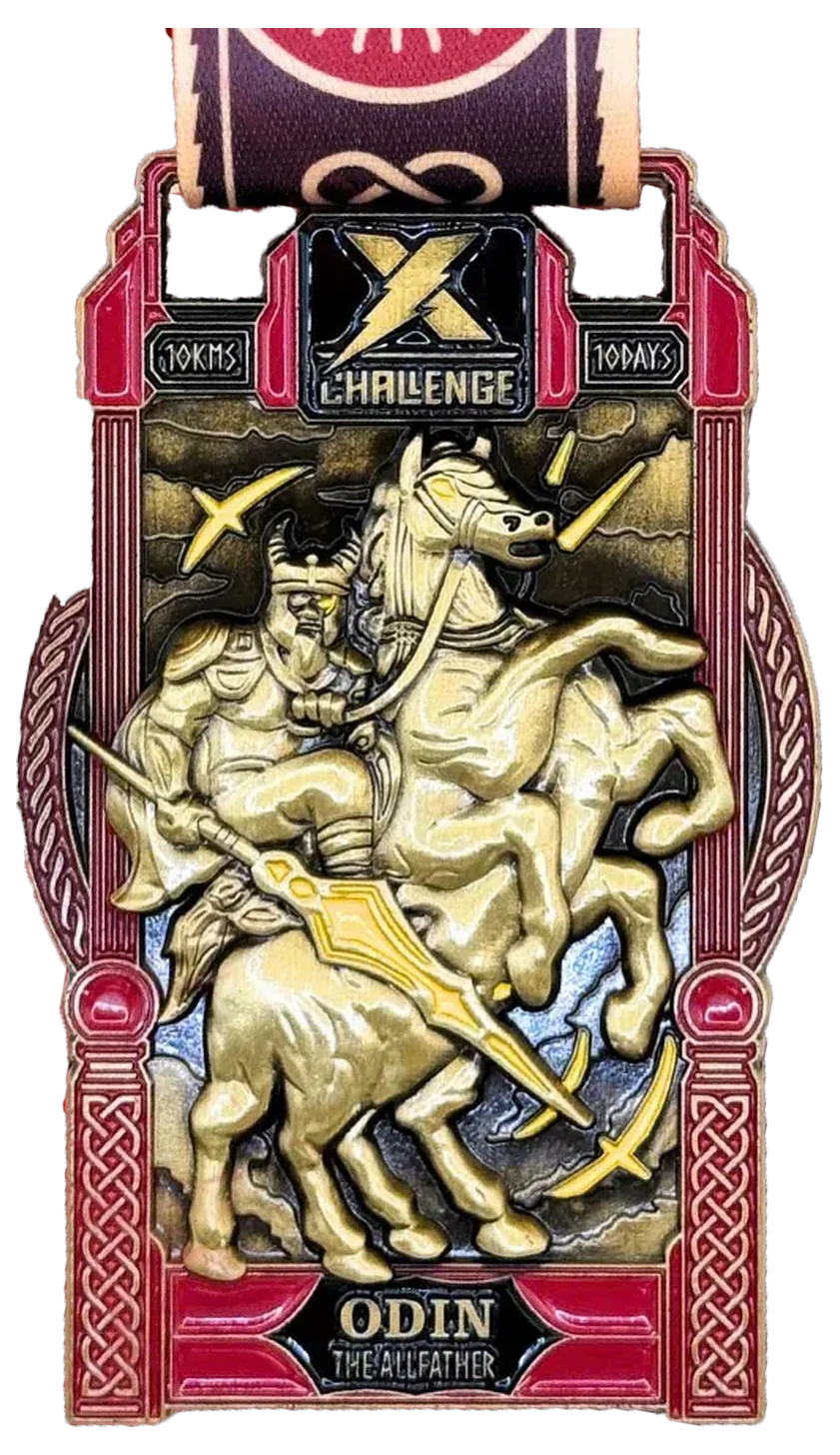
| 10K (6.2 miles) | About 8 weeks after a 5K | 1 hour to 1 hour 20 minutes | Odin: 10 days, $45 |
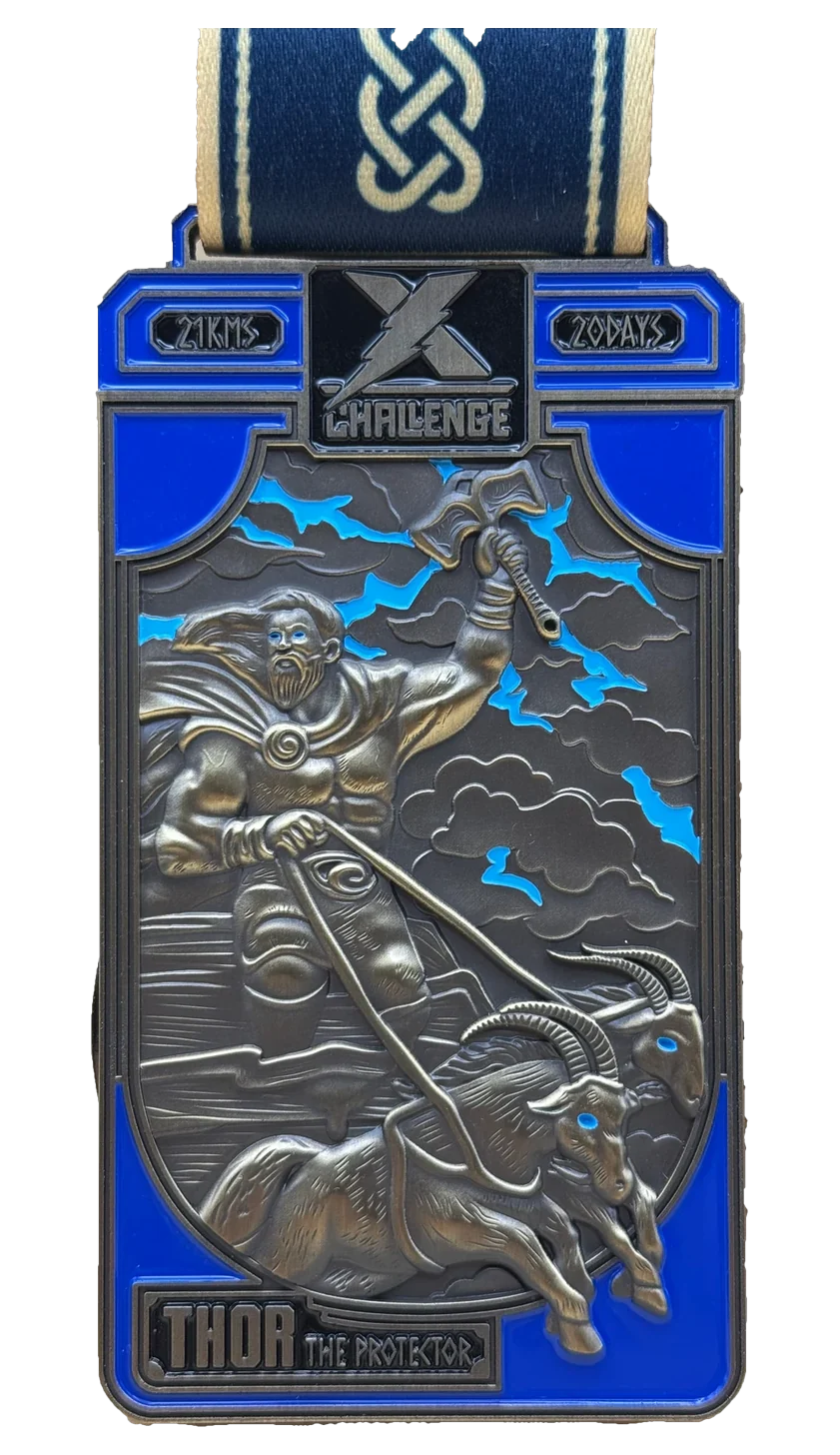
| Half marathon (13.1 miles) | 12 to 16 weeks | 2 hours 30 minutes to 3 hours | Thor (21 km): 20 days, $45 |
The training and finish times are rough ranges for someone covering the distance in one go. The best-known beginner plan, the NHS Couch to 5K, takes nine weeks at three runs a week, and you are free to take longer. A first 10K usually comes a couple of months after a first 5K. A half marathon plan usually runs three to four months. Walk breaks are normal at every distance.
What each one asks of your week
The distance on the bib matters less than the hours it takes from your week. Here is roughly what common beginner plans ask by the last few weeks, if you plan to cover the distance in one run.
| Goal | Sessions a week | Longest session by the end | Total time a week |
|---|---|---|---|
| 5K in one run | 3 | About 30 to 40 minutes | About 1.5 to 2 hours |
| 10K in one run | 3 to 4 | About 1 hour to 1 hour 20 minutes | About 2.5 to 3.5 hours |
| Half marathon in one run | 3 to 4 | About 2 to 2.5 hours | About 4 to 5 hours |
An X Challenge asks for much less, because you can split the distance into as many sessions as you like. At about 3 miles an hour, these are the daily walks that keep you on track.
| Challenge | Distance | Window | Average per day | Daily walk at 3 mph |
|---|---|---|---|---|
| Loki | 5 km (3.1 miles) | 7 days | 0.7 km | About 10 minutes |
| Odin | 10 km (6.2 miles) | 10 days | 1 km | About 15 minutes |
| Thor | 21 km (about 13 miles) | 20 days | 1.1 km | About 15 minutes |
Which one to pick first
- Not active right now: Loki. One week is short enough to finish, and you learn what your days can hold.
- Active a few times a week: Odin. 10 days asks for a little more regularity, and 10 km is a distance people recognize.
- Want something to tell people about: Thor. About 13 miles sounds huge but spreads over 20 days.
- Prefer slow and steady: Loki has the lowest daily average on the site, 0.7 km.
- Already running a 5K comfortably: skip ahead. A 10K or half marathon gives you a goal that still asks something of you.
A worked example: 5K to half marathon in one season
The three Norse challenges were built as a ladder. Started back to back, they take 37 days for 36 km, which fits inside a season. The whole set is $99, against $45 each if you buy them one at a time.
- Week 1, Loki: a 10 to 15 minute walk on five days covers it. Use the week to find the time of day that works.
- The next 10 days, Odin: three or four sessions of 2.5 to 3.5 km. Try jogging a few minutes of each one.
- The last 20 days, Thor: about 7 km a week. Three short sessions and one longer one on the weekend works for most people.
By the end you have moved most days for over a month, and you have a better idea of whether you want to run a half marathon in one go one day.
What changes as the distance grows
Run in one go, each step up changes more than the number. A 5K is over before most problems show up. A 10K takes long enough that pacing starts to matter: go out too fast and the last two miles hurt. A half marathon brings in the things marathoners talk about, such as taking water on the way, eating something beforehand, chafing, and shoes that are past their best.
Split across days, almost none of that applies. The skill becomes planning: knowing when the next session happens and not letting two quiet days turn into five. That is why a long cumulative challenge can be a gentler first goal than a short race run in one go.
Run-walk: the middle ground
You do not have to choose between running and walking. Most beginner plans start with short running intervals, a minute or so, followed by a longer walk, and stretch the running bits week by week. Couch to 5K opens with one minute of running and ninety seconds of walking. A run-walk mix gets a first 10K or half marathon done with less soreness than trying to run every step, and many experienced runners use it on long days too. On a cumulative challenge, it also means one session can be a walk and the next a jog, depending on how you feel.
How to tell you are ready for the next one
- You finished your last challenge with days to spare, without a big catch-up at the end.
- Your usual session feels easy enough that you could talk the whole way.
- You have been moving three or more times a week for at least a month.
- Nothing hurts the next morning beyond normal stiffness.
If you tick most of these, move up one step: 5K to 10K, or 10K to a half marathon. If you tick one or two, repeat the same distance in a longer window or try a walking-friendly long challenge first.
Common mistakes
- Picking the longest because it sounds impressive. A finished 5K does more for you than an abandoned half marathon.
- Thinking a longer challenge is harder per day. It mostly is not. The hard part is keeping the habit for weeks.
- Starting the window in a busy week. You choose when it starts, so pick a quiet one.
- Making every session hard. Easy, conversational effort is what most beginner plans ask for most of the time.
- Leaving it all to the last weekend. Two short sessions beat one long catch-up you dread.
If you want to run it in one go
Read the guides to the virtual 5K, the virtual 10K and the virtual half marathon, and use the pace calculator to see what finish time a pace gives you.
Common questions
- Can I walk a half marathon challenge? Yes. Walking counts the same as running, and the daily average is a short walk.
- Is a 5K too easy if I already run? If you run 5K comfortably, start with a 10K or a half marathon instead.
- Do I need to finish in one run? No. Every session the app records adds to your total.
- What if I fall behind? Write to info@xchallenge.us before your window ends. The how it works page explains your options.
If you have a health condition, are pregnant, or have not exercised in a long time, check with a doctor before you start.
Sources
- Get running with Couch to 5K, NHS: a 9-week beginner plan of three runs a week, which you can take longer over.
- Adult Activity: An Overview, CDC: 150 minutes of moderate activity such as brisk walking a week, which can be split into shorter chunks.
Challenges from this guide

Or take the whole set

More: all guides · how it works · every challenge