
A New Year fitness goal you can actually keep
Updated · 6 min read

In short: A New Year fitness goal lasts longer when it is small, dated and measurable: cover 5 km in your first week, say, rather than get in shape. Phrase it as something to do, not something to stop, and tell one person about it. A sequence of short goals works better than a single huge one. Going from a 5K to a 10K, a half marathon and then a long challenge fills most of a year, with a finish line every few weeks.
Why resolutions fall apart, and what helps
- Too big. Working out every day from January 1 leads to tired, then sore, then done.
- Too vague. Getting fit is a wish, not a plan. You cannot tell on any given day whether you are on track.
- No date. Without a finish line there is no reason to start today rather than next Monday.
- All or nothing. One missed session feels like failing, so people stop.
- Bad timing. January in most of the US is cold and dark, and nobody plans for it.
Researchers followed 1,066 people’s New Year’s resolutions for a year, in a study published in PLOS ONE in 2020. At the end, 55% of those who answered said they had kept their resolution. Two details stood out.
- Approach goals did better than avoidance goals. 58.9% of people whose resolution was to start or do something succeeded, against 47.1% of people whose resolution was to stop or avoid something. “Run three times a week” beats “stop being lazy.”
- A little support helped. The group that got some support during the year did better than the group that got none, and better than the group that got the most.
Write a better goal
| Instead of | Try | Why |
|---|---|---|
| Get in shape | Walk or run three times a week until March 31 | Countable, with an end date |
| Lose weight | Cover 10 km a week on foot in January | An action you control |
| Stop skipping workouts | Run Tuesday, Thursday and Saturday at 7 a.m. | Approach goal with a cue |
| Run a marathon | Finish a 5K by the end of January, then reassess | Small enough to start today |
| Exercise every day | Move for at least 10 minutes on 5 days a week | Room for bad days |
See how to set a running goal for more on goal types and how to break one into weeks.
Your first four weeks of January
| Week | Sessions | Each session | Focus |
|---|---|---|---|
| 1 | 3 | 15 to 20 minutes of brisk walking or walk-run | Show up, nothing more |
| 2 | 3 | 20 minutes, a little more running | Same days and times |
| 3 | 3 | 20 to 25 minutes | Log every session |
| 4 | 3 or 4 | 25 to 30 minutes | Finish your first dated goal |
LOKI fits this month well: 5 km in 7 days, about 0.7 km a day. Start it in week three or four, when the habit has begun to settle. If you have a health condition, are pregnant, or have not exercised in a long time, check with a doctor before you start.
Pick a goal that fits, and tell someone
| Where you are on January 1 | A first goal | A goal for spring |
|---|---|---|
| Mostly inactive | Walk 20 minutes on 5 days a week through January | Walk TURTLE, 68 km in 39 days |
| Used to run, stopped | Walk-run three times a week for four weeks | Finish ODIN, then run 5K without stopping |
| Running a little already | Finish LOKI in January | Finish THOR by March |
| Running regularly | Add one longer run a week | A half marathon distance in one run |
If you used to run and stopped, see getting back into running after a break.
The resolutions study found that a little support beat both none and a lot. In practice that means one or two people who will ask how it is going, not a public announcement to everyone you know. A friend who walks with you on Saturdays, a partner who knows your run days, or a small group chat where you each post a weekly total all count. If you would rather keep it private, a calendar where you tick off each session does a similar job.
Plan for winter
Most New Year goals in the US start in the coldest, darkest weeks of the year. Plan for it. Move runs to lunchtime or the weekend, wear layers and a light, and keep a treadmill or indoor option for icy days. See winter running tips, running in the dark and treadmill virtual runs.
A plan for the year, with rewards
| When | Focus | Challenge | Time window |
|---|---|---|---|
| January | Start the habit | LOKI (5 km) | 7 days |
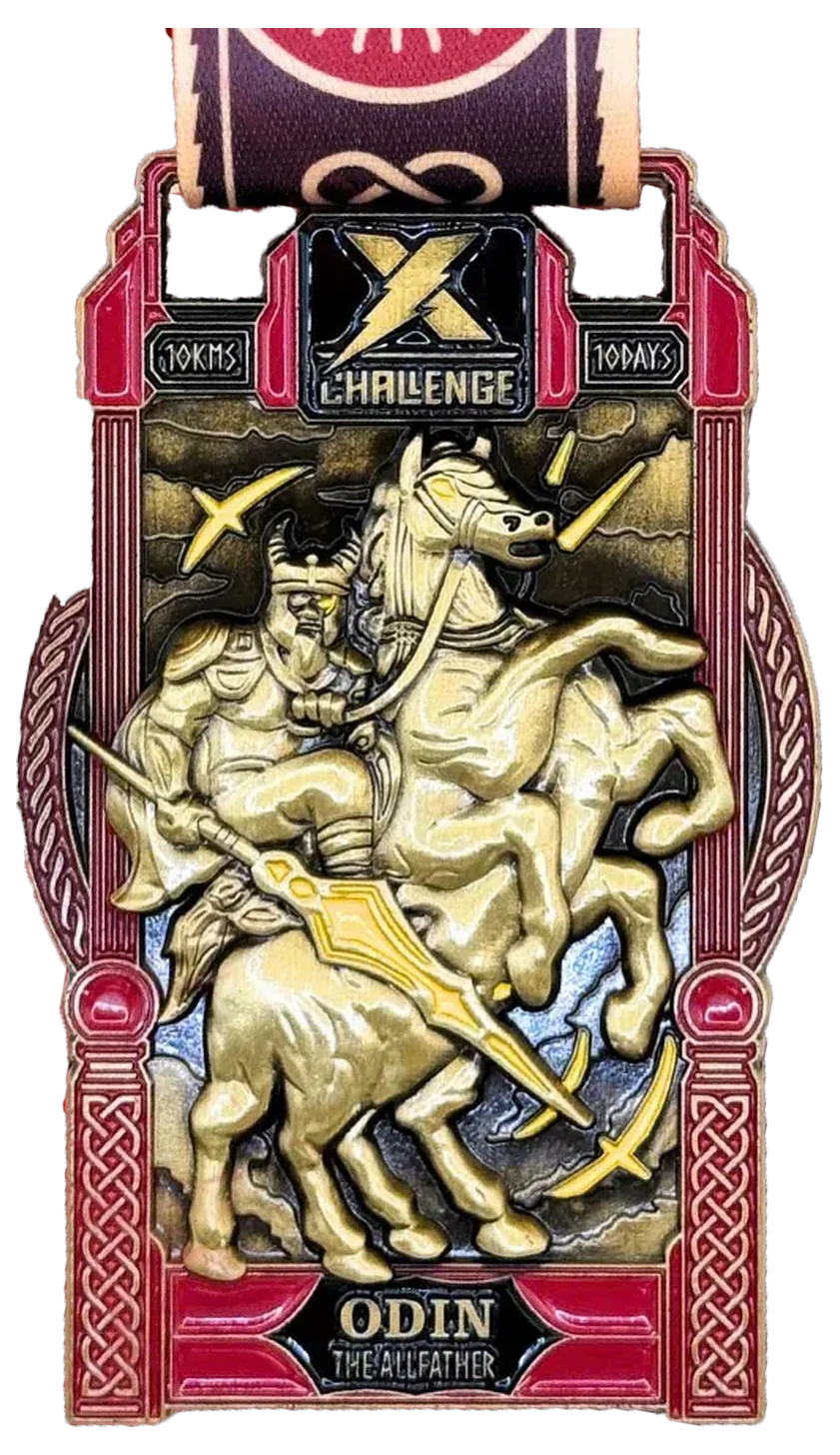
| February | Make it regular | ODIN (10 km) | 10 days |
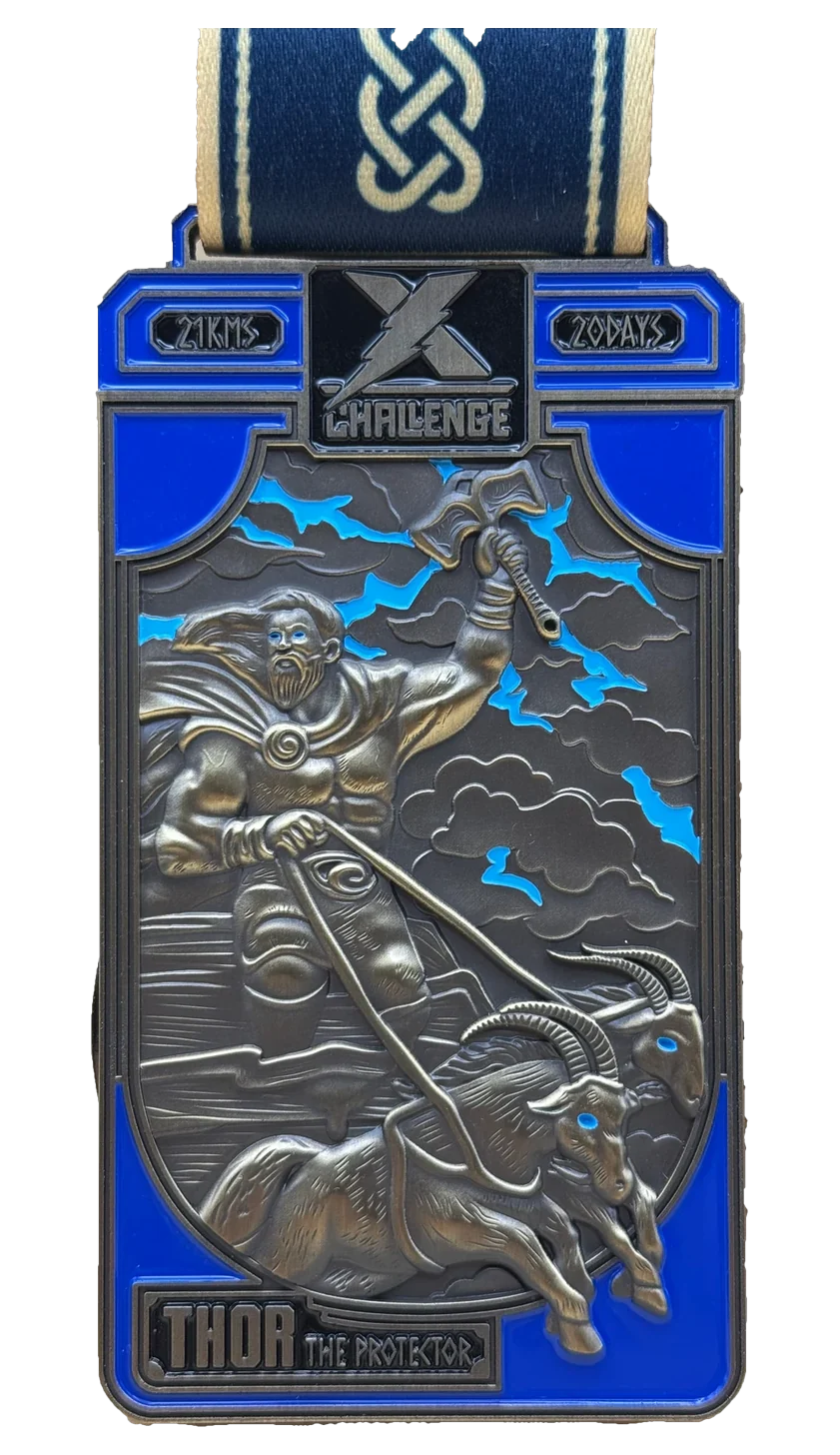
| March | First big milestone | THOR (21 km) | 20 days |
| April–May | Build patience | TURTLE (68 km) | 39 days |
| June–August | Keep it easy and steady | KYLIN (88 km) | 68 days |
| September–November | The long one | PHOENIX (139 km) | 79 days |
It is only a suggestion, and each window starts when you tap Start, so the order and timing are yours. A finish line every few weeks keeps the year from becoming one long slog.
A reward gives the goal an edge on the days the habit has not formed yet. The best ones are small, frequent and tied to the habit itself.
- Weekly: a favorite breakfast after the Saturday run.
- At four weeks: new running socks or a running hat.
- At each finish: a medal for the wall, and a photo of you with it.
- Any time: a podcast or playlist you only allow yourself while running.
Avoid rewards that undo the effort, such as skipping the next week as a treat. Rest is part of training, but it should be planned, not a prize.
When February hits, keep it easy
The first wobble usually comes three to six weeks in. The novelty is gone and the habit is not automatic yet. Expect it. Lower the bar rather than quitting: keep your days, shorten the sessions, and remember that a single missed day barely affects how a habit forms. See getting past a running slump and how to build a running habit.
Pick one goal and put the first session on the calendar. If you have not been active, try a 30-day walking challenge first. If you are buying for someone else, see gifts for runners. LOKI is a good first finish line.
Common questions
- Is it too late if I start in February? No. Any Monday or first of the month works as a fresh start. The best start date is the one you actually use.
- How big should my goal be? Small enough that you could start today. You can raise it once it feels easy.
- Should my goal be about weight? An action goal, such as sessions or distance, is easier to control week to week. Weight can follow, but it moves slowly.
- Should I tell people? Telling one or two people who will check in tends to help.
- What if I miss a week in January? Restart at the previous week’s level. One week does not undo the habit, and the research on habits suggests a single miss barely matters.
Sources
Challenges from this guide

Or take the whole set

More: all guides · how it works · every challenge