
Walking for weight loss: what to expect
Updated · 6 min read
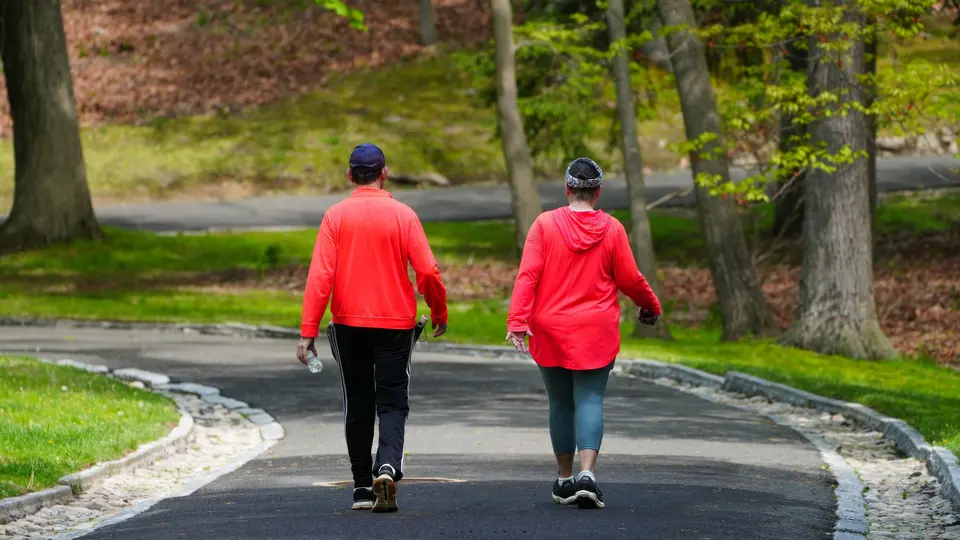
In short: Walking helps with weight loss, but most of the loss comes from eating fewer calories, and regular activity matters most for keeping weight off, says the CDC. A 155-pound adult burns about 133 calories in 30 minutes of walking at 3.5 mph, so an hour a day adds up to roughly 1,800 calories a week. That is real, but a few snacks can cancel it. Pair daily walks with modest changes to what you eat, build toward 150 minutes or more a week, and judge progress over months.
What walking burns
| Activity | 125 pounds | 155 pounds | 185 pounds |
|---|---|---|---|
| Walking, 3.5 mph | 107 | 133 | 159 |
| Hiking, cross-country | 170 | 216 | 252 |
| Running, 5 mph | 240 | 288 | 336 |
Two things stand out. Heavier people burn more for the same walk, because they move more weight. And hiking, with its hills and rough ground, burns well over half as much again as walking on the flat. You can use both: walk a little longer, and add hills when you can.
These are averages. Your own number depends on your weight, your speed, the terrain and your fitness. Fitness trackers only estimate calories, so treat their number as a rough guide rather than a target to eat back.
Why food matters more
The CDC says most weight loss comes from cutting calories, and that losing weight with activity alone takes a high amount of it. The numbers show why. A 30-minute walk burns about as much as a small snack. If the walk makes you hungry and you eat a bit more, the gap closes. Here is a worked example. Say you walk 30 minutes a day, five days a week, at 155 pounds. That is about 665 calories a week. If you also trim around 300 calories a day from what you eat, by cutting a sweet drink and a second helping, that is over 2,000 a week. The food change does three times the work, and the walking makes it easier to stick with.
Walking earns its place in other ways. The CDC says regular activity is what helps people keep weight off once they have lost it. It also lowers the risk of heart disease and type 2 diabetes, improves sleep and mood, and keeps muscles and bones strong, all of which help whatever the scale says.
How much to walk
The CDC’s baseline for adults is 150 minutes a week of moderate activity, such as brisk walking, plus muscle-strengthening on two days. For weight, it notes you may need more than that, and that the right amount varies a lot from person to person. If you are starting from little, reach 150 minutes first, then add more if your weight is not moving after a couple of months. Raise time before speed. An extra 10 minutes on each walk is easier to keep than walking faster, and it adds about the same.
The total matters more than how you split it. Two 20-minute walks burn about the same as one 40-minute walk. Pick the pattern you can keep for months, not the one that looks best on paper. A walk you skip burns nothing.
An eight-week walking plan
| Weeks | Walks a week | Each walk | About per week |
|---|---|---|---|
| 1–2 | 5 | 20 minutes, easy to brisk | 100 minutes |
| 3–4 | 5 | 30 minutes, mostly brisk | 150 minutes |
| 5–6 | 6 | 35 minutes, brisk, one with hills | 210 minutes |
| 7–8 | 6 | 40 minutes on weekdays, 60 to 75 at the weekend | 250 to 300 minutes |
Add two short strength sessions a week if you can: squats, lunges, push-ups against a wall or counter. Muscle helps you stay strong as you lose weight. If your joints complain, hold a week rather than moving on. If you have a health condition, are pregnant, or have not exercised in a long time, check with a doctor before you start.
Ways to burn more on the same walk
- Walk briskly. Faster walking burns more per minute. See brisk walking pace.
- Add hills, stairs or a treadmill incline. Read incline treadmill walking to start safely.
- Make one walk a week longer, an hour or more at an easy pace.
- Mix in short jogs once walking feels easy.
- Carry a light pack. Rucking for beginners explains how to start without hurting your back.
- Walk more in daily life: errands, calls, the stairs, the far end of the parking lot.
- Walk with a partner or a group. You will walk longer when the time passes in conversation.
Food habits that help
You do not need a special diet to walk for weight loss. Small, steady changes work better than strict rules you drop after two weeks. Do not “eat back” the calories your tracker says you burned. Keep regular meals, put more vegetables on your plate, include some protein, and drink water rather than sweet drinks.
Walks under an hour do not need a sports drink or a snack for most people. Have water and eat at your next meal. For more on food around exercise, see what to eat for weight loss when running. The same ideas apply to walkers.
Tracking progress beyond the scale
Your weight swings by a few pounds from day to day with water and food. Weigh at the same time once or twice a week and watch the trend over a month. A tape measure around your waist and how your clothes fit are useful too. So are the signs that have nothing to do with weight: climbing stairs without getting out of breath, sleeping better, or walking the same loop a few minutes faster than last month. Write them down. On a slow week they remind you the walking is working.
Distance is the easiest number to move, and it keeps you going when the scale stalls. A long challenge such as KYLIN, TURTLE or DRAGON runs for weeks or months, which is about the time it takes to see real change. DRAGON is 179 km in 88 days, about 30 minutes a day.
Common questions
Is walking or running better for weight loss? Running burns more per minute. Walking is easier to keep up and gentler on joints. The best one is the one you will still be doing in six months.
Can I lose belly fat by walking? You cannot choose where you lose fat. Regular walking and a lower calorie intake reduce fat overall, including around the waist.
Why am I not losing weight even though I walk every day? Usually because food intake has crept up to match. Look at what you eat before adding more walking.
Should I walk before breakfast to burn more fat? There is no need. The best time to walk is the time you can keep. Walk on an empty stomach only if it feels fine for you.
Sources
- Physical Activity and Your Weight and Health (CDC): most weight loss comes from eating fewer calories, and regular activity is what keeps it off.
- Calories burned in 30 minutes of leisure and routine activities (Harvard Health Publishing): calories for walking, hiking, running, cycling, swimming and rowing at three body weights.
- Adult Activity: An Overview (CDC): adults need 150 minutes of moderate activity a week, such as brisk walking, plus muscle-strengthening on two days.
- Benefits of Physical Activity (CDC): lower risk of heart disease, type 2 diabetes and several cancers, better sleep, and less short-term anxiety.
Challenges from this guide



Or take the whole set

More: all guides · how it works · every challenge